
PHOTO
Astronomy enthusiasts are getting their accommodation sorted two years in advance as excitement grows for Dunedin’s once-in-a-millennium celestial event.
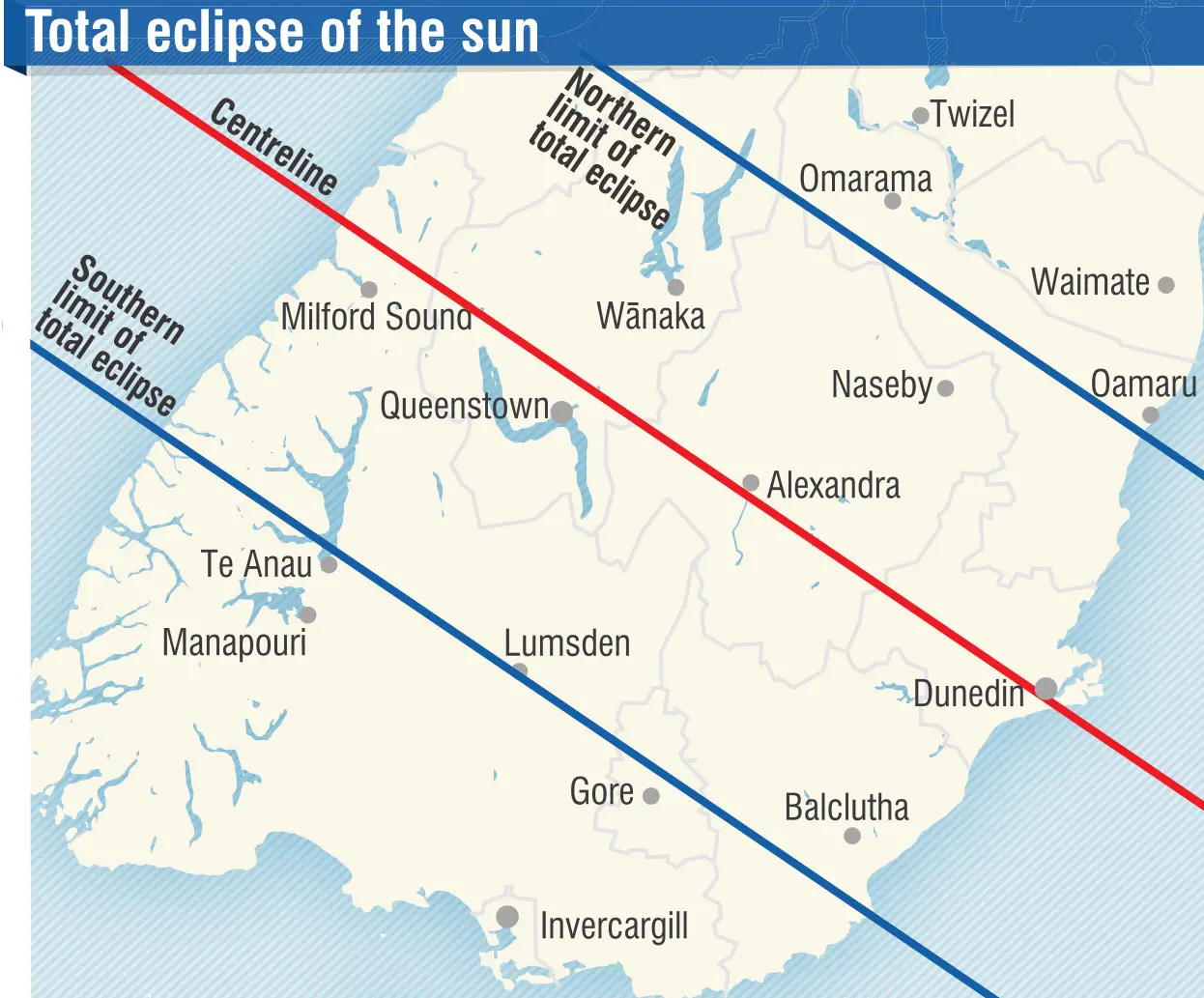
Otago will be one of the few places worldwide to experience a total solar eclipse on July 22, 2028.
Distinction Dunedin Hotel general manager Andrew Duncan said there was already significant interest in bookings for the eclipse, particularly from the United States.
The eclipse’s full effect — the face of the sun completely covered by the moon — will be visible only in its path of totality.
In 2028, this will sweep across much of Otago; Dunedin and Queenstown will be the only major centres nationwide to experience the full eclipse.
Mr Duncan said it was unusual for guests to reserve accommodation two years in advance but across Dunedin’s two Distinction properties, more than 150 room nights were booked in the period surrounding the eclipse.
"We are feeling great about this event and believe it will fill Dunedin in the same way a rugby test does."
Meanwhile, the Dunedin City Council has applied for $4million in government funding to deliver an eight-day festival celebrating the eclipse.
At a council meeting on June 4, destination manager Teresa Fogarty said a group had been established to develop an event with wide appeal — including astronomy, mātauranga Māori, culture, science, and the arts.
"We’re pitching this as a very time-bound, place-bound global event. It’s once in, not in a generation, but in many generations."
The last total eclipse that would have been visible from Dunedin was in 1163, and following 2028’s eclipse, the next would occur in 2431.
A report to the meeting, on year one of the council’s refreshed festival and events plan, said future work included a focus on development opportunities associated with the eclipse, which will occur eight days after Matariki.
In a section titled "Dark Mode Dunedin", the report said 5000 international and 30,000 domestic visitors were expected, with an estimated potential economic impact of $30m.
"Beyond immediate visitor expenditure, the event also presents long-term opportunities to enhance Dunedin’s international profile, strengthen regional partnerships, support the visitor economy during winter, and create enduring cultural and educational legacy outcomes for the city," the report said.
Ms Fogarty said the next stage of planning would include assessing visitor capacity and function of Dunedin’s infrastructure.
The council’s bid to the Ministry of Business, Innovation and Employment’s major events fund had been developed over the past 18 months, and was submitted last month.