
PHOTO
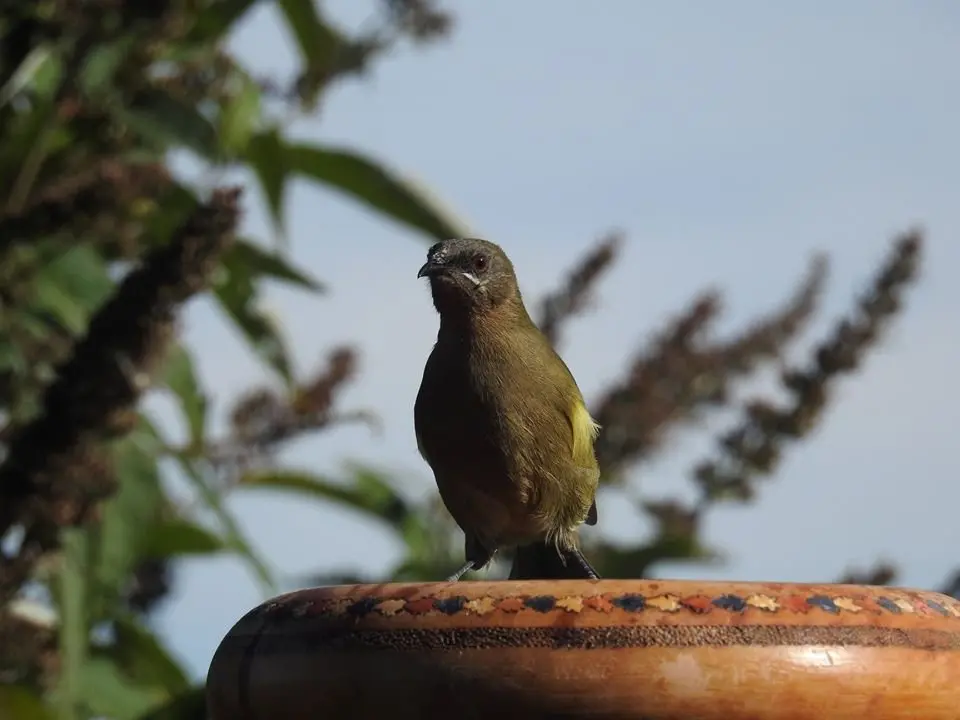
Regular readers will remember that last month, I was wondering where the tuis and bellbirds were.
The day the last article in this column was published, I heard a bellbird.
In the very next weekend, I even saw one, which is rare for me.

Bellbirds bob through branches several metres off the ground, which is well above my head.
I just happened to be in our upstairs living room with the door open — and there she was, right at eye level, singing away. Just beautiful.
The Department of Conservation website and NZ Birds online both have more information about bellbirds and how we can encourage them and there is one consistent theme — predator control is a vital strategy.
Autumn is a busy time as young predators raised over the summer move out of their home to find killing fields of their own.
Predators travel in all directions and further than most of us imagine.
That’s one of the reasons having a trap in every backyard is one of the goals for our campaign for a Timaru free of predators.
Last month, I was thinking about planting.
Some of the conversations I had since then reminded me of the important follow-up to planting — weeding. This is not nearly as popular.
Many people and groups are excited about planting natives, it feels like you have really achieved something.
However, because our native plants are often slow to grow, keeping the weeds under control is a challenge.
Often grass is a problem for establishing plants because it grows quickly and tall, well, taller than the opposition.
While many bulk plantings have plastic protectors to surround them, they still need support by clearing out competitors until they are high enough to shade out the opposition.
If it helps, what about re-framing the task.
You are not weeding, you are doing ISE (invasive species control).
While spraying may seem like an easy option, reducing the amount of toxins going into the environment is ideal — which is where you come in.
People power is required for plantings all around the Timaru area.
Strategies include direct pulling, which is easier after rain, or smothering with whatever mulch comes to hand.
As with predator control, everyone can do something. Nobody can do it all, but if we all do our bit, we will continue to transform our environment for the better.
• Predator Free Timaru is a group of passionate locals on a mission to bring back the birds to Timaru by predator control in local backyards and green spaces — one of many groups nationwide working towards the Predator Free 2050 vision.