
PHOTO
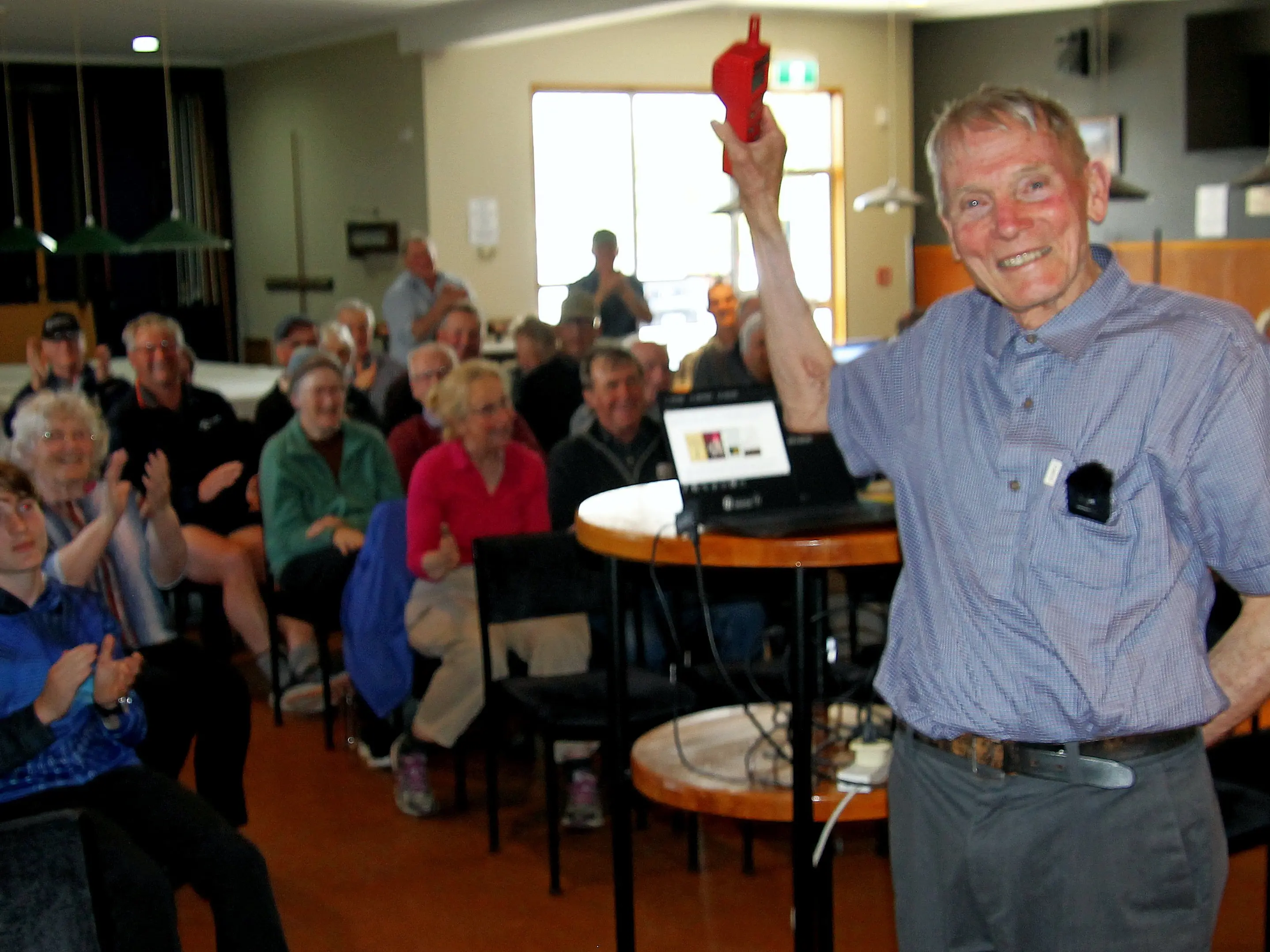
About 30 farmers and local people attended a presentation by Emeritus Prof Will Happer at Balclutha Town and Country Club last Friday.
Emeritus Prof of physics at Princeton University, Prof Happer studied atmospheric gases to focus lasers through Earth’s atmosphere, and as director of the United States Department of Energy’s Office of Science, he was a consultant to several US presidents.
His one-hour presentation covered atmospheric thermodynamics, plant biology and cattle digestion to inform listeners about the effects of livestock on climate change.
By his calculations, a 14% reduction of New Zealand’s cattle methane within targeted timeframes would lower global temperatures by about 0.0001°C, while the elimination of every ruminant animal on earth would reduce temperatures by about 0.1°C.
He cited Nasa surveys showing increased plant greening on Earth due to rising CO2 levels, which enables plant photosynthesis with less water.
"Some small fraction of the 1°C warming during the past two centuries must have been due to increasing CO2 which is indeed a greenhouse gas," he said.
"[But] most of the warming has probably been due to natural causes."
Prof Happer’s opinions are controversial and out of step with most climate scientists in media whose message is "the science is settled" on the existential threat of human-affected climate change.
But he claims public opinion is shifting.
"The climate alarmist message is practically dead in the [United] States ... Mr [Bill] Gates became a climate apostate a couple of weeks ago, the big international banking consortium to promote ‘saving the earth’ has collapsed [and] Nestle no longer is leaning on New Zealand to report on methane.
"Polls are showing older people don’t believe it and young people suspect it’s nonsense, but in between there appears to be two generations who [think] the world is coming to an end."
Prof Happer was invited to bring his presentation on tour by the Groundswell movement, who argue New Zealand farming regulations stemming from the Paris Agreement are "unworkable".
He described himself as an environmentalist who would like to see "climate alarmism" reduced so environmental issues such as plastic pollution and habitat loss could be more seriously addressed.
"I do own a small farm but not a single head of cattle," he said.
"I’m doing this because unless people are aware of all the science, you get uninformed decision-making and a lot of fear."