
PHOTO
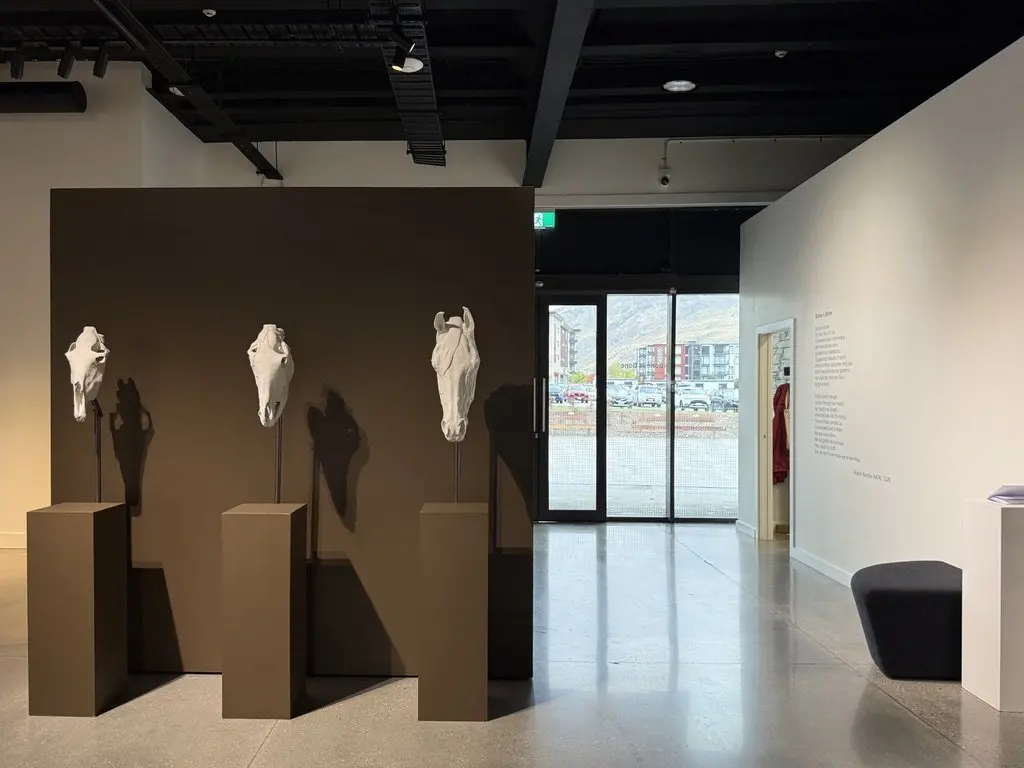
Connection lies at the heart of Hāwea Flat artist Robyn Bardas’s exhibition, ‘Bone Is Bone’, on display at Te Atamira in Queenstown until June 14.
The multimedia exhibition which includes sculpture, video and written work, explores the relationship between humans and horses as a way to examine connection — between humans and horses, humans and other species, and humans and humans — through art.
The exhibition — the most striking feature of which is three life-sized horse busts — is something of a creative tangent for Bardas, who had been training towards being able to sculpt a series of life-sized busts of women in her creative community.
The trouble was that practising within the limitations of classical sculpture techniques — working from real-life, not from a photograph — was not compatible with the busy lives of her desired subjects.
"In the meantime, while I was practising and thinking about it, I had a horse skull in my studio, so I used that as a model.
"Then I realised there was more to it than just technical training," Bardas said.
When she’s not working on artistic projects, Bardas spends much of her time with horses practising natural horsemanship, a horse training philosophy which focuses on connection and partnership with horses when compared to traditional training techniques.
"The whole thing between horses and humans that I work with is connection and understanding each other, and reading the minute signals that we give each other physically, emotionally and telepathically.
As Bardas worked on the horse skull to hone her technique, the similarities, and the connection, between the equine skull and her own were impossible to ignore.
"When I was working on the first skull, I was thinking, ‘my bones are exactly the same as this bone’.
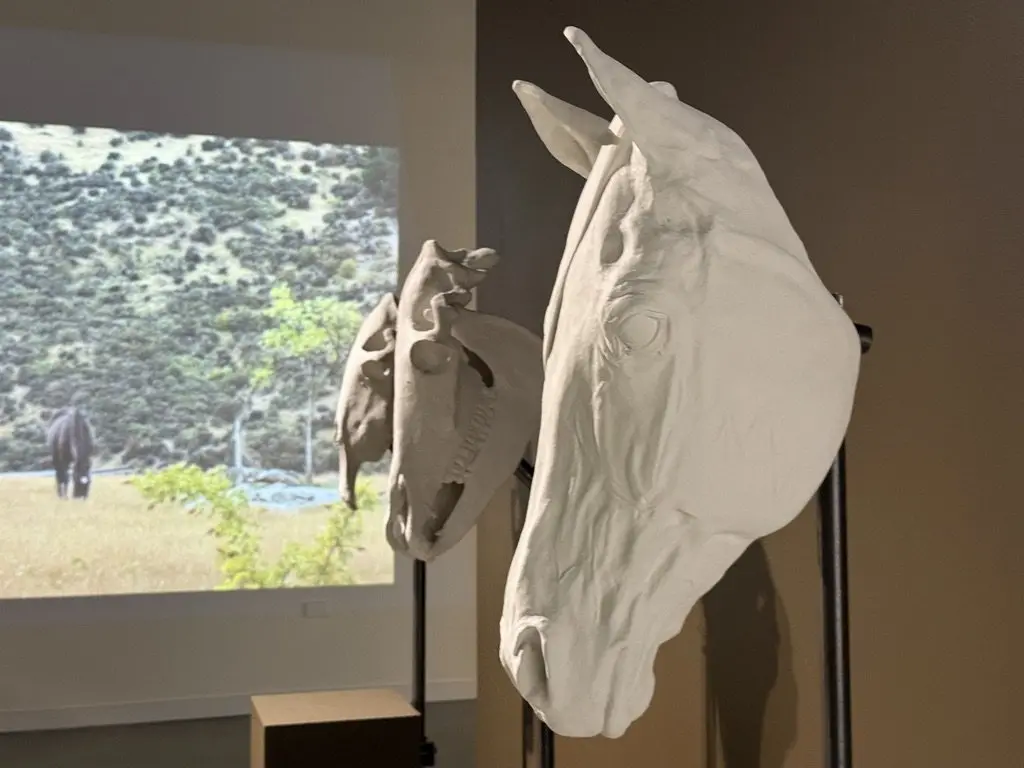
"The nose is longer in a horse and the eyes are in a different place, but its the same particles.
"That’s how ‘Bone Is Bone’ came along ... it’s a way of finding commonality between us." After creating the first skull sculpture, Bardas developed a further two sculptures, studying the anatomy of horses — from their bone structure to the way their veins run along their nose — to create incredibly life-like pieces of work.
In addition to the three busts, the exhibition features seven hand-sized sculptures which Bardas compares to drawings as she honed her craft, as well as videos of Bardas’s horses living naturally in their paddock and of Bardas working with clay as her horses interact with her.
There is also pile of hay designed to contribute to a holistic sensory experience.
While Bardas is exhibiting her relationship to horses, she hopes that the exhibition is evocative of connection in all its forms for attendees.
"It’s not necessarily about horses," Bardas said.
"It’s about connection between all of us.
"How we connect in all these different ways that aren’t obvious ... and how we’ve co-lived together for all these centuries.
"Its an evolution of survival and pleasure in each others’ company."