
PHOTO
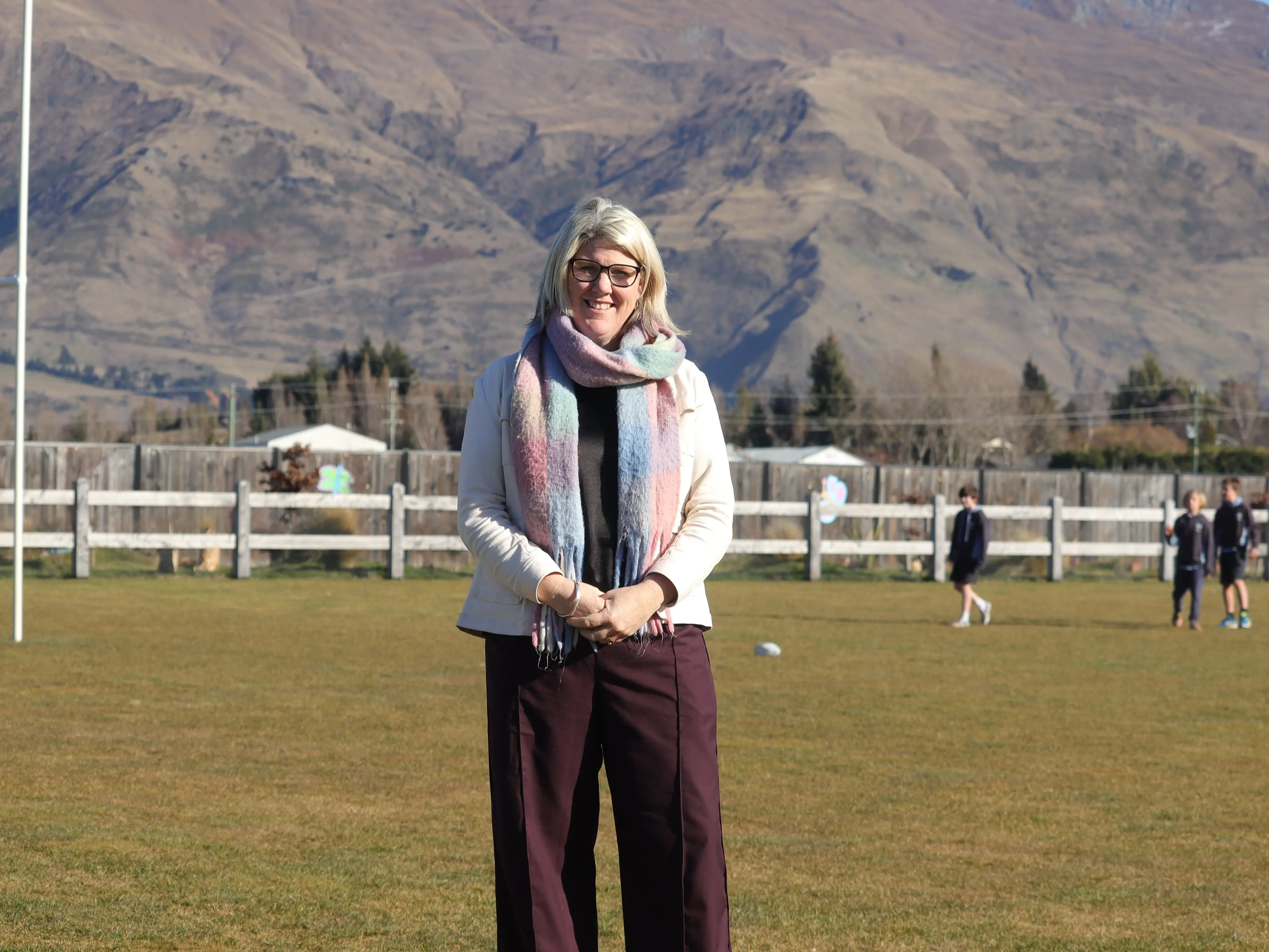
Local educators agree flexible learning spaces are the way to go but are criticising the lack of consultation from the government that has been ongoing for decades.
The Ministry of Education announced two weeks ago that it would end the construction of open-plan classrooms in favour of flexible learning spaces.
Education Minister Erica Stanford said the design had been introduced to create more collaborative learning spaces but had instead raised challenges around managing noise and behaviour while coming at a greater economic cost.
Long-time teachers around the Upper Clutha agreed with the decision but said this was not the first time the government had changed their mind about open-plan designs.
Tarras School former principal Noeleen Puller had about 50 years of experience in the region and was in the classroom the last time this design was introduced, taken away and introduced again.
"It’s been a flip-flop exercise by the Otago Education Board, probably first of all, and then the Ministry of Education."
Ms Puller recalled the ministry’s decision in the 1980s to move into open-plan classrooms where multiple different classes would be held in large spaces.
During this time, she said the walls of several classes were knocked down with some spaces having sliding doors that could be closed for some classes.
"It was terrible trying to take a story time or something when the other half of them were doing playing with blocks or whatever and it just didn’t go because the noise was horrendous and of course little children, they had trouble concentrating."
She said flexible learning spaces, which most schools in the region had adopted, were the best way to go.
This meant having some larger open spaces for students to collaborate in while keeping single cell classrooms available should teachers need a quite working space.
The bigger issue for Ms Puller was the ministry’s lack of consultation with members of the New Zealand Educational Institute Te Riu Roa.
"Not at any stage through the flip-flops did they ask a group of teachers who belong to NZEI their opinion."
Former Wānaka Primary principal Wendy Bamford supported the flexible learning spaces the school already had but shared a similar disappointment in the ministry.
"I don’t think I’ve ever been consulted at that kind of level," she said.
"... the Ministry of Education is very good at listening to other countries ... They should actually start listening to their own teachers."
Te Kura O Take Karara principal Jodie Howard said the advisory groups for decisions such as this one were small and did not accurately represent all communities in New Zealand.
As a small school in a rural part of the country, Ms Howard felt the ministry’s outreach was lacking in the region.
"Where have they come and visited places like us and seen what it looks like for us. "We don’t feel that the consultation goes wide enough and diverse enough," she said.
As a school of just over 300, Ms Howard valued a flexible learning environment which offered students both traditional classrooms and open learning spaces.
However, she was also quick to point out that classroom design was only one small factor contributing to students’ learning and behaviour.
Ms Howard felt the ministry’s statement viewed the removal of open-plan classrooms as a concrete solution to issues around noise and disruption.
"It feels like it’s seen as this is a quick fix," she said.
"Regardless of what the walls look like, the shape and size and things like that, kids will have different experiences and different teaching."
Having experienced traditional classroom settings, open-plan and flexible environments, Ms Howard said good-quality teaching and having teacher aide support in the class was more important in enhancing student learning.
Mount Aspiring College principal Nicola Jacobsen supported the flexible learning space the secondary school had but saw it was more important to focus on supporting teachers in the classroom as they brought learning to life.
"Everyone does learn differently. Everyone teaches differently," she said.
"What makes the difference is the professional practice of the teachers in that space."