PHOTO
Local democracy reporter
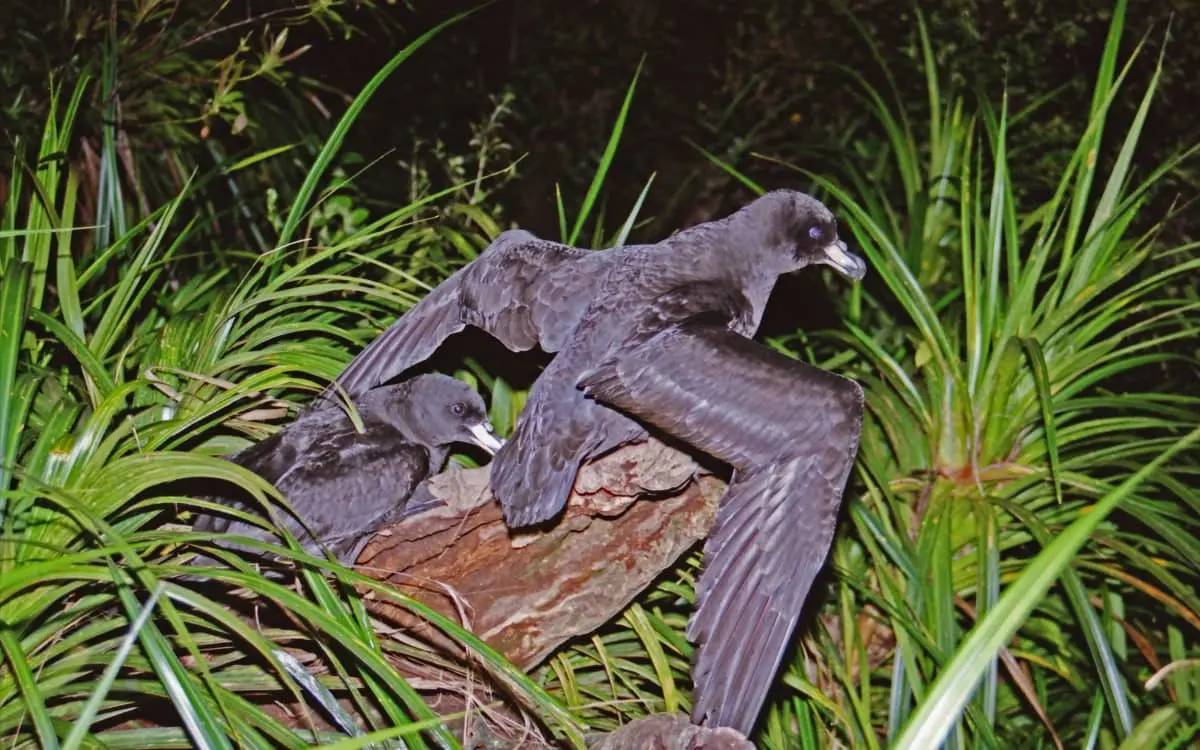
Rare Westland petrels nesting in the Punakaiki area may be at risk of bird flu, with the entire West Coast exposed to infected migratory seabirds from Australia.
New Zealand's first case of H5 bird flu was confirmed yesterday when a skua found on Petone Beach at Wellington tested positive. The flu was detected in Western Australia last month, again in a brown skua.
The West Coast - which faces the eastern seaboard of Australia and is equivalent in length to the distance between Wellington and Auckland - is home to the Westland petrel, an endangered species native to the region with a total population of 20,000 worldwide.
Forest & Bird West Coast chairwoman Suzanne Hills expressed concern for the Westland petrel, which are at risk due to their small breeding location.
"They are an incredibly vulnerable population because they only breed in one location and that is a very small area just above the Punakaiki River.
"If they were hurt and it spread in that breeding location, that is potentially very concerning."
The colony has about 4000 breeding pairs annually, however not all of them breed every year and the ones that do only lay one egg.
"It takes them at least seven years before they start breeding, sometimes even later. They have one chick every year because it takes so many resources to get their egg and raise that chick," Hills said.
"They are a long-lived bird... so they will only breed if they are in good condition."
The petrels need help, especially since the chicks are hatching at this time of the year, she said.
West Coast zoologist Dr Sunkita Howard, who also helps run tours to the petrel colony at Punakaiki, said the birds were not facing imminent risk.
"It is certainly a concern that the whole world's population is just in this one place, all quite close together at the moment."
She had asked the Department of Conservation (Doc) for advice on best practices to prevent the spread of the flu and has suspended tours to the petrel colony in the meantime.
Risk to penguin population
West Coast Penguins Trust manager Inger Perkins is likewise concerned about the risk posed to penguins found along the West Coast - little blues (korora) in the north and tawaki (Fiordland crested) in the south.
Bird flu poses a risk to the larger colonies of penguins on the West Coast as they congregate, Perkins said.
"We have got some larger colonies across the coast in a few places and then we have got the Fiordland crested penguins in South Westland," she said.
"After about three weeks or so of being fed at a nest, they [the penguin chicks] then congregate in a creche, so they are gathering in a much tighter grouping and it is that tighter grouping of birds that – if that disease arrives from somewhere – then they are more at risk because it can be catastrophic."
Although the penguins cannot be protected from the bird flu, the West Coast Penguin Trust's rangers and volunteers were "prepared as we can be" in terms of sanitising and knowing what to look for, Perkins said.
She advised avoiding contact with any sick or dead bird, adding that being informed was the most important step people could take.
The department's South Island regional director, Owen Kilgour, has previously said although bird flu cannot be prevented from reaching New Zealand, Doc has developed a response plan with the Ministry for Primary Industries.
Water-borne birds would be most at risk of catching it, Kilgour said.
Biosecurity Minister Andrew Hoggard said the bird flu situation is being monitored, but at this stage there is no evidence of any illness beyond the infected seabird.
“MPI, the Department of Conservation, the Ministry of Health and Health New Zealand have been working together with industry and local councils to get ready," he said in a statement yesterday.
"Our response is designed to manage the risks of H5 bird flu, to protect poultry production, and reduce impacts on wildlife and communities.”
• LDR is local body journalism co-funded by RNZ and NZ on Air