PHOTO
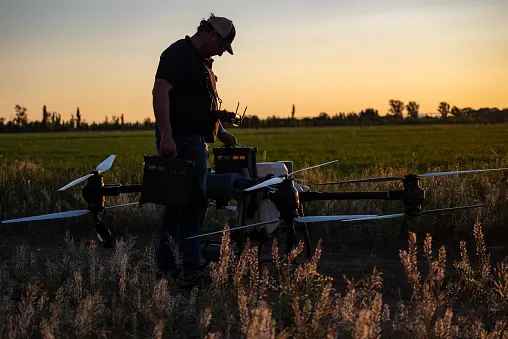
The government says it is freeing up farmers to use drones more but critics say it increases the chance that a machine could veer off and kill someone.
The move announced on Thursday aims to scrap requirements for lower-risk routine drone operations, such as for pest and fertiliser spraying, to wait for certification.
"Farmers have told us about routine spraying operations being held up due to costly and complex regulatory roadblocks," Associate Transport Minister James Meager said in a statement.
Rules on drones under 25kg had already been loosened and this would extend that to heavier ones, like in Australia where 150kg machines operated under "simple" licensing.
Only a notification to the Civil Aviation Authority ahead of time will be needed from mid-2027.
Critical public safety and environmental protections would remain, Meager said.
But the Aviation Industry Association says this lowers the bar before licensing or other safeguards are in place.
"Agricultural spray drones are the size of a dining room table, can travel at more than 70kmh and will almost certainly weigh more than 100 kilograms when operating. What happens if a farmer operating one of these has a flyaway or system failure?" its vice president Dr Isaac Henderson asked.
Poor operators could spread harmful spray drift around, he added.
Simon Wallace of the Aviation Industry Association said they had been working with government for months on careful rule changes.
"This is not a low-risk activity that lends itself to hasty reform," Wallace said.
Regulation Minister David Seymour said his ministry investigated after hearing red-tape was hindering farmers, then made recommendations to the government and worked alongside Meager's civil aviation reform.
Drone consultancy Fenix UAS, which does training, said for anyone to use a drone without proper training endangered the public and environment.
"An out-of-control drone can fly sideways into traffic on a road or even take out an aircraft. Fatalities have occurred in other countries," its director Dr Andrew Shelley said.
This does not appear common judged by overseas media reporting. A farm-spray drone reportedly hit a motorcyclist in the head, killing them, in China last year, while a farmer was reportedly seriously injured using one in Korea. "Agricultural drones have long, sharp blades that can be as dangerous as knives when engaged," a fire department official was quoted by the Korea Herald.
He called for pilot licences after a week's training for basics, then another week for big drones and a third week for spraying chemicals.