PHOTO

Construction giant Calder Stewart is close to signing up the first commercial tenants for its $3 billion solar- and wind-powered inland port.
The port is being developed to boost South Island’s export trade, including agriculture.
The Milburn Quadrant development, just south of Dunedin, is on 200ha of industrial-zoned land neighbouring State Highway 1 and the South Island’s main rail line.
An inland port for exporters, manufacturers and logistics businesses is expected to ease freight bottlenecks at coastal ports and truck pressure on roads.
The privately-funded project is expected to create hundreds of jobs.
Milburn Quadrant will dovetail into Calder Stewart’s $2.5b Awarua Quadrant in Invercargill and $3b-plus Hornby Quadrant in Christchurch to help expand the South Island’s food, manufacturing and construction supply chain infrastructure.
The family-owned company announced recently more than $500m is being invested in a fourth stage at Hornby.
Calder Stewart property director Ben Stewart said Milburn Quadrant was ready to go and the company was in talks with potential businesses.
"We bought the land years ago and took it through a private plan change and it’s shovel-ready, zoned industrial. We are engaged with several occupiers at the moment."
He said the site’s location next to the highway and railway line appealed to businesses.
The plan was to create an energy precinct at Milburn, combining solar power with wind generation, after the company had filed for resource consent for a wind farm at Awarua, near Invercargill.
"We want to do this at Milburn as well to attract heavy power users and we are looking at how to provide generation on site."
Calder Stewart owned forestry land in the surrounding hills and initial readings from a wind mast were positive for building turbines to supply wind energy to Milburn, he said.
New buildings would include rooftop solar generation, generating up to 50MW of power for site or local community use. Wind generation was expected to provide several hundred megawatts.
The plan is to develop sites for businesses on long-term leases or as owner-occupiers.
Mr Stewart said Calder Stewart wanted to put in initial infrastructure, but keep options open so it could be fitted around the needs of occupiers without losing "blank canvas" opportunities.
Walking trails and bridges are in place with the locations of major structures such as railway sidings and roading still to be confirmed.
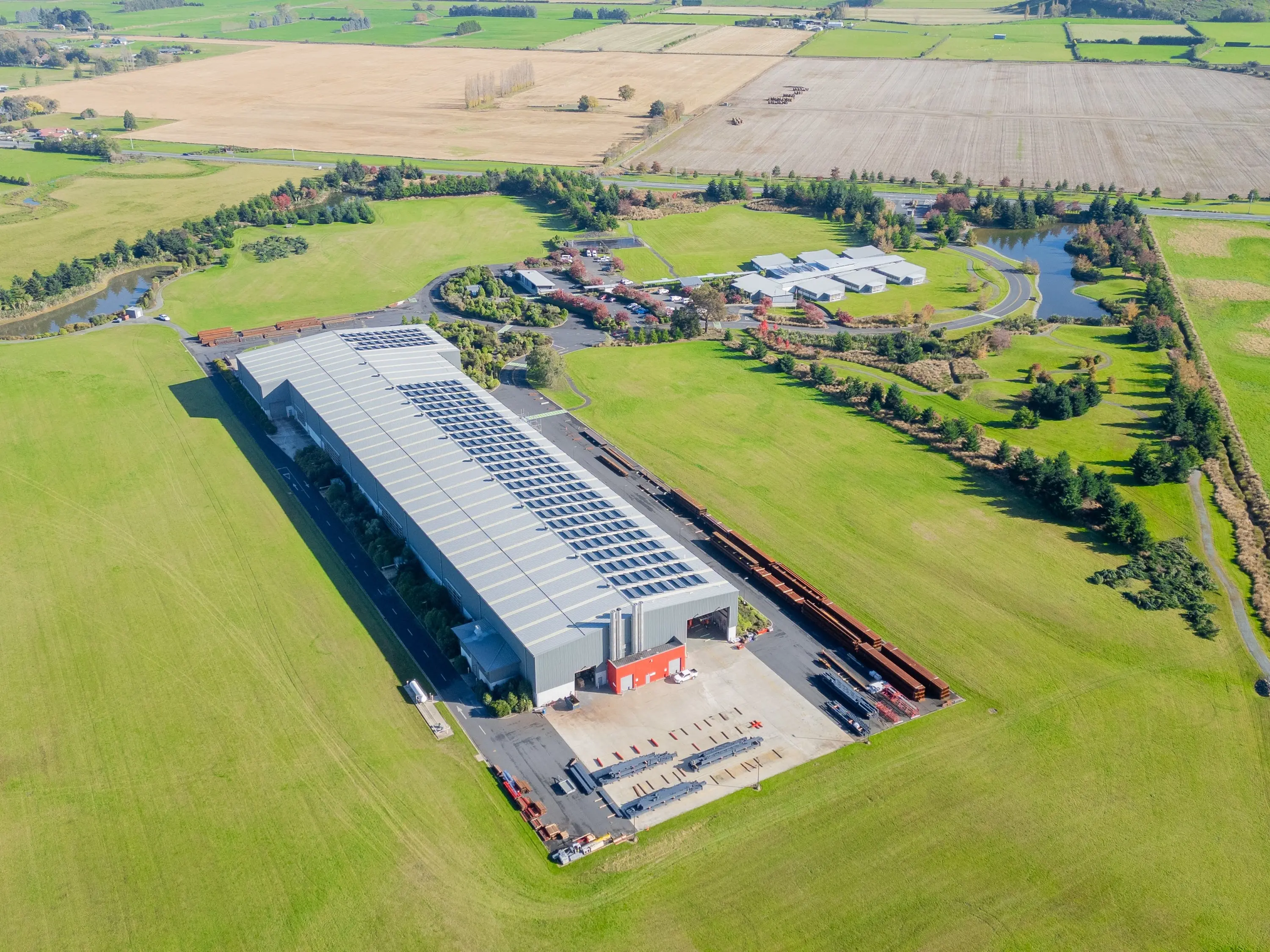
A head office campus and large steel fabrication facility across the road at Revolution Hills, near Milton, is completed.
As a finished venture, Milburn was expected to remove 10,000 heavy truck trips off the road each year by shifting freight to rail.
Mr Stewart said the site would help primary, agricultural and other exporters by creating more capacity and freeing freight logistics at ports.
The Milburn and Awarua Quadrants were only 100km apart and occupiers could get goods to either of them to free up more port options, he said.
"We are framing Milburn as an inland port or like an intermodal freight hub ... goods can go anywhere from there, whether it’s rail or trucking."
Awarua was on 500ha of land zoned heavy industrial which would take time to build and the family was happy to play the long game for both sites to get the right occupiers.
"We have been in business for 71 years, so we are a long-term intergenerational business and this is not a five-year play for us. It’s taken a long time to rezone the land and get it to the point where we are happy to bring it to the market."
He said "patient" family capital was being invested in the projects by the three-generation business after land was secured.
The three multibillion-dollar valuations are based on their expected completed value.
The company is the nation’s largest industrial landowner and developer and over the past three years has developed more than 750,000sq m of industrial buildings.