
PHOTO
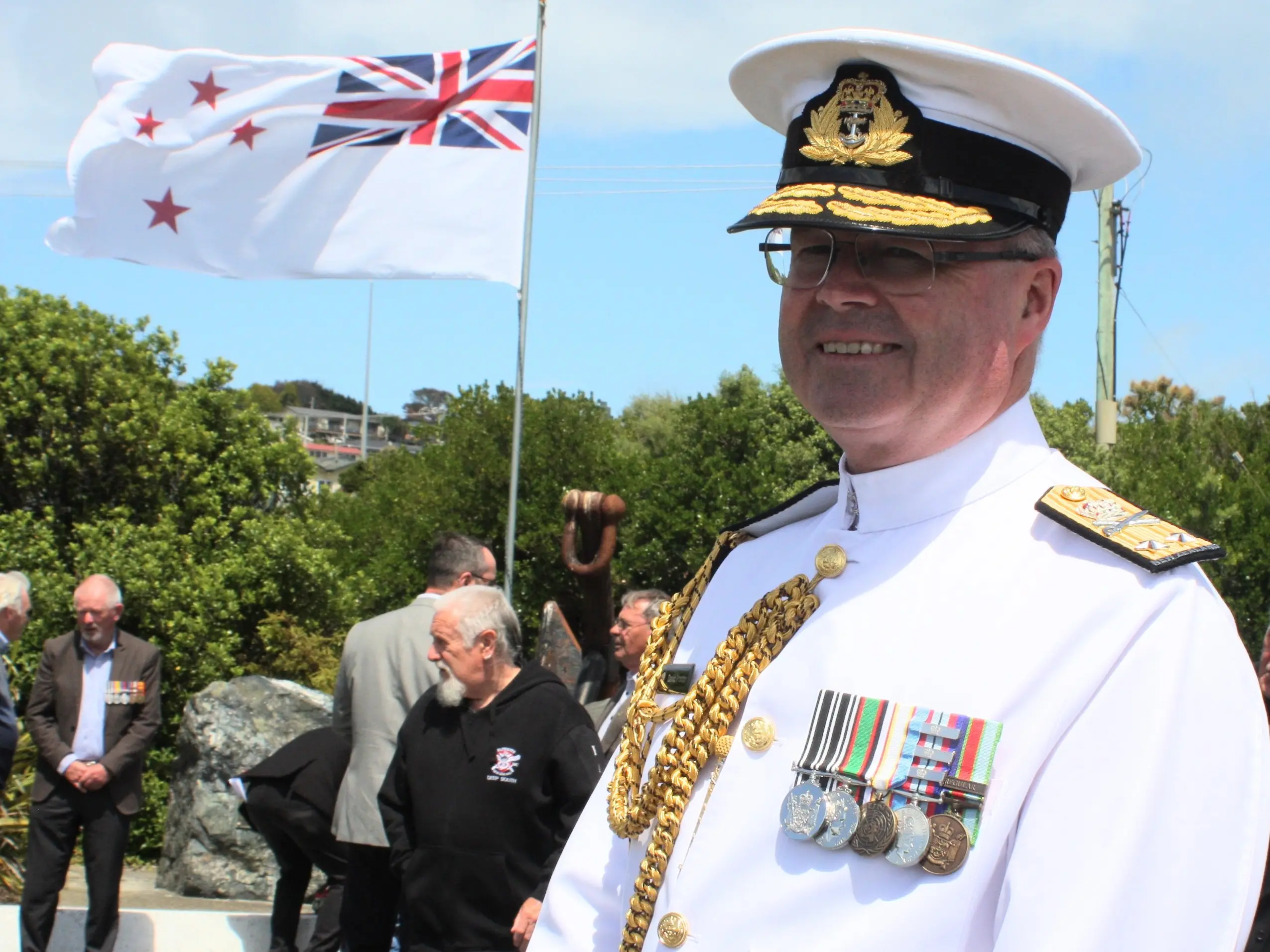
A week before Christmas 1941, 763 men on the Royal Navy cruiser HMS Neptune lost their lives off the coast of Libya — 150 were New Zealand sailors.
Chief of the Royal New Zealand Navy, Rear Admiral David Proctor, along with present and past navy staff and members of the public gathered at Bluff on Sunday morning to remember New Zealand’s worst naval tragedy.
At the time of the tragedy, the New Zealand Navy was just over 2 months old.
While service members trained for war, they hoped and prayed for peace, he said.
"This was a massive hit and a big tragedy for a young service. A huge hit for 150 Kiwis dying in the middle of what was a long war."
R-adm Proctor said some remembrance services deeply affected his emotions.
"War is horrible. What I know, in those dark hours those sailors would not have gone easily.
"They would’ve been fighting hard, probably not for what the nations were at war for, but fighting really hard for their shipmates — trying to keep their shipmate alive."
While he reflected on the tragedy, he said, "I am a whole lot proud of those servicepeople who went before me... and proud to be in this navy and have an opportunity to reflect on their service and their sacrifice."
Looking out for each other was the "cool" part of human nature and war was the frail part, he said.
The Neptune sank after it sailed into an Italian minefield — taking 748 crew with it.
Initially 16 crew survived the sinking on a Carley Float, but died in the five days following.
On Christmas Eve, sole survivor, 20 year-old Able Seaman Norman Walton, who had spent three days in the water and two on a raft, was picked up by the Italian Navy. He spent the following 15 months in an Italian prisoner of war camp before being repatriated to England.
Neptune had been deployed to serve in Force K — a cruiser fleet made up of HMS Aurora, Leander, Kandahar, Lance, Lively and Havock to protect the HMS Breconshire on its passage through the Mediterranean to Malta.
At about 1am on December 19, 1941, 30km from Tripoli, the ships, with the Neptune leading, sailed into an uncharted deep-water minefield.
The Neptune triggered a mine and exploded two more while reversing out of the field.
The ship’s anti-mine screen prevented damage from the first blast while the second struck the bow’s hull and the third blew off the propellers leaving the ship dead in the water.
Several rescue attempts were made by the escorting ship over the following three hours. But the Penelope and Aurora had also triggered mines.
Contact with a fourth mine delivered the Neptune’s fatal blow, causing it to capsize and sink within minutes.
During his address to the crowd, Colin Quay said "the Neptune would ever be the unseen memorial to all those seamen who gave their lives in service for the freedom of humanity in past and present conflicts".
Invercargill resident Ivan MacIntosh attended the service to honour his uncle, and namesake, who died in the maritime tragedy.
Both his father and uncle served during World War 2. His father learned the news of his brother’s death while spending several years in a Japanese prisoner of war camp.
Mr Walton came to New Zealand in 1991, to unveil a memorial in Nelson to honour his fallen ship-mates. He died aged 84 in 2005.
By Toni McDonald