
PHOTO
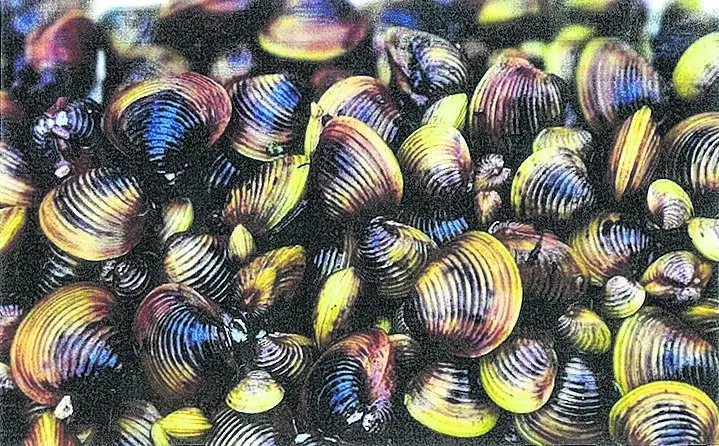
The gold clam, a southeast Asian freshwater mollusc bivalve shell, has been found in the Waikato River and elsewhere nearby.
It could spread beyond this and now poses a huge threat to New Zealand: it could destroy freshwater ecosystems throughout the country and negatively affect our freshwater including drinking supplies.
The gold clam, Corbicula fluminea, is a hermaphrodite and can self-fertilise, helping it to multiply extraordinarily rapidly.

It was first found in Lake Karapiro in May 2023, this lake being a reservoir lake on the Waikato River.
The clams deplete essential minerals like calcium from the water, weakening the removal of arsenic and forecasting a rapid acceleration with widespread associated damage inevitable.
The gold clam is spread by human equipment harbouring its individuals, by birds and by floods.
Gold clams could be imported in small boats. The juvenile clams produce a sticky mucus to attach themselves to boats and gear.
Gold clams were recently found in Lake Rotomanu, New Plymouth, forcing authorities to drain the entire lake out to sea.
The gold clam represents an immense threat to infrastructure, economy and recreational use of waterways.
The implications of the gold clam are described in the paper "Habitat suitability of Aotearoa New Zealand for the recently introduced gold clam Corbicula fluminea", by Rose Sommerville, Calum Mac Neil, and Finnbar Lee.