
PHOTO

By Raphael Franks
Rocket was bred to race, but the seven-year-old standardbred was destined for a different life.
The unraced mare, a relation of New Zealand Cup champion Mainland Banner, has found her happy place at Christchurch Riding for the Disabled (CRDA) in Wigram.
Rocket Banner, now known as Kit, boasts a distinguished pedigree. She is by Art Major, whom Australian breeder Alabar Farm describes as “one of the greatest stallions in the world today”.
Her journey into charitable work began after trainer Mark Davies struck up a conversation with CRDA volunteer and former trainer Frank Shrives at a pub in West Melton.
Shrives arranged for Rocket to have a trial at CRDA.
Shrives died in May, aged 76, “but he was thrilled to see this young horse start to succeed here and enjoyed working with her”, CRDA president Philippa Parker said.
“His conversation, enthusiasm and power of persuasion resulted in the very generous gift of Kit to Christchurch Riding for the Disabled.”
Parker paid tribute to Shrives.
“It has been said that Frank had a skill in making everyone think they were his favourite – and that holds true for all of us.
“We know Frank enjoyed and valued the time he spent with us; we hope he knew we valued him too. We will miss him.”
Rocket was sent to Chanelle Dickie, a well-known figure in the harness racing industry for her work educating and rehoming standardbreds, where she was retrained under saddle.
She was renamed Kit, “purely for rider appeal and confidence, so they didn’t think their horse was about to blast off”.
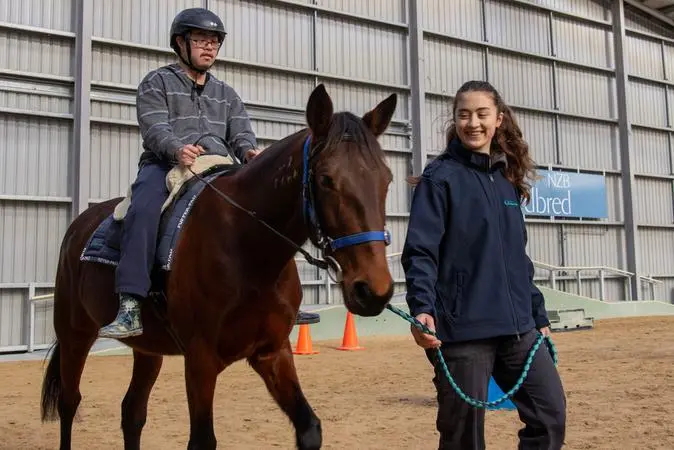
Horses at CRDA need to be calm and dependable, Parker said.
“Sometimes you’ll have, for instance, a rider with ADHD or Down syndrome. You might need two people working with that horse, so one side walker and one who’s leading. And a horse has got to be very respectful and very responsive to the leader.”
Kit must also stand patiently while riders complete activities, such as hitting a ball off a cone with a baton or threading ribbons through hoops.
“You’ve got to allow that rider to do whatever it is they need to do. Sometimes that can take two or three goes for that rider to do it,” Parker said.
Some of them can’t do things quickly, so the horse has got to be able to just stand there patiently and wait.”
Kit has now completed two full terms at CRDA and takes part in the education and sport and recreation programmes.
“She has an active walk, a gentle nature, relaxed trot and patience and understanding towards the rider,” Parker said.
“Kit has become a favourite.”