
PHOTO
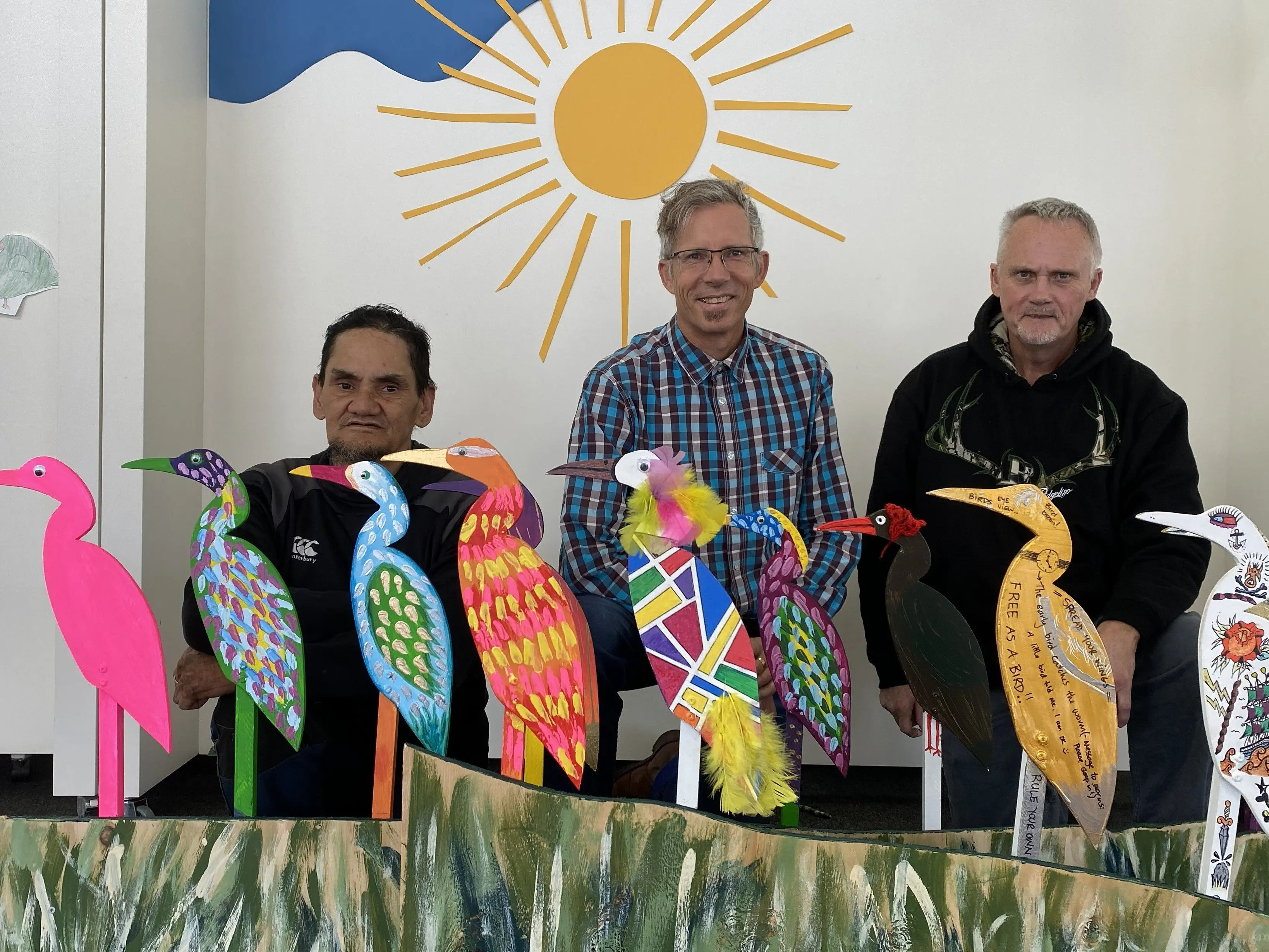
Dunedin’s Artsenta creative space is marking its 40th anniversary in style, by ‘‘releasing’’ 40 brightly-coloured bird sculptures into the community in a celebration of creativity and wellbeing.
Artsenta director Paul McLellan-Smith said the artists had pulled out all the stops to create 40 small sculptures for the Dunedin Fringe Festival exhibition ‘‘40 Ways of Seeing Wellbeing’’.
‘‘A vibrant flock of sculptures has been created by our artists,’’ Mr McLellan-Smith said.
‘‘And now we are sending them out into the community to create a network of wellbeing around Dunedin.’’
Last week, a group of Artsenta representatives visited PeaSea Art gallery in Port Chalmers, run by artist/musician Robert Scott, to present bird sculptures.
Mr McLellan-Smith said it was important to celebrate the 40th anniversary of Artsenta, as one of the longest running creative wellbeing spaces in the country.
‘‘But we also want to highlight that we’re only one of many services and spaces that support our community and the more links we can make between them the better.’’
Among the artists who have benefited greatly from being long-term members of the Artsenta community and are active contributors to the organisation, are Vincent Clayton and Greg McLeod.
Mr McLeod, who has been involved with the organisation for its entire 40 year history — dating back to its earliest days at Cherry Farm — said Artsenta’s programmes were vital for the wellbeing of many people in Dunedin.
‘‘It has always been a place to belong — the work you do helps to enhance you as a person and takes your mind off things if you are struggling in your life,’’ he said.
‘‘Being at Artsenta is a safe place, you can feel comfortable being yourself and make friends in a supportive atmosphere.’’
Mr McLeod met his wife Bridget at Artsenta and the couple were together for 18 years before she died.
As an artist, he has turned his hand to many creative pursuits and is a dab hand with a crochet hook, creating pet blankets, throws, bedspreads, cushion covers and other items for friends.
Mr McLeod also liked to help keep the Artsenta gardens tidy and made delicious baking for his fellow artists.
Lately he had been making mosaics from tiles and was enjoying learning the new technique.
‘‘It’s great to be able to try so many new types of creativity and to have the equipment on hand at Artsenta to give it a go,’’ Mr McLeod said.
Mr Clayton has been with Artsenta for more than 10 years and is a member of the Artist’s Voice committee.
His current focus is on working with rocks found for him by friends and working in a multistep process to paint permanent intricate designs on them, often depicting images of Māori deities and legends.
For Mr Clayton, Artsenta was a place of learning and sharing in what the artists were achieving.
‘‘You can follow your passion every day and create whatever is in your mind,’’ he said.
Along with being a place for creative pursuits, Mr Clayton also appreciated how Artsenta had the resources to support members in their lives outside in the community.
‘‘If you treat Artsenta with respect, you will go a long way,’’ he said.
Both Mr Clayton and Mr McLeod said it was the people that made Artsenta such a special place.
‘‘There are no barriers between staff and artists, we are all people here, being creative to support our wellbeing.’’
History
Artsenta began as the Creative Expression Unit at Cherry Farm Mental Hospital in 1986, a visionary initiative instigated by then superintendent, Julia Aranui-Faed.
From the beginning it was set up to be an independent entity that would be able to continue once Cherry Farm was closed down in 1992.
Since then, Artsenta has operated as a non-profit charitable trust in five different locations in Dunedin and touched the lives of thousands of people.
Mr McLellan-Smith said the longevity of Artsenta was due to the many artists, staff and trustees who had contributed to it over the years, as well as the ongoing support of core funders Health New Zealand Te Whatu Ora and the Ministry of Social Development.
An exhibition exploring the history of Artsenta and its impact on the lives of those who attend is to be held later this year at Tūhura Otago Museum.