
PHOTO
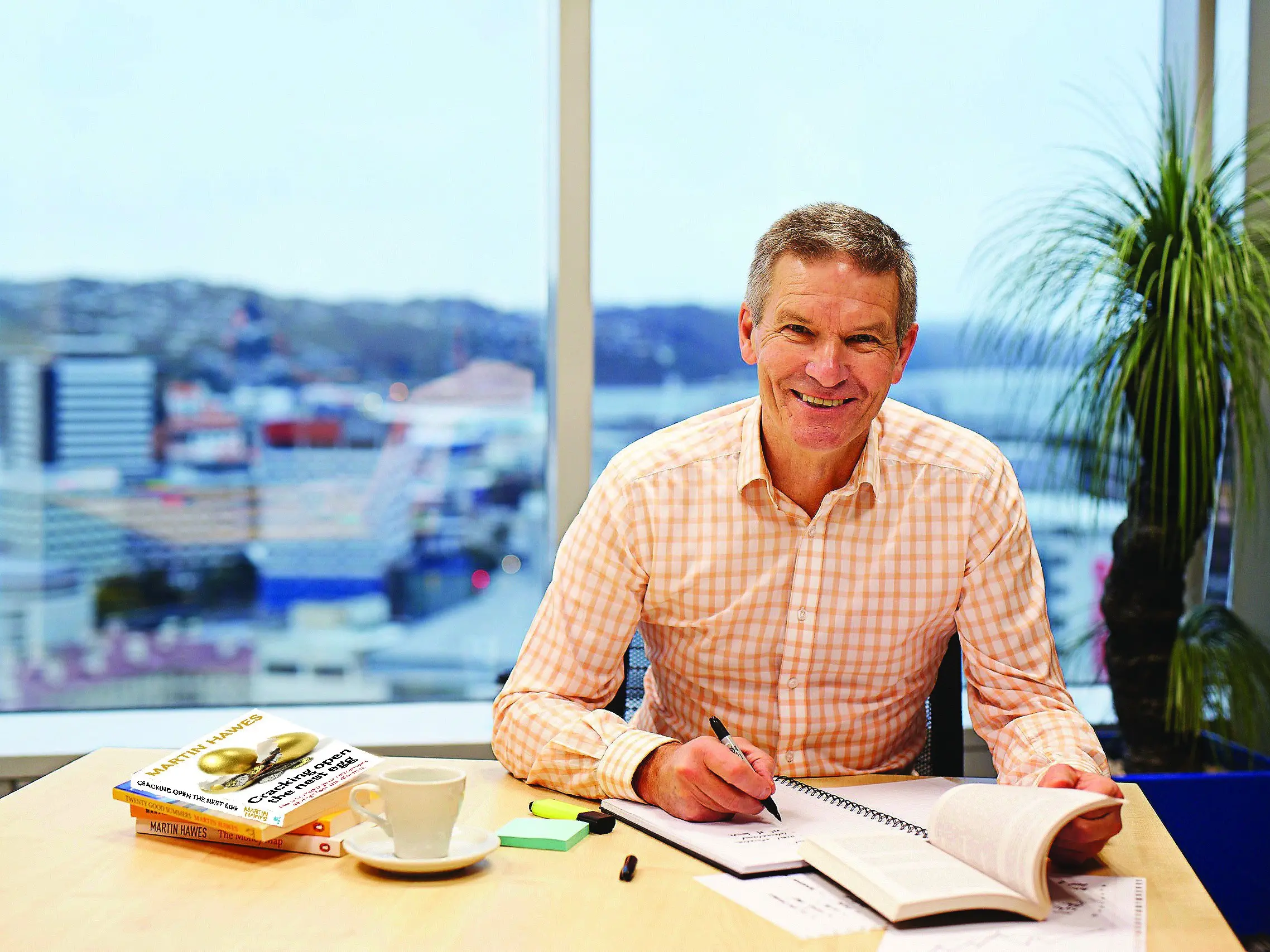
Retirement — it is a word that, if Martin Hawes had his way, would not exist.
The well-known financial adviser, author, speaker and media commentator saw connotations of withdrawal; of sitting in a rocking chair hoping the grandchildren would visit.
"I don’t like the word retirement ... I wish I could come up with a better term. I encourage people to think about it as a lifestyle change and not necessarily stopping everything," he said.
And should the uber-active Mr Hawes, who is in his late 60s, choose to ever move into a retirement village, he would be looking for one with a rock climbing wall, rather than a rocking chair.
An expert on personal finance, he was a financial adviser for 20 years. He now called himself a financial writer, rather than an adviser; he still had his licence to give advice but was no longer doing that.
This month, he is launching his 23rd book on personal finance, entitled Cracking Open The Nest Egg, which is all about making retirement savings last the distance.
It was his first book for nine years and he decided it needed to be written as retirement was "such a problem" for people, he said.
"I have seen many clients struggle with retirement and, especially, investing and how much to draw down. There’s a real fear of the money running out."
Working out how to achieve a regular retirement income was much more difficult than it used to be. Historically low interest rates plus longer life expectancy meant the old method of parking a nest egg in a savings account and living off the interest was no longer an option.
"This is all the money you are ever going to have — you have to use it well because, if you mess it up, you are not going to go back and spend another 40 years to hatch another," he said.
He believed setting yourself up to "decumulate" — to take a lump sum and turn that into a steady income — was the hardest thing to do in finance.
There was the tension between living a good lifestyle, against the money "not running out before you do".
It was a very difficult developmental stage for people at a time of life when there were a lot of things going on; there was a change in status, for some, like farmers, they were no longer a farmer and were shifting to a new home with new neighbours and they might have to develop new friends and networks.
There was also the possible need to change a 40-year habit of managing money and most got that wrong — not in that the money ran out before they did, but they did not spend enough, too scared it would run out.
That meant they were leaving lifestyle, rather than money, on the table during a period that should be the time of their life.
People tended to hoard money in the early stages of retirement, rather than spending a bit more freely. He encouraged people to spend well in those early years because, even though they might not be able to imagine it, they would slow down.
"You won’t travel, you won’t spend as much on clothing, cars, food, going out. There will be a gradual reduction in your expenditure," he said.
Mr Hawes viewed retirement in three stages — the early stage was all go, the mid stage was slow go and the late stage was no go.
A keen adventurer himself, he was still mountaineering, swimming in the ocean and rock climbing with people his age and older.
"I can’t imagine retirement, going for a trot along the flat instead of striding up a hill," he said. But whether his knees gave out, or whether it came on gradually, he acknowledged that it would come.
Life expectancy was a lot longer these days which meant the money had to last longer. There was a fear of having to "live off reused teabags and wine biscuits" in people’s final years — but he had never seen that happen because people adjusted their lifestyle, he said.
Many people never sat back and imagined the actuality of retirement; of what it was going to feel like when they went from running a business to retiring. Increasingly, retired folk were going back to work, becoming "recidivist retirees".
People needed to have something to move towards; an image of what retirement might look like for them, he said.
When it came to the impact of Covid-19, Mr Hawes said it was difficult to tease out what was KiwiSaver and what was Covid — but there had certainly been an increase in financial capability, and people were looking at a diversified portfolio.
People had spent a lot of time at home over the past couple of years and they had more time to look at their money and look after it. Financial capability was certainly improving for his generation facing 25 years of retirement.
Probably one-third of people aged 65-69 were still working, including Mr Hawes and many of his friends. But very few of his friends of his own age were manual workers and they could continue to work. But there was a group of people that "simply won’t be able to do that".
The political scene, economy and national events could throw up all sorts of things and people needed to have "a little bit in lots of different things".
"We don’t know what’s ahead of us. You’ve got to have a wee bit of everything and not rely on a singular asset class," he said.
For those able to afford it, Mr Hawes suggested getting professional advice. But for those who did not have enough money for that, he suggested they invest time in reading articles, attending seminars and listening to the likes of podcasts. There was a "lot of data out there" to help ensure a good retirement.
Asked when people should start thinking about retirement, Mr Hawes said 20-something-year-olds should be thinking about their future, although not necessarily retirement, and should be contributing to KiwiSaver as an "absolute minimum" and starting to build up wealth.
Young people were living in the present but it was the future where they were going to live their life, he said.