
PHOTO
The prime minister says the government would look at accommodation levies next term if re-elected.
Tourism leaders have been calling for political parties to back a nationwide accommodation levy ahead of this year's election.
Regional Tourism New Zealand made the pitch in a bid to create more sustainable funding, saying the costs often fell back on ratepayers because much of the infrastructure - paths, toilets and carparks, and other systems visitors put additional pressure on, including wastewater and transport - were increasingly funded by councils.
The proposed levy would be applied across all accommodation types as a user charge, but it would target shorter stays so it did not hit worker and longer-term temporary accommodation in communities.
National has repeatedly ruled out implementing an accommodation levy, also nicknamed a bed tax, in its first term.
On Tuesday, Prime Minister Christopher Luxon reiterated that point.
"We're not looking at it this term. We are undertaking work to look at it this term. There's a number of complications. It's a conversation that's been around since 2017. We'll continue to build out, if we progress with a policy we'll make sure we're consulting with everybody in doing so."
The government's city deal with Auckland contains a commitment to consider a bed tax, but not until next year at the earliest.
Regional Tourism NZ, representing 31 regional tourism organisations, was also pushing for a national register for short-term rental accommodation to be set up so they also contributed.
Chair Andrew Wilson said it would mean visitors contributed directly to the communities they enjoy.
"At the moment, we've obviously got a lot of burden placed on residents and ratepayers having to fund this type of infrastructure and these assets.
"What we're really looking to do is make sure the visitors contribute to that in a modest and fair way."
The funds would be governed independently, reported in long-term plans and returned to the region they were collected in to link visitor demand with investment.
"An accommodation levy gives us the tools to invest in the places visitors come to experience - the infrastructure, the events, the amenities that make New Zealand destinations world-class," he said.
"This is about enabling communities to grow tourism well and giving the industry a sustainable foundation to build on."
Without more sustainable funding, Wilson said the quality of visitor experiences would be degraded.
The funds raised by a levy must not replace existing council investment, but add to it, he said.
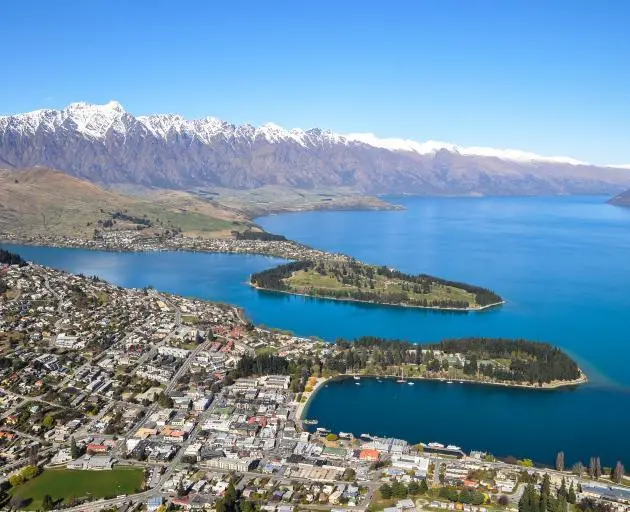
A similar levy had been broached by different regions before - Queenstown Lakes residents voted for a bed tax in 2019 before the pandemic hit, while Auckland received a promise to consider a bed tax during its city deal signing earlier this year.
"We want to avoid a situation where there's a whole variety of different arrangements and some kind of patchwork arrangement across the country," Wilson said.
"If we're going to head down this path, we want to make sure that we've done it once and done it at a national level."
The organisation suggested Inland Revenue would be the most efficient way of collecting the levy using its existing GST infrastructure.
Rotorua Mayor Tania Tapsell told Morning Report she was in support of an accommodation levy, saying it was not a tax on residents or ratepayers but a user charge that enabled fair reinvestment.
"We want to make sure that one of our biggest industries, one of the biggest employers in jobs, is actually supported. And to do that this is new revenue that could come in and be reinvested," she said.
Tapsell said mayors in New Zealand's major tourism destinations had been clear to the government that it was time to implement the levy.
"What we're asking for is a commitment from all major parties, not just the current minister, all major parties to introduce nationally-specific accommodation levy legislation."
But Labour's local government spokesperson Tangi Utikere would not make a commitment.
"The sector itself and local government is going through massive reform. What I've asked for the government to do is to give councils more time to be working on their reform package, so they can talk about a whole range of different things about what the future might look like."
This story was first published on rnz.co.nz |  |