

PHOTO
One of the strongest El Niño events on record is expected over summer, putting emergency services, councils and farmers on alert for a hotter, drier season. Raphael Franks reports.
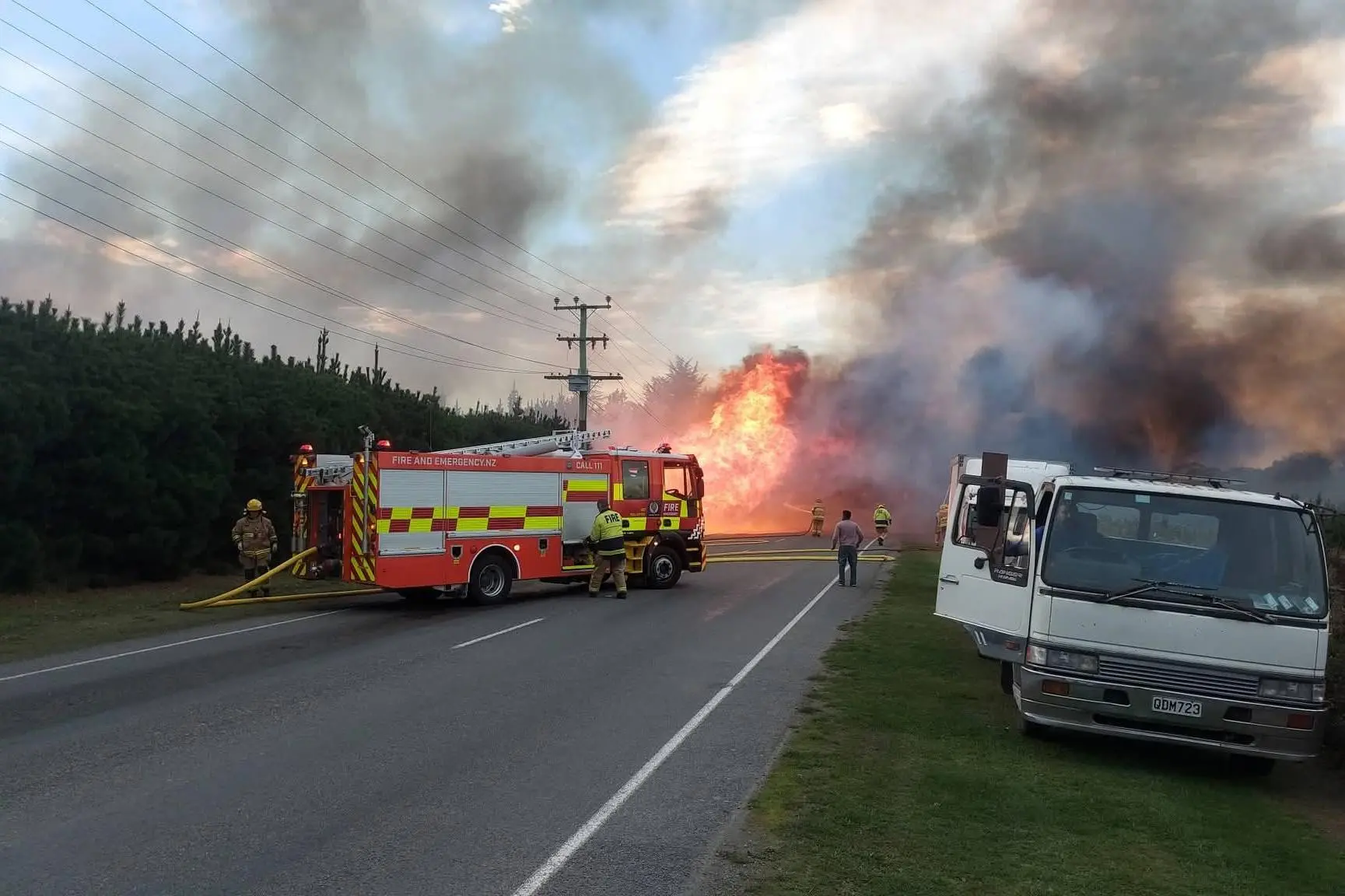
El Niño will bring more severe dry and windy conditions to Canterbury, heightening drought and wildfire concerns across the region.
Fire and Emergency NZ may declare a restricted fire season earlier than usual to manage the risks, and is currently making sure staff and volunteers are well-trained to respond, and that people are aware of advice and rules for lighting fires and doing controlled burn-offs.
Farmers are facing the potential of lower yields due to less grass growth, and are planning how to prioritise and manage their stock in terms of feeding, as well as considering the best crops to plant if drought conditions arise.
The city council was briefed on August 18 by its civil defence and emergency management lead Brenden Winder on risks of drought, wildfires, and health impacts of extreme heat.
There is a significant public health hazard of increased illness, mortality, and demand on health services in extreme heat, the city council was told.
Weather ‘whiplash’ is also possible, the city council heard, where droughts are followed by intense rainfall and flooding, or a heatwave followed by a cold snap.
Fire and Emergency’s Te Ihu assistant district commander Kevin McCombe said El Niño’s combination of strong winds and heat could lead to “extreme fire behaviour”.
“While we can’t predict exactly how many fires Canterbury will see, El Niño can increase our fire risk greatly.”

McCombe said 98% of wildfires in New Zealand were caused by people, so FENZ wanted people to understand how to use fire safely.
“The message is simple: Know the conditions, know the restrictions if there are any, and take responsibility for preventing fires.
“Always check out the Check It’s All Right website for safety advice. Clear dead and dry vegetation around houses and buildings. For our rural counterparts, ensure your accessways are actually suitable for our vehicles – we need to make sure that we’ve got good clearance above so we can actually get vehicles down driveways.
“We also want to make sure that any water supplies or tanks or ponds they have on their property are accessible to us.”
FENZ was in regular discussions with other agencies to manage “emerging risks,” he said.
“Our planning is around being able to scale response when conditions demand it.
“We understand our resources and our people. We understand our equipment and our ability to bring in additional support from our local resources as we become stretched.”
FENZ district community risk manager Dean Harker said resources had already been stretched by fires in Rolleston and Gebbies Valley in June, along with five other simultaneous blazes in North Canterbury.
At the time, FENZ said Canterbury was already “extremely dry for this time of year”.
“We had a lot of fires in one day, but probably 99% of those fires were avoidable,” Harker said, stressing the importance of prevention.
“We’re working with other agencies like the councils and civil defence to do some community meetings to encourage preparedness and readiness to make sure people are looking after their own properties.”
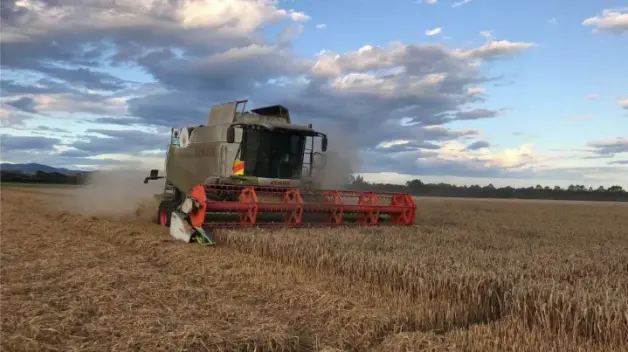
Harker and McCombe both said farmers needed to manage controlled burn-offs.
“If you light a fire, you remain responsible for it,” McCombe said.
“Changing wind conditions can turn a controlled burn into, as we’ve seen, uncontrolled fire very quickly. So they need to, if they’re planning, check the conditions and any restrictions that may be in place, never leave a fire unattended and make absolutely certain that it’s completely out.”
El Niño’s drought conditions could result in lower volume, and lower quality, yields for farmers, and less revenue. Milk production and animal stock weights could be lower due to less stock feed availability.
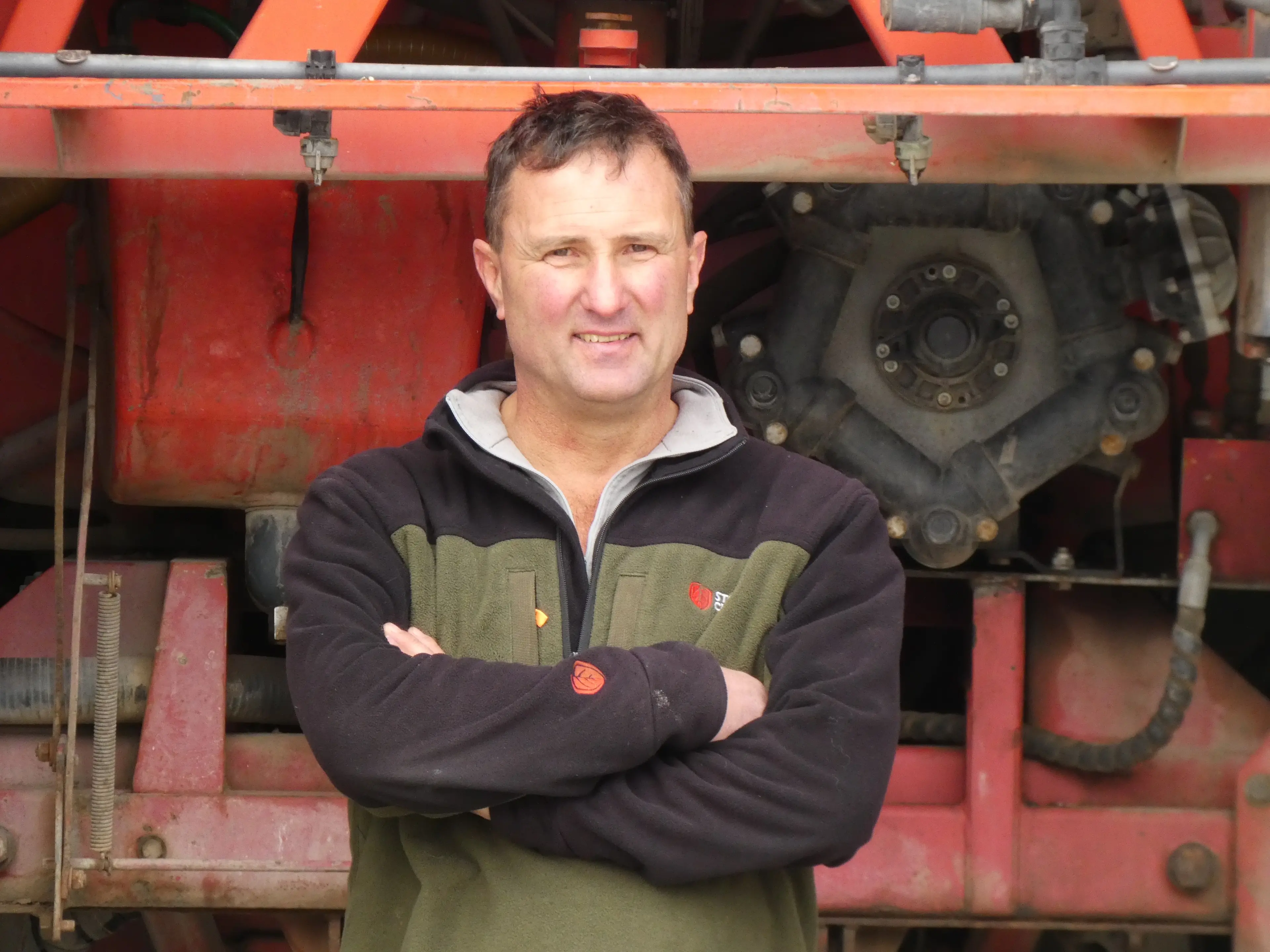
Federated Farmers arable chair David Birkett, who has a 200-hectare farm in Leeston, says he needs to consider how to spread out demand for water ahead of planting in spring.
“Early planting is certainly one of the tools or levers we can pull. If you plant really early, like now, you can utilise the water that’s already in the ground, and we’ve actually got good moisture at the moment.”
Without enough water, Birkett says, higher-value crops like vegetable seeds will have to be prioritised over lower-value crops like wheat.
“We’ll get to a point where crops will start to get behind. And once you get behind, then you have to make a decision. We’ll get to a point where we’ll have to sacrifice some of the crops. Generally, they will probably be the grain crops.
“On average, you’d probably see something like a 20% to 25% reduction in yield.”
Birkett said the biggest potential impact will be a shortage of feed for animals.
“The dairy industry takes a lot of feed from Canterbury now. The biggest fear is that supplement feeds, things like hay and baleage, the lack of those, would probably be the biggest concern.”
Consumer food prices could nudge up, but will be less impacted as most of New Zealand’s wheat for food comes from Australia, Birkett said.
“I think there will be (an increase), but it probably won’t be as big as it used to be. We’re so free trade now they just bring the stuff in.”
Federated Farmers’ Kerry Harmer said dairy or sheep and beef farmers could face a crunch with the availability of stock feed.
“If the grass growth slows down because it’s too hot and too dry, which is what we’re likely to get in Canterbury – and even the guys with irrigation will end up on water restrictions – then you’ve got to feed stock with something else,” Harmer said.
“What farmers normally do is use surplus or extra grass growth in the late spring and early summer and bale that up, make silage out of it and store it to feed out at the times when you haven’t got much grass growth.”
Harmer said most farms were in a good position to manage the impacts in the short term.
“They’ve had a good season. We’ve got good feed ahead of us because we had a good summer last summer. And financially, red meat prices, wool prices, and milk prices have been good.
“So everybody’s actually sitting in a reasonably good position, but they’re all very aware that the next couple of years are likely to be quite different.
“If it is as bad as they say and we are walking into a two-year drought-type situation, that will have a massive impact on the economy in general.”
El Niño explained
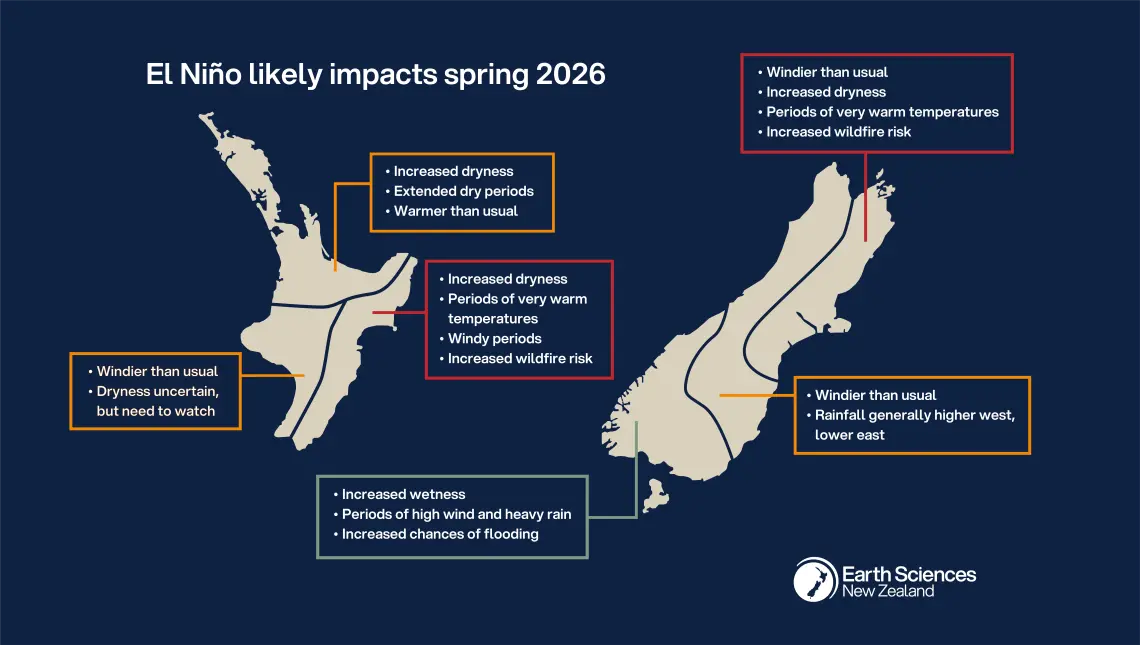
El Niño is a natural global climate phenomenon and part of the El Niño-Southern Oscillation cycle, which occurs every few years. It brings warmer, drier conditions to eastern parts of New Zealand and wetter conditions to the west. El Niño was officially declared at the start of July.
El Niño begins when ocean temperatures off the coast of South America and in the central Pacific rise above average, Earth Sciences New Zealand meteorologist Chester Lampkin said.
“What happens is the trade winds, which usually blow from east to west, they slow down. They may even reverse at times. We’re seeing that now, where the winds become a little more westerly across the equatorial Pacific,” he said.
“And when the winds slow down and start moving from west to east, it starts to push warm water that is originating from the area of Indonesia, Malaysia, and the Philippines. So that warmer water starts to push eastward. That’s what ends up heating up the eastern part of the Pacific.”
Westerly winds are more common globally during El Niño, leading to more northwesterly and southwesterly winds across Canterbury, Lampkin said.
“It’s a very normal phenomenon,” he said of northwesterly winds, “but that phenomenon will increase during El Niño years that we’re seeing right now.
“Therefore, there’s likely to be more warmth and more dryness.”