

PHOTO
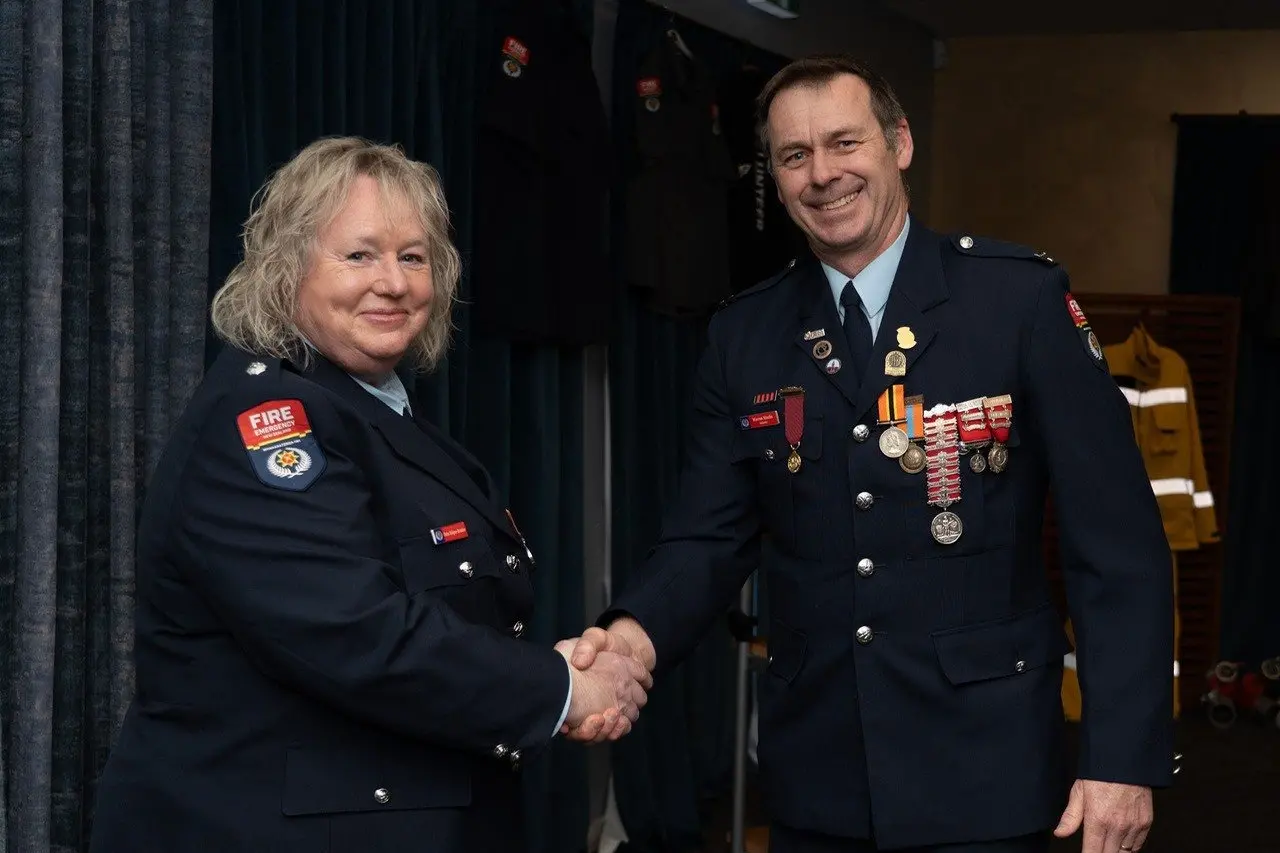
Willowby Volunteer Fire Brigade firefighter Debs Stilgoe-Brooker is the first woman from a Mid and South Canterbury rural service to be presented with a 25-year gold star.
The accolade was presented this month and made her the fourth woman in the urban and rural divisions across Canterbury to reach the milestone.
Looking back, Stilgoe-Brooker said she has a lot to be proud of, and thankful for, as being a firefighter was not done alone.
"Each time the pager goes off, or meals are missed and the interrupted nights mean family and friends are making sacrifices too,” she said.
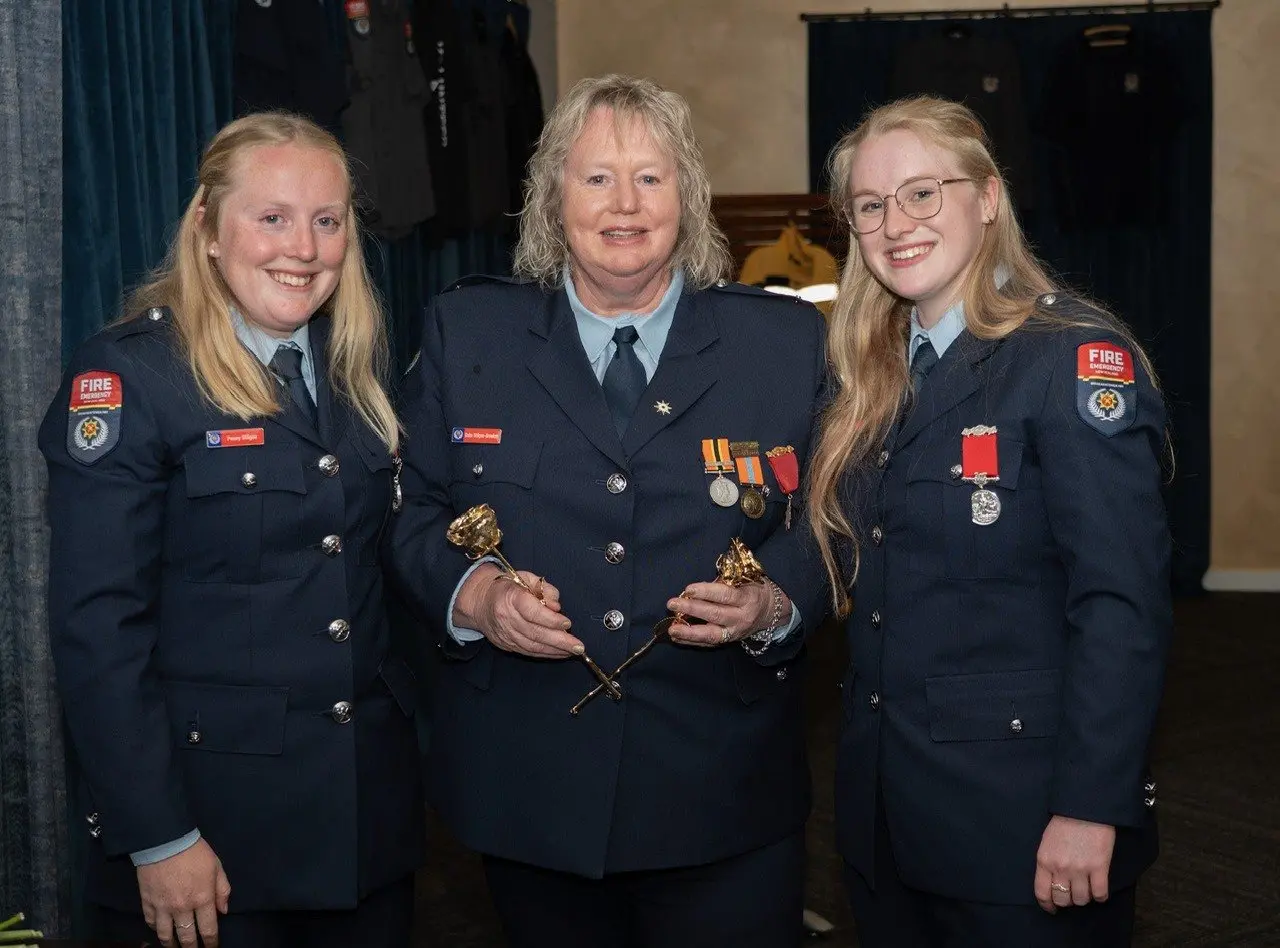
She said her daughters, Penny and Amy, had grown up around callouts.
"In the old days as a solo mum, the girls would run to the little green car and head off to fires with me, watching from the car, while doing their activity packs.”
It set them up for service too. Both daughters have also joined the fire service; Penny at Ashburton, and Amy at Pines Beach.
"It is humbling that they have followed me into emergency service response,” Stilgoe-Brooker said.
"They are what I am most proud of.”
After nearly 27 years with the Willowby brigade, Stilgoe-Brooker has witnessed many improvements for women in the fire service.
In the beginning women were a novelty and some health and safety rules governing women were a bit light.
“I’m pretty sure women today couldn’t be operating pumps three days before giving birth or still fighting fires when six months pregnant with their second child.”
She said the introduction of female uniforms was a welcome change.
It put an end to male hand-me-down overalls that were too big in some places and too small in others.
“Inclusive language has changed over the time for the better too.”
As it stands Stilgoe-Brooker, is yet to get a callout on Christmas day, but she said she has fought fires on her own birthday and those of family members.
“Sometimes. it means that I turn up to fire wearing perfume and makeup which can get the odd sideways look.”
In the beginning, Stilgoe-Brooker said her plan was to serve her community, be part of the crew and do the job that needed doing.
"In 1999, myself, Louisa Russell and another lady stood in Willowby as the siren sounded for longer than usual on one particular day and we said to each other, we could of had the truck out by now.
"Later that year, Louisa and I joined.”
She said being a female rural firefighter did not phase her after being a piggery manager back in the late- 90's.
She couldn’t see how fighting fires could be any “harder or dirtier” than that.
"I knew I could meet the demands made of a person in firefighting,” she said.
Her first call out was to a hay shed that had “spontaneously combusted.”
“We contained the fire as it burnt through, pulling the iron out through the night,”
It was one of a number of fires she remembered, for different reasons.
“Some were terribly tragic and some dare I say it, fun - like research burns.”
Her advice to women thinking about joining FENZ is to “give it a go. To any woman interested, it can be deeply satisfying and there is training to cover everything.”
“There are all kinds of roles within the fire service to met individual skill sets.
"Everyone has something to offer.”
“There are definitely more women in fire these days, though it would be great to see more."