


Theatre, dance, light projections, drawing, music — if it is quirky or innovative, Dunedin Dream Brokerage is probably supporting it.
The brokerage supports art projects by finding homes for them in empty buildings, but it is different from a regular gallery, as it encourages active engagement with the Dunedin community.
"We like to invite projects that are a little bit outside of the box — like it’s not a traditional gallery experience. There’s interactive elements with public programming, or installations or workshops or artwork you can play with, touch, or performances or collaborative works which involve the community — things like that," current broker and artist Jess Covell says.
The organisation came into being in 2015 when the Dunedin City Council (DCC), concerned about empty shops in the central city, directed staff to investigate options.
The work the Urban Dream Brokerage, operated by Letting Space and the Wellington Independent Arts Trust, was doing in Wellington, where empty commercial spaces were used to house art projects, and research into other similar models in Australia and New Zealand were presented to the council.
The timing coincided with the consultation process for the Ara Toi Ōtepoti Strategy and the establishment of a franchise of the Urban Dream Brokerage in Dunedin to "open up vacant retail space for temporary art projects" was included as a specific action in the final Ara Toi strategy.
"The model seemed like a really good fit for Dunedin," dream brokerage te hoe akau (steering committee) member Caroline McCaw says.
Dunedin City Council Ara Toi/creative partnerships team leader Lisa Wilkie says by providing low- or no-cost spaces and helping manage the logistics of installation and exhibition, the brokerage actively supports the practices of artists, many of whom are in the early stages of their creative careers.
"Visiting artists have the opportunity to collaborate with local practitioners, which strengthens creative networks within the city and further afar."
The council has funded the brokerage with $50,000 annually, which supports the part-time broker position and operational costs.
Tamsin Cooper was employed as the first broker to develop relationships with property owners and managers and local artists. The broker was overseen by a steering group and an advisory panel which guides, advises and ultimately approves applications from artists and creatives, ensuring they fit the brokerage’s kaupapa and professional standards.
"Dunedin has a very lively arts and culture scene and it has never been hard to find creative projects that fit our kaupapa. The dream brokerage model has thrived here, and our broker facilitates around 12 projects a year ranging in scale and complexity. We have found the model really flexible," McCaw says.
In the beginning, the initiative continued under the Wellington brokerage but in 2017 the brokerage was dissolved. McCaw says by then the Dunedin brokerage had established its own kaupapa and continued under the new name of Dunedin Dream Brokerage.
"Our local hoe ākau were confident we could do this independently, but needed to find an organisation to umbrella us — provide basic administrative support, a desk and public liability insurance to cover our work."
The Dunedin Chamber of Commerce took that role and the Dunedin Fringe Festival offered the brokerage a desk in its offices. When the chamber transitioned to Business South, the brokerage found a new umbrella organisation in Otago Polytechnic.
Over the past 10 years, as well as supporting emerging and established artists in getting their projects off the ground, it has also managed larger projects such as the "Environment Envoy" (funded by DCC’s Te Ao Turoa) and "Off the Ground" (part of the Covid-19 recovery response).
"These kinds of projects come with targeted funding and allowed artists to develop larger projects often with a broader reach, and more public programmes."
During Covid-19 lockdowns, the brokerage was one of the only arts organisations able to present work, and invited local artists to create printed posters to be shown in their neighbourhood shop windows for other neighbours to encounter on daily lockdown walks.
Another project which grew out of Covid-19 times is the online "Locations of Interest". This is a social media takeover project that sees local artists share their favourite places around Dunedin through multimedia storytelling on brokerage platforms.
The brokerage also assists with promotion of events, connection with media outlets and the services of professional photographer, Justin Spiers, to document the projects.
"So the Dunedin Dream Brokerage isn’t just about finding a space to show work. There is a whole lot of opportunities to develop creative practices that comes with engaging with the brokerage from an artist perspective," Covell says.
McCaw says the brokerage has found people find out about projects in a variety of ways, such as through the media or just by passing by.
"This is one of the things I love about the work we enable — presenting creative work to the people of Dunedin, and our many visitors, in ways that surprise and delight, often unexpectedly."
She has been on the steering panel (one of four members) since the beginning and says given the brokerage has often had no more than a year of funding confirmed, it never considered still being around in 10 years’ time.
"I don’t think we had any grand plans. But that’s the spirit of this mahi, encountering creative practices as they come, and supporting people. I do love the work that we do and the people I work with. There seems to be no shortage of projects in our community waiting to find the space and time that they need to come to life, and that’s encouraging."
Covell took over midyear from departing broker Charlotte Parallel, keen to tackle the job that had helped her as an artist. She has been involved in nine brokerage projects herself.
"I saw first-hand how beneficial it can be for people to work in found spaces and you sort of learn to pick up new skills because there’s things that you kind of have to adapt to or work around."
Her role is essentially one of facilitator, helping the artist develop the project and find a venue, something that can be quite an involved process.
"We sort of help shape a proposal, go through the nitty gritty of it, and then we have an advisory panel — so that’s made up of volunteers, who are all from different facets of the art world. They will look at proposals and agree for it to go through."
Property owners and landlords generally reacted positively when asked about being involved, she says.
"It’s a great way for property owners to show the property in a different light and the artist takes care of the space, giving it a wee spruce-up, a nice little clean. It brings attention to a space, which we think is a big bonus for people, especially when they’re trying to lease."
Some of McCaw’s favourite projects are ones that "literally shine from an empty shop on to the street" such as David Green’s Time and Tide and Trudy Lane’s Sunroom.
"But equally I like the subtle work that people stumble across and get joy from during a lunch hour or while doing errands."
Green, whose first brokerage installation was in 2017, wanted to challenge himself with putting his video installations in urban contexts instead of gallery spaces, so the brokerage provided a way to shift his practice that way. He has gone on to do three more installations: Bruno’s Thin Skin (2021), Singular Plural (2024) and Tide's Return (2025).
"It opened access to spaces shaped by local history and commercial life, which allowed the work to respond to the lived fabric of the city rather than the neutrality of a gallery. It was exactly the catalyst I needed to move into more singular, unpredictable sites with their own particular atmosphere and material character."
He found the process very positive and "refreshingly straightforward", with it consistently feeling responsive and respectful of the work.
"The landlords I have interacted with have all been accessible and responsive, and the buildings themselves are full of character."
The publicly accessible sites meant people who might never choose to set foot in a formal gallery got to see his work, Green says.
"Young people especially seem happy to wander into these sites with curiosity, partly because they are not dealing with the social pressure they might feel in a traditional art space. They do not have to buy anything or worry about whether they have the right kind of cultural knowledge."
The response has shown him how valuable it is to put this kind of work in the path of people who are not already seeking it out, as it widens the art audience and also gives some visitors the confidence to explore immersive artworks in more traditional settings.
"In that sense, I feel I am contributing not only to the development of my own practice but also, with the brokerage, helping to encourage the wider Dunedin community to engage with the arts in an active way, not only as viewers but potentially as makers as well."

A selection — 10 years of Dream Brokerage projects
#1 The Big Wee Book of Dunedin, December, 2015
Malcolm Hayes and Leon Nimmo
187 George St
The goal was to have 100 of Dunedin’s published and unpublished authors contribute to the "Big Wee Book" within this time.

val smith, Caroline Plummer Fellow
George St’s underground market
The project explored the experience of queer, trans and gender diverse people in public space, through one-on-one walks with the public, conversations, community building experiments, workshops, research and performances.
#17 — Sunroom, June-July 1 2017
Trudy Lane
23 Princes St
A large projection of the sun from solar telescopes in Dunedin, Dresden and outer space were beamed in accompanied by events, shows and public discussions on astrophysics, energy, ecologies and cosmologies.
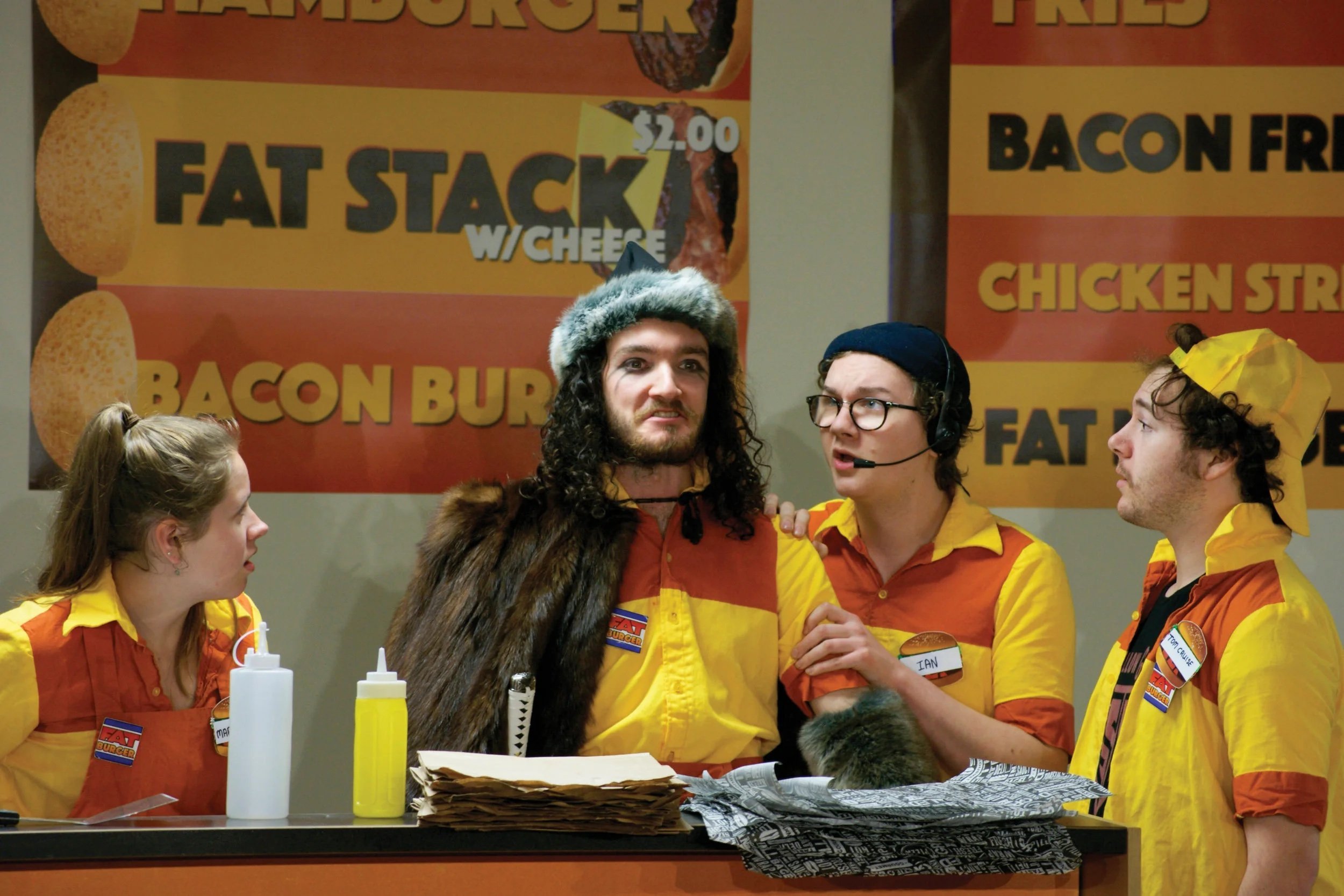
Arcade Theatre Company — Arts Festival Dunedin
177 George St (The Underground Market)
Abby Howell's Attila the Hun, a play about a late night fast food crew.
#36 "Time and Tide", September 2019
David Green with support from the Dunedin School of Art
343 George St
Light projectors play footage of gentle tidal scenes on to the walls of the space, the colours spilling beyond the shop’s front window and on to the path outside.
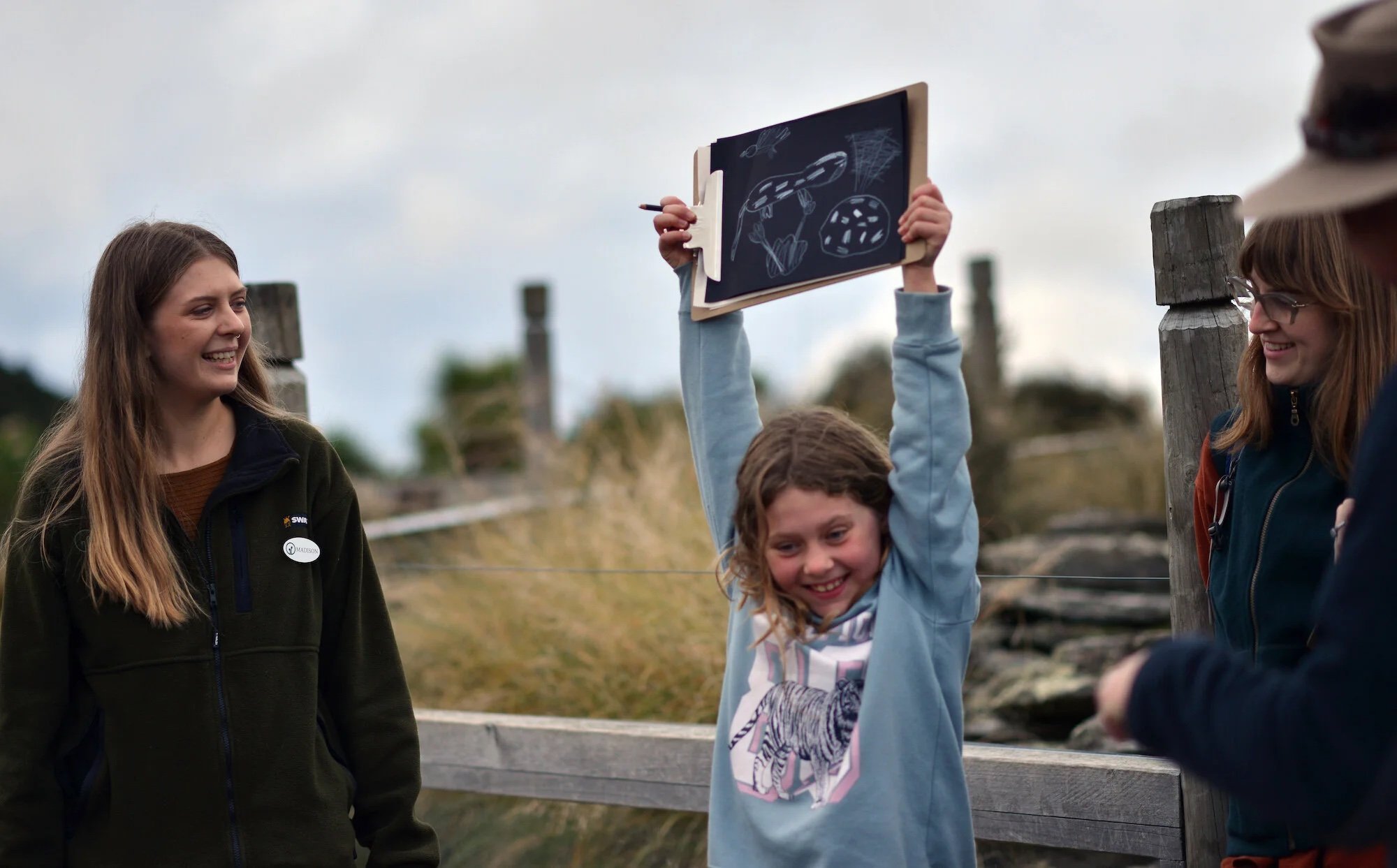
Dunedin artists, designers and writers display work in the windows of local shops in North East Valley, South Dunedin and Port Chalmers reflecting on the "upside of lockdown".

Madison Kelly
Basking Hub: 17 George St
The arts hub welcomed communities to learn about local mokomoko and the creation of observational drawings on tiles. It continued with workshops at Orokonui Ecosanctuary and finished with a hui..
#60, 61, 62, 63 The Platform Project Feb-May 2022
George St, from Moray Pl north to the Albany St intersection
An initiative that invited local artists to present projects that connected art and community activities alongside the development of George Street.
#69 A Wardian Case March 2023
422 Princes St
Miranda Bellamy and Amanda Fauteux
Showed the flora of Kawau Island, home to Sir George Grey from 1862 to 1888. In quiet collaboration with the plants that endure, plant cell signals are sonified in chorus and cacophony.
#88 "Rope/Walk" November 2024.
Kari Morseth at Donaghy’s Rope Walk, Bathgate Park, South Dunedin.
Kari Morseth’s project titled Rope/Walk was an outdoor art event where members of the public were invited to have a go at hand twining and contribute to the making of a 300m rope.
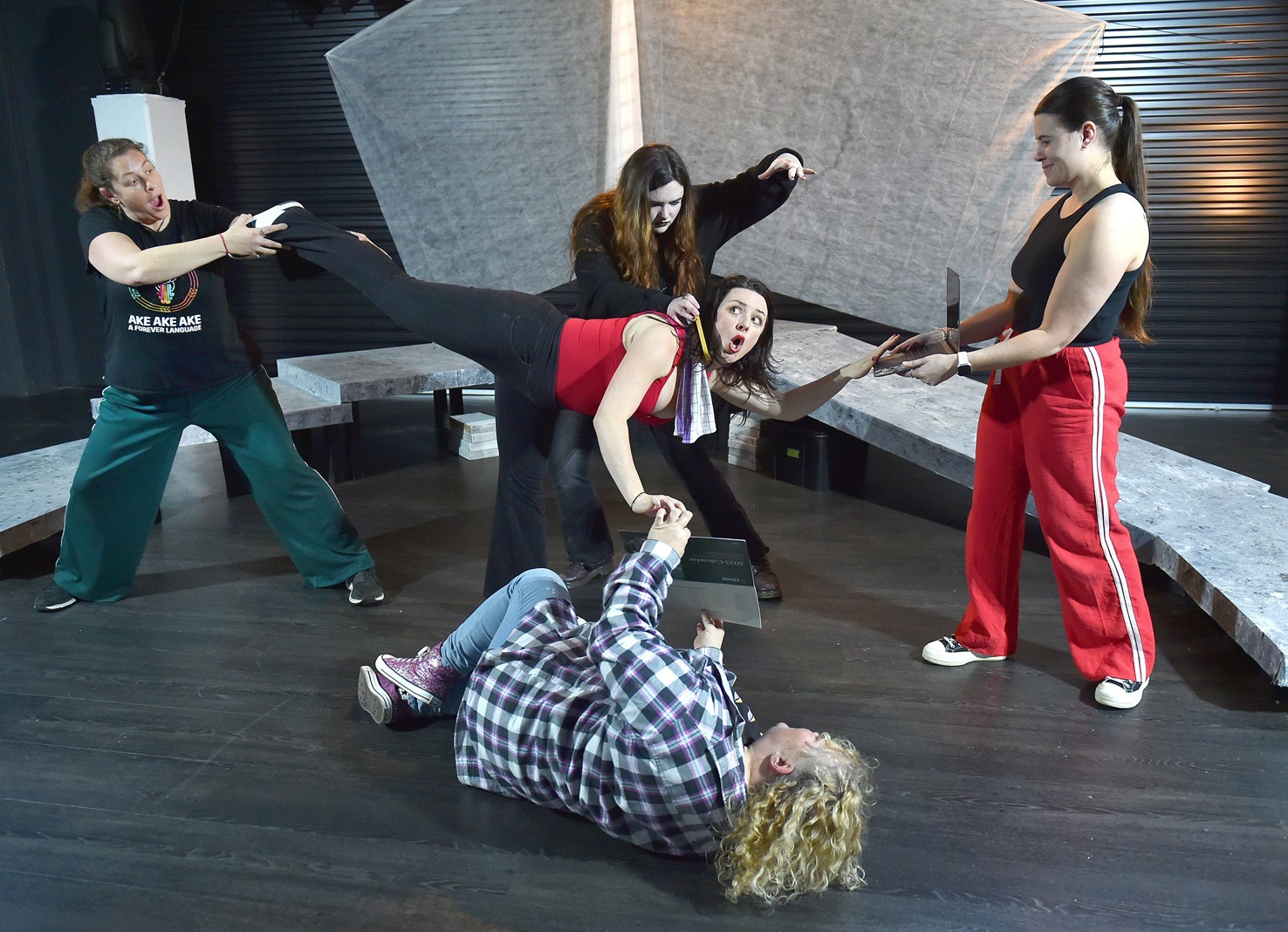
24 Filleul St, Dunedin
A bold new theatrical work by theatre-maker Lizzie Tollemache. Six showings that celebrated the depth of neurodivergent talent within our creative community.


