
PHOTO
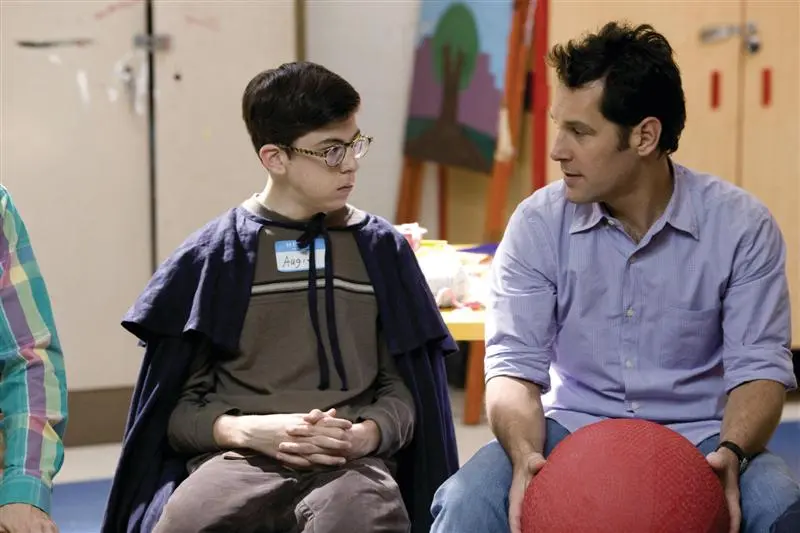
At a screening of the upcoming comedy Role Models the other night, I found myself thinking about the Academy Awards, wondering what I always wonder when I see a good new comedy: Why shouldn't the Oscars recognise good work in comedy the same way they do in drama, animation, cinematography, editing and all the other great movie crafts?
Shockingly, comedy is so thoroughly ignored by Oscar voters that it's been more than 30 years since a true comedy - Woody Allen's Annie Hall - won the Oscar for best picture.
To say this is a disgrace would be an understatement. I hate to bore you with a recitation of film history, but movies began as a comic medium.
A generation of Americans grew up falling in love with cinema, largely thanks to Charlie Chaplin, Buster Keaton, Harold Lloyd and a host of other inspired silent-movie comics.
A second generation of moviegoers survived the Great Depression with the wonderful screwball comedies of the 1930s, from My Man Godfrey and The Awful Truth to It Happened One Night and Midnight, not to mention the great Marx Brothers and W. C. Fields movies of the period.
The comedies of the '30s remain the true pillar of movie art from that era, immensely watchable even today, as many of the dramas and gangster films of the period have lost much of their thrill and allure.
Comedy often tells us more about our time than the most acclaimed drama.
If future cultural historians wanted the best window into the contemporary mores of the early 21st century, they wouldn't find much help from most of our recent Oscar winners (Crash aside), which tend to be set in the past, looking back in time for lessons about earlier eras.
For the best analysis of people's anxieties, quirks and fears in 2008, you would start by watching Judd Apatow movies.
Directed by David Wain, who did 2001's Wet Hot American Summer, Role Models has no weighty message.
It's simply loaded with shrewd comedy writing and slyly funny performances.
Penned by a quartet of writers - Wain, co-star Paul Rudd, Ken Marino (who plays a comically clueless stepdad in the film) and original writer Timothy Dowling - it follows the misadventures of two mismatched young guys (Rudd and Seann William Scott) who find themselves forced to become mentors to a pair of unhappy young boys in a Big Brothers-style community-service programme.
There are several stellar performances, but none better than the one given by Rudd, who gives his character a wryly poignant spin rarely seen in comic buddy films.
Played by Rudd, Danny Donahue is smart, cynical and thoroughly disappointed in himself, shrewd enough to see that he's going nowhere in life but not resourceful enough to stop himself from spinning his wheels.
If this were a performance set in a drama instead of a comedy, it would inspire all sorts of noisy best-actor chatter from the awards-season soothsayers.
But because it comes in a comedy package, Rudd will go without that Oscar, just as Steve Martin did in All of Me, the 1984 comedy that featured one of the most soulful acting performances in modern times, a performance roundly ignored by Oscar voters.
Why does comedy get so little respect at Oscar time? "When it's done well, it looks effortless," says Scott Stuber, who has worked on a host of great comedies, first as a Universal studio executive and now as a producer.
"But the truth is, comedy is really difficult. I have incredible respect for the writers and filmmakers, because it's really hard to create the right dynamic that can capture humour that comes from real human experience.
"And when it comes to acting, if you want to understand the complexity of comedy, try to imagine what Eddie Murphy did in the first Nutty Professor.
"It's sheer genius - he's not just playing entirely different characters, but he's playing opposite totally different characters who are all him. You can't believe he didn't get an Oscar. The acting is as good as you'll ever see."
It's long overdue for the academy to give a separate Oscar for best comedy film, and comedy-acting performances as well.
After all, the precedent has been set.
When it became clear that Oscar voters were never going to give a best-picture Oscar to an animated film, even though many Pixar films were the best movies made in their year of release, the academy created a best-animated-film category to right the wrong.
It might mean that animated films are in a creative ghetto, but at least they get to take home a trophy.
The academy should do the same for comedy. It would make good business sense.
With the Oscar telecast's ratings in a free fall because most viewers haven't seen the limited-release dramas vying for best picture, having a comedy category would allow the Oscar telecast to give air time to a host of more commercial, broad-appeal movies.
It always has struck me as unbearably elitist that the academy would happily invite comic actors on the show as hosts and presenters but not as award winners.
Alas, the Motion Picture Academy is still in denial.
Sid Ganis, its president (and a veteran comedy producer), brushed off my idea, saying (talk about denial!) that just because a comedy hasn't won a best-picture Oscar in 30 years doesn't mean one couldn't.
"I absolutely feel that a comedy of quality would and could be nominated and win," he told me.
"It's happened before, so why couldn't it happen again?"
Well, then why did the academy create an animation award? Wasn't that an admission that animated films didn't have a chance in hell of winning in the overall best-picture category? No, says Ganis.
"They do have a chance in hell of winning best picture and winning in any other category."
He argues that creating a comedy category would set an unfortunate precedent.
"We see a lot of superhero movies and comic-book movies and horror movies, but we don't have a separate category for all of them," he says.
OK, so the academy doesn't get it. Maybe they never will. That's their loss. If I were Universal, I would give any academy member a free ticket to the opening night of Role Models.
Laughter is a wonderful communal experience. It might be nice for some of the academy mandarins to hear it for themselves.
Comedy is part of the fundamental DNA of film.
Instead of figuring out how to energise its dying institution, the academy is guilty of pushing the Oscars further and further from the people who actually love movies.