
PHOTO
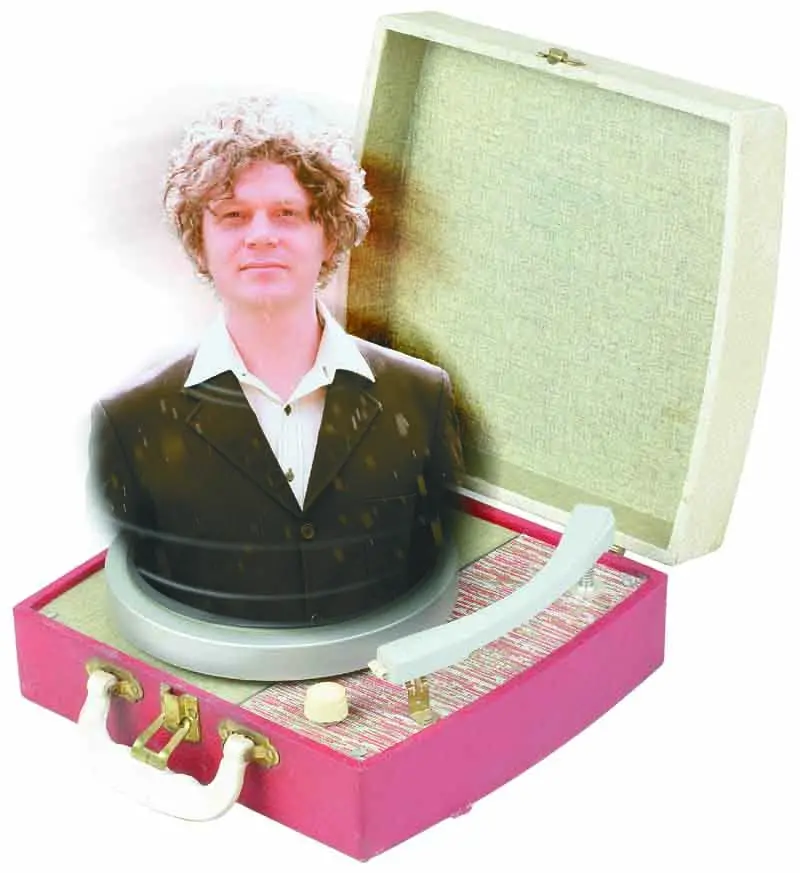
If we are to be exact, it is 10 years and five months since Arch Hill Recordings released its first album, Oddy Knocky, by former Superette and JPS Experience member David Mulcahy.
Continuing a long-established spirit among independent labels, that December 1999 debut defied the trend of the time.
Instead of the pervasive, window-rattling drums of dance music, Arch Hill offered delicate pop songs.
A decade on and the label is still serving up delicate (and sometimes muscular) pop songs.
Mulcahy's first effort is now augmented by others, including Don McGlashan's Marvellous Year (2009) and Warm Hand (2006), The Clean's Mister Pop (2009), a couple of David Kilgour's solo releases, Frozen Orange (2005) and The Far Now (2007), as well as Falling Debris, Kilgour's collaboration last year with poet Sam Hunt.
There are others: The Bats, Luke Buda (of the Phoenix Foundation), Jay Clarkson, former Dunedin outfit Mestar, and newer acts such as Surf City, The Family Cactus and Street Chant, who are attracting interest offshore.
White Swan Black Swan is on the roster, too. A given, really, since it is the band of Arch Hill founder Ben Howe.
Some of those groups feature on an 18-track sampler available as a free download on the label's website, where Howe exhorts visitors to "plunder and pillage the record company and fleece the artists".
Tongue-in-cheek they may be, but his words reflect a serious concern: how to survive in a rapidly evolving music business.
There was a time when the concept of spreading the word about a band involved late-night poster runs, phone calls to friends or, come closing time down the pub, mumbled plans regarding the next night out on the town.
Nowadays, the whispers are carried via Facebook, Twitter, Myspace and others, borne by a marketing strategy in which the net is cast wide in the hope of catching a potential fan's attention.
The past decade has witnessed massive changes in the music industry, both globally and closer to home.
Hurt by digital downloading, the big four major labels (Universal, Sony-BMG, EMI and Warner) have all cut staff in recent years, while remodelling their revenue-gathering streams.
To the current climate add industry statistics that show only 1% of all records produced will sell more than 1000 units.
It is not surprising major labels are loath to take risks on little-known bands.
Enter the local, independent record label, which can operate with fewer overheads and release new recordings in smaller batches.
Like its major-label counterparts, a small operator can also sell music in a variety of forms, garnering a range of income streams from a single recording.
None of this is lost on Howe, who claims it's a great time to be an independent record label.
"There are so many more opportunities, but you have to be very conscious of developments as they are happening, and be willing to experiment and take risks.
"The music industry is changing so much; no-one in the music world knows where it is going.
"I guess with the new media revolution, the opportunities to reach bigger audiences are far greater and that's the exciting and interesting side of it.
"The difficulty is that it is actually much harder to make money.
"I think, if anything, you have to work even harder.
"That is the challenge," Howe says, pointing out that in addition to the time-honoured cycle of recording, releasing and touring an album, artists (and their labels) need to try new approaches.
That includes giving away music ("a certain amount", at least) free.
"You make your income from the peripheral aspects, whether it is publishing, merchandise, vinyl.
"Weirdly enough, I think vinyl is part of the future.
"The old model of actually making money from CDs is definitely on the way out.
"The digital thing will reach mass audiences and out of that mass there will be a niche thing - collectable, beautiful vinyl with all the extras," Howe explains from his inner-city Auckland office.
"Because CD sales have declined by something like 50% in a few years - that is anecdotal based on my own experience - I am unable to continually release CDs, but because you can upload things and put them on to iTunes for virtually nothing, that does open up opportunities for niche markets."
Howe started Arch Hill Recordings as something of a hobby.
For him (and his mates), the enterprise initially offered little more than a means to record songs.
The label was born out of Arch Hill Studios, on Auckland's Great North Rd.
In late 1998, a bunch of musicians with various connections to one another were convening at the venue.
They included Howe (previously in Superette with Mulcahy and Greta Anderson), Mulcahy and Jim Laing (formerly of the JPS Experience).
Out of this came Mulcahy's debut, followed in 2000 by releases from Lanky and Fang, then Christchurch outfit Pine and Wellington's Ghostplane.
"It was something to do for fun," Howe says.
"To a large part, it still is, but we have grown to a point where we have rent to pay.
Howe, a guitarist, admits he's a bit of a music geek.
He likes rummaging around instrument shops or internet sites, hoping to find some obscure piece of equipment he'll rarely use.
His interest in all things musical extends to academia: he has completed a master's degree that included research into independent labels and "quite a bit on Flying Nun" and started work on a PhD "about NZ culture and identity", but got a little sidetracked.
The subject of Flying Nun has been to the fore in recent months, with the news label founder Roger Shepherd has bought back the imprint from major label Warner.
Howe claims he spent the best part of two years working with Shepherd, hoping to be involved in any new arrangement.
However, Shepherd ultimately left Howe out of the deal.
The Otago Daily Times could not contact Shepherd this week but in the March edition of Victoria University's Salient magazine, he is quoted as saying: "It was very hard, but [Howe] didn't have the money. We weren't going to be able to raise the money. It was unfortunate, and maybe I managed it really badly, but I just had to do what I had to do, really.
"I'm not happy about it, but it just got too difficult."
Howe's response? "That's what I have read in the media, but I have never had it told to me personally. I was disappointed.
"In some ways it has been a good thing. I had been thinking I would end up shaping the label to work in a complementary manner [with Flying Nun].
"Now that I know what the scenario is, I can rethink Arch Hill. For two years it was in a state of limbo.
"Surf City, The Family Cactus and Street Chant are getting interest offshore, particularly in the US and Australia, so I will be able to focus on that.
"But people like David Kilgour and The Bats are still my heroes, so I want to do right by them as well."
Howe has other work to do, too. He also heads Mystery Girl Presents, a live touring company that brings in overseas acts.
In recent times, he has lured leading alternative rock acts such Pavement, Sonic Youth and Ween to our shores.
Asked whether the proceeds from Mystery Girl-related tours fund wider Arch Hill activities, Howe says it certainly helps.
"However, if I was interested in the money I would probably dedicate more time to the touring and less to the label."
Symbiotic to the life cycle of Arch Hill is the rise of New Zealand music in the past decade.
This year marks the 10th anniversary of New Zealand Music Month, established by the New Zealand Music Commission (Howe was an NZMC board member from 2003-2004) with the initial objective of increasing the proportion of Kiwi songs on commercial radio.
Thanks to NZ On Air strategies, New Zealand music content on commercial radio has doubled in 10 years, from 10.4% in 2000 to 20.9% as of March 2010.
Compare that with 1995, when New Zealand music comprised just 1.6% of commercial radio airplay.
"I think the growth of mainstream New Zealand music is good," Howe enthuses.
"I would rather people buy local stuff because that builds the whole infrastructure.
"There is the chance that a more mainstream music fan might end up hearing something that is on Arch Hill and liking it.
"Ten years ago, New Zealand music just wasn't cool.
Now, people go into Hallensteins and buy NZ Music Month T-shirts and champion it."
A selection from Arch Hill
David Kilgour and Sam Hunt Falling Debris (2009)
A project combining David's Kilgour's music and voice with the poetry of Sam Hunt, Falling Debris is a typically relaxed detour from the guitarist's other work, be it with The Clean or his solo endeavours.
Kilgour washes Hunt's words with organ and acoustic guitars that shimmer and chime.
However, it's when he pulls out his electric guitar and lets rip on Friend To Many that the party really starts.
Don McGlashan and the Seven Sisters Marvellous Year (2009)
Don McGlashan's second solo album, three years on from his Warm Hand debut, benefits from a collaboration with Sean Donnelly (aka SJD), another Auckland-based singer, songwriter and multi-instrumentalist.
Songs are slightly skewed; others, such as excellent opener The Switch, simply repeat a chord progression.
It's a trip through a wide range of styles, capped off by McGlashan's classy falsetto on Bathe In The River, a track first brought to prominence by Hollie Smith.
Ghostplane The Panther Valley Country Club (2004)
Centred around principal songwriters Achilles Botes and Mark Dryburgh, Wellington outfit Ghostplane got more than a few critics grinning with its debut EP, a mix of dark alt-country, ethereal pop and clever vocal interplay.
Throw in banjo, clarinet, weird electronic stabs and an acrobatic rhythm section and the result is seven very different tracks, ranging from the clanging electric guitars of Flame On Lens, the slacker delivery of All Goes Wrong to the cluttered, chaotic vibe of Electric Range.