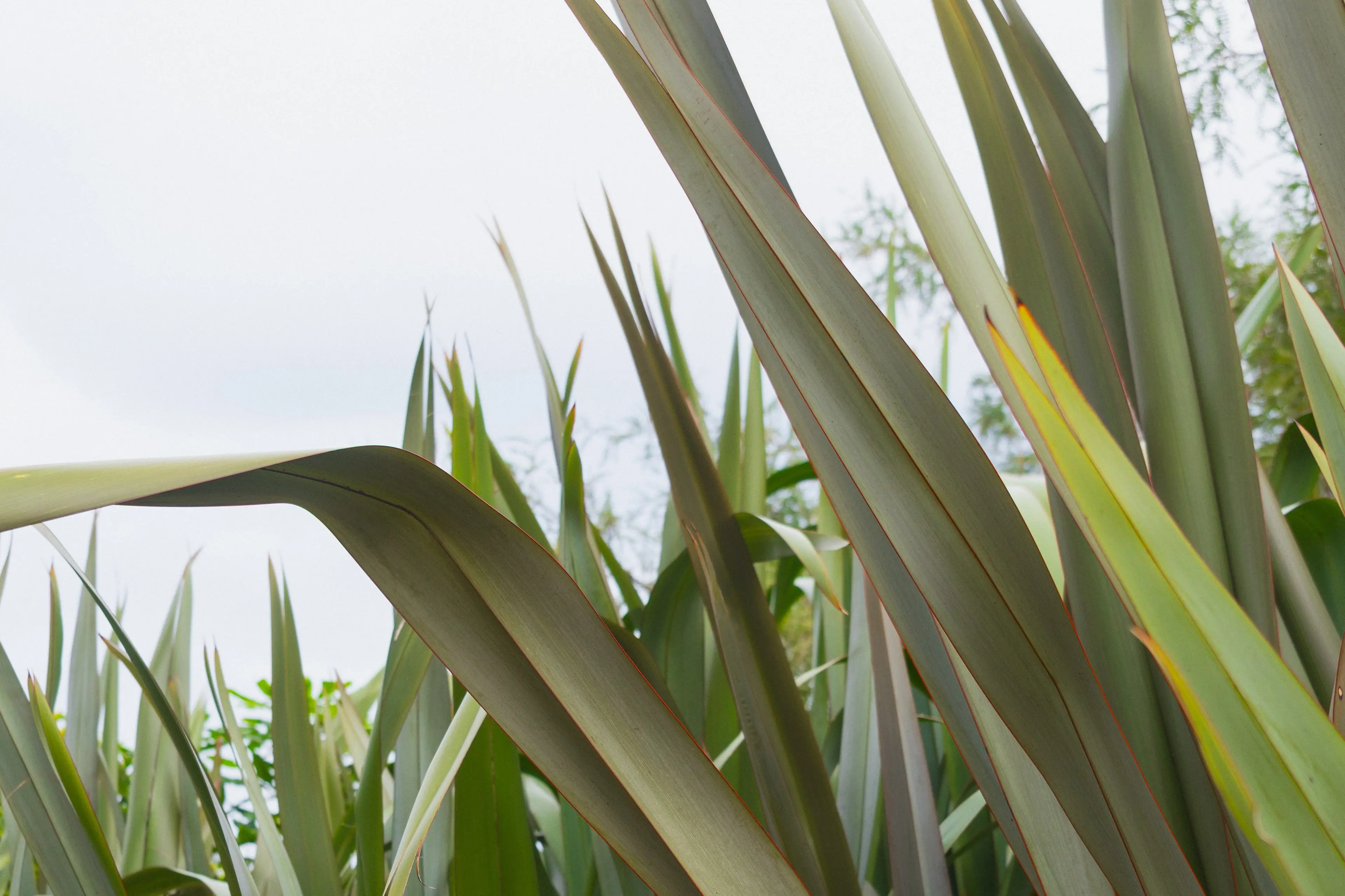
Harakeke — Phormium tenax — is one of the most recognisable plants in Aotearoa. We often see harakeke in a pretty tatty state, planted as a shelter belt or pushing over a fence in your nan’s back garden, moth-bitten and shredded by the wind. However, when you come across a healthy, well-tended pā harakeke, another story emerges. Their leaves rise powerfully from the earth, arching gracefully towards the sky in delicate tones of blue-green, bronze and olive. A warm honeyed scent marks the arrival of summer, as their massive flower spikes tower above the foliage, adorned with tubular blooms in rich shades of crimson, copper and gold. Brimming with nectar and laden with pollen, they provide a valuable food source for tūī, korimako and tauhou. With beauty comes strength. Able to withstand frost, fire, wind and drought, harakeke thrives in habitats as varied as swamps, hillsides, forest margins and dunes. Its vigorous root system makes it invaluable for regenerative planting, stabilising soft earth, preventing erosion and protecting freshwater ecosystems. Perhaps one of harakeke’s greatest qualities is its generosity. Māori have long considered it a taonga for its medicinal and practical uses. Within each leaf lies muka, a gleaming, ivory coloured fibre, as soft as it is strong. Drawn from each leaf by the skilled use of a mussel shell, it can be transformed into exquisite kākahu (garments), intricate kete (baskets) and whītau (fibre) of extraordinary strength. Beautiful, resilient and endlessly useful, harakeke rewards anyone willing to stop, look closely and discover that one of Aotearoa's most familiar plants is also one of its most extraordinary.