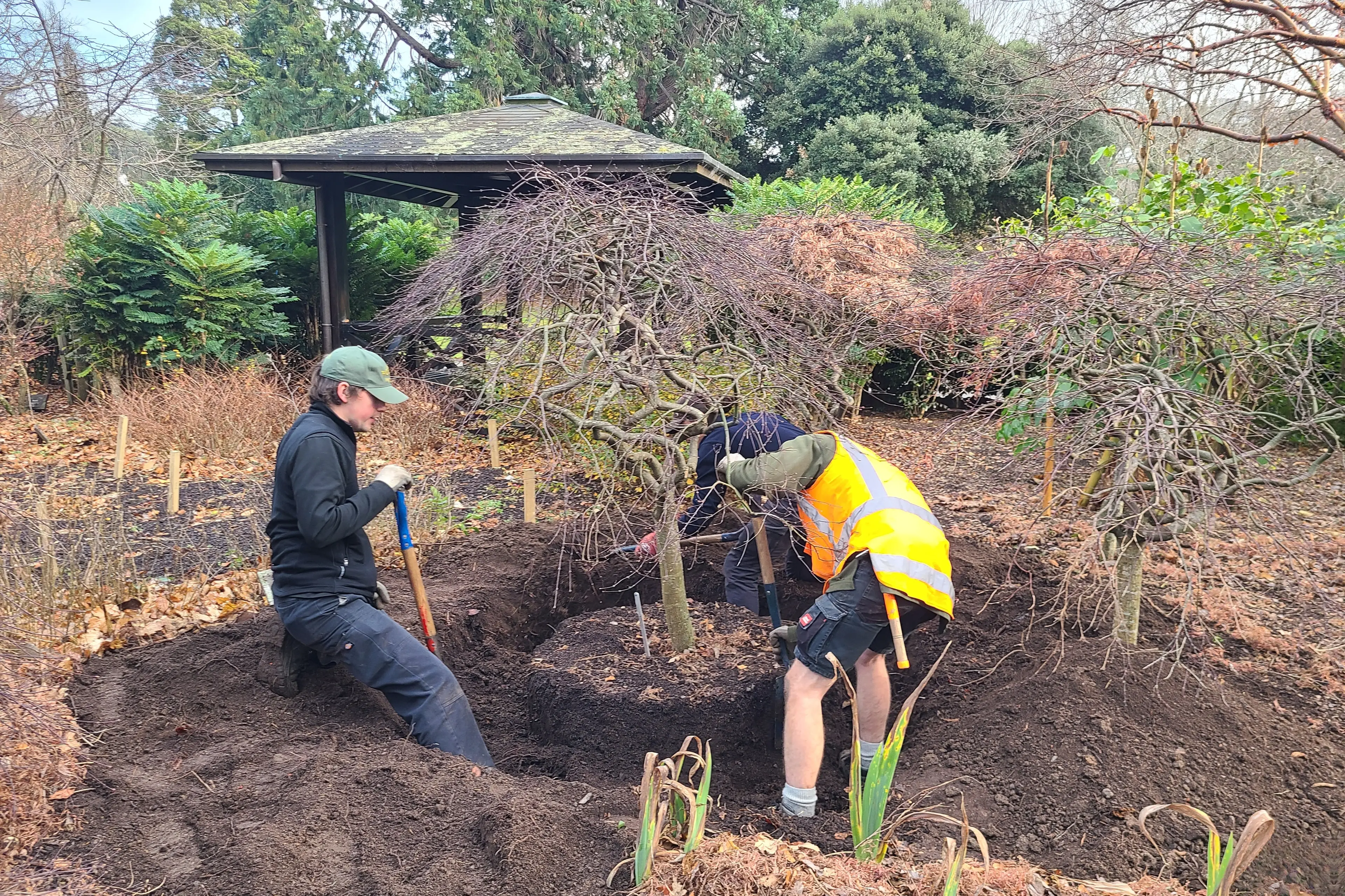
Winter at the Dunedin Botanic Garden offers staff the ideal time to transplant trees and shrubs while they are dormant. Transplanting offers a chance to refresh and declutter borders and gives plants the best chance to re-establish before spring. With growth paused, plants are less likely to suffer transplant shock. During dormancy, plants need less water and energy, so disturbing their roots causes minimal stress. Cooler temperatures and weaker sunlight also reduce moisture loss, improving survival rates. Preparation is essential for successful transplanting. Choose a cool, overcast day and dig the new planting hole before lifting the plant. The hole should be twice the width of the root ball and the same depth. If possible, mix compost into the backfill soil to improve growing conditions. Trim excessive foliage to balance root loss. When removing the plant, dig around the drip line to preserve as much of the root system as possible. Lift carefully, keeping the root ball intact, and trim any damaged roots cleanly with sharp secateurs to reduce the risk of disease. [Missing Credit]When transplanting, it is important to dig around plant's drip line to preserve as much of the root system as possible. Photo: Rebecca Rutter Before replanting, water the base of the new hole, then position the plant at the same depth as before. Rotate it to achieve the most attractive aspect. Backfill with soil, firm gently to remove air pockets, and water thoroughly to settle the roots. Finish by applying a generous layer of mulch over the root zone to insulate the soil during winter, keeping it clear of the stem to prevent rot. With careful handling, winter transplants will be ready for strong spring growth, bringing renewed vitality to any garden.