
PHOTO
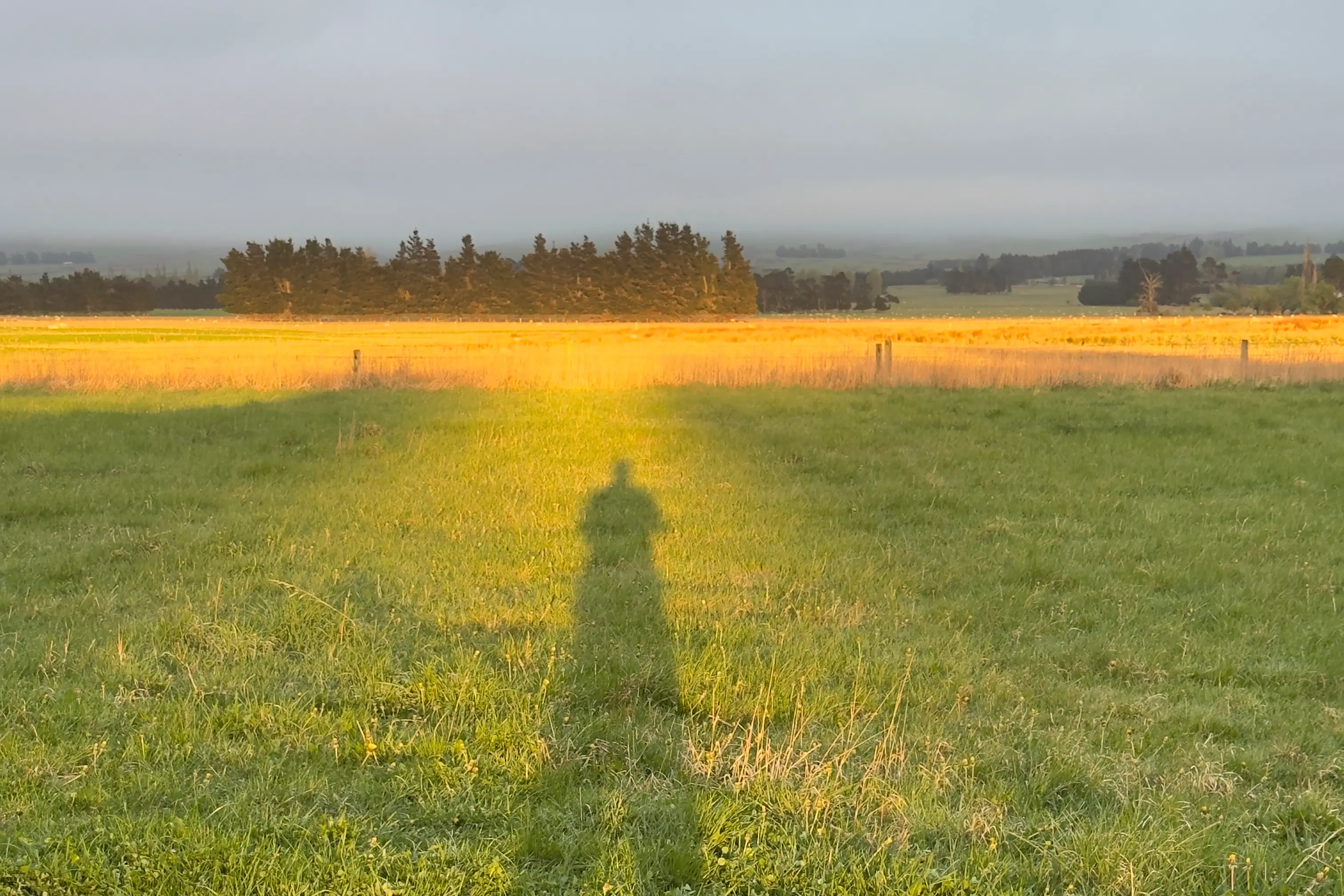
At 7.28 last Sunday morning, I walked backwards across our paddock in Middlemarch, with a camera held above my head. The lambs had a lot to say about it. Their mothers said nothing, which was worse.
The sky was mostly clear. The sun had been up about 20 minutes and sat three degrees high over the hills behind me. The grass was wet. I was looking for my own shadow, and more particularly for the light around its head.
I have been chasing optical effects for most of my life: sundogs, glories, the green flash. The one I wanted that morning is called heiligenschein. It is German for holy light. When the sun is low and behind you, each dewdrop on the grass acts as a small lens. It gathers sunlight on to the blade behind it, and the blade sends the light back the way it came. Back towards the sun, and back towards you. So the grass around the shadow of your head glows. Only your head. The person standing next to you sees the glow around their own shadow and not yours, which tells you most of what you need to know about people.
The first man to make much of it was Benvenuto Cellini, a goldsmith in 16th century Italy. He came out of a papal prison in the 1530s, saw the light around his shadow on the morning grass, and decided God had marked him out. He put it in his autobiography. He also noted that it showed up best when the grass was wet with dew. So he had the answer. He went with God anyway. He was not a modest man.
Did I get it? There is a brightening around my shadow's head in the photo, and it runs off towards the fence in a pale strip. But the sheep have flattened the grass along there, and even dry grass brightens opposite the sun, because each blade hides its own shadow. Astronomers call that the opposition effect. I would call my picture a probable.
What I did get was legs. With the sun that low, my shadow was about eighteen times my height, more than 30m long. I stood there a while, being tall. Then I went in for breakfast. Just another morning in Middlemarch!