

PHOTO
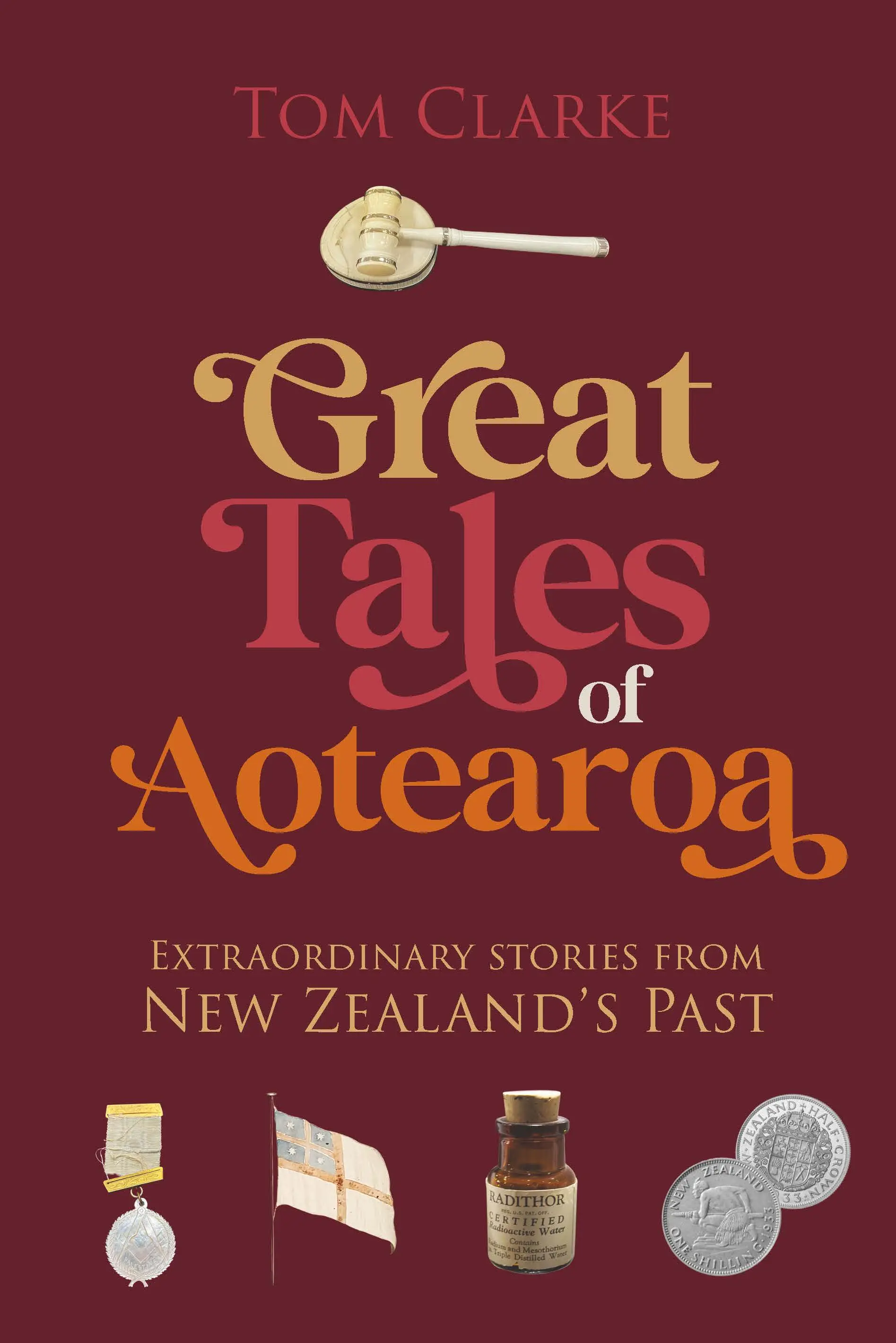
Great Tales of Aotearoa
By Tom Clarke
Bateman Books
Reviewed by Jim Sullivan
More than 40 years ago, Tom Clarke was compiling a Today in History New Zealand resource for broadcasters and ended up with 4500 two- or three-sentence bites of our past.
At the same time, I was doing a similar compilation which ended up with about 5400 entries.
Many of them cried out for more extensive treatment and it was Clarke who saw there was a book or two in all of this tantalising information.
Taking the most intriguing entries and turning them into book chapters, he has already had a hit with Our Untold Stories.
This new collection offers more of the quirks, tragedies and oddities of our past.
Believe it or not, there have been seven recorded duels in New Zealand and their stories are told, along with a full coverage of the enthusiastic embracing of “radioactive water” as a cure for many ills.
Our first aviation fatality is just one of the dozens of almost forgotten episodes which is explored along with the stories of drivers killed in motor racing accidents.
I first knew the author when he was a young reporter at Timaru’s radio station, and his southern roots shine through in Great Tales of Aotearoa — a Mackenzie Country family’s unequalled contribution during the South African War, the hidden involvement of Oamaru in the news of Captain Robert Falcon Scott’s demise in Antarctica and a wealth of stories drawn from Dunedin during the great influx of immigrants in the 19th century.
The chapters on the disastrous voyages from England to Port Chalmers provide a level of detail seldom seen in other histories.
The drama of Sir Lloyd Geering’s heresy trial in 1967 is introduced by a surprising number of earlier heresy scandals featuring highly respected churchmen.
All are told within an informative backdrop which puts the “small bites” into a wider historical context.
Some of the chapters focus on life stories, often of people who have already been written about in extensive biographies such as Bernard Freyberg and Harold Williams, but they are no less enjoyable for all that.
Interspersed with these offerings are briefer chapters based on items which simply caught the eye of a Today in History New Zealand compiler.
The suicide of Ōtaki’s Frederick James Brown is a chance to tell of a New Zealand lawyer who made money in the Klondike gold rush and used his gold in the making of a set of Masonic gavels and strikers which incorporate almost one thousand gold nuggets.
Not an earth-shattering event but appropriate for the book’s subtitle, Extraordinary Stories from New Zealand’s Past.
There are probably about 4000 small gems as yet unused in Clarke’s compilation, so there could be more books to come.
If Great Tales of Aotearoa is any guide then bring them on!
Jim Sullivan is a Patearoa writer