
PHOTO
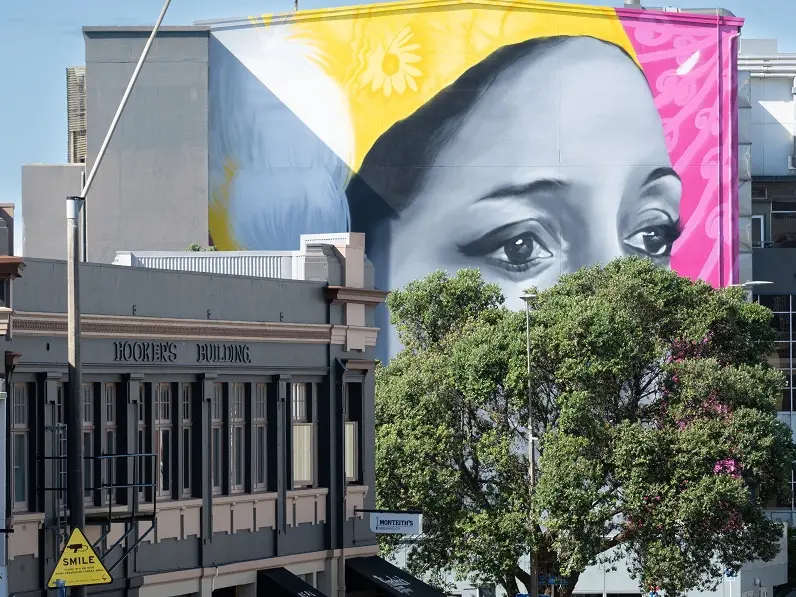
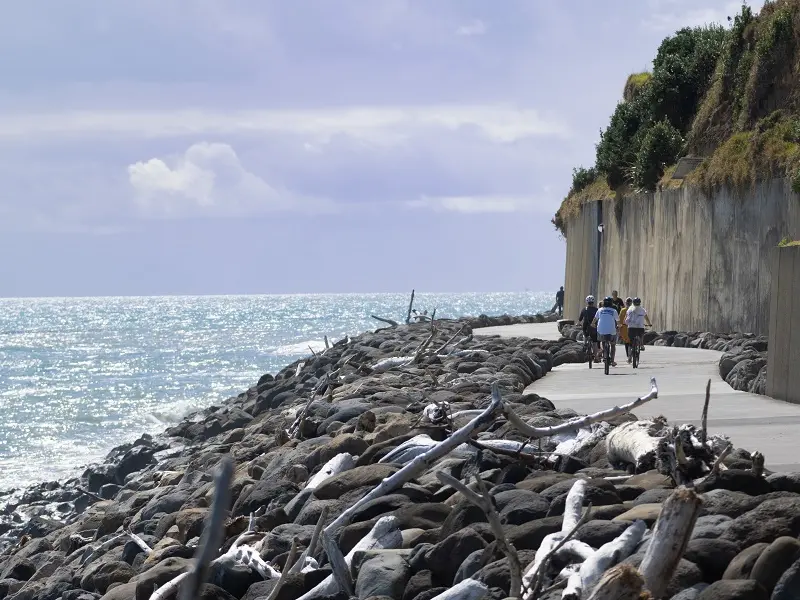
New Plymouth, who knew? "I know!" said Jared. He and wife Nadine are the new managers of Belt Road Seaside Holiday Park. Moving here from Ashburton six months ago, they are still finding the city a wonder. Me too. With art deco buildings a-plenty and downtown New Plymouth a canvas for street art, not to mention the magnificent coastal walkway — a triumph of shared activity and sculpture — there’s plenty to please. Len Lye’s 45-metre-tall red fibreglass Wind Wand photobombs the promenaders, while his Wand Dance, housed within the funfair-mirror walled Govett-Brewster, looks like a group of gold-eyed tubular robots doing a mad hula and sounds like a dozen Slinkies falling down a flight of stairs.
Hibiscus flowers bloom from every hedge and the climate is tropical. Many people wear moko and the vibe is laid back. Puke Ariki, meaning ‘hill of chiefs’ and named for the village that once occupied the site, is a combined museum and library just off the walkway. It has an installation explaining Taranaki’s wet and mild climate and a model of Meg the Megalodon shark hanging over the atrium. Taranaki’s seas were once warmer and a lot chompier. If you stand underneath Meg and look up you get an idea of just how small the boats that delivered the first settlers from Devon really were, as she is quarter the size. The museum is also home to a wonderful collection of local taonga including hei-tiki, weaving and carving.
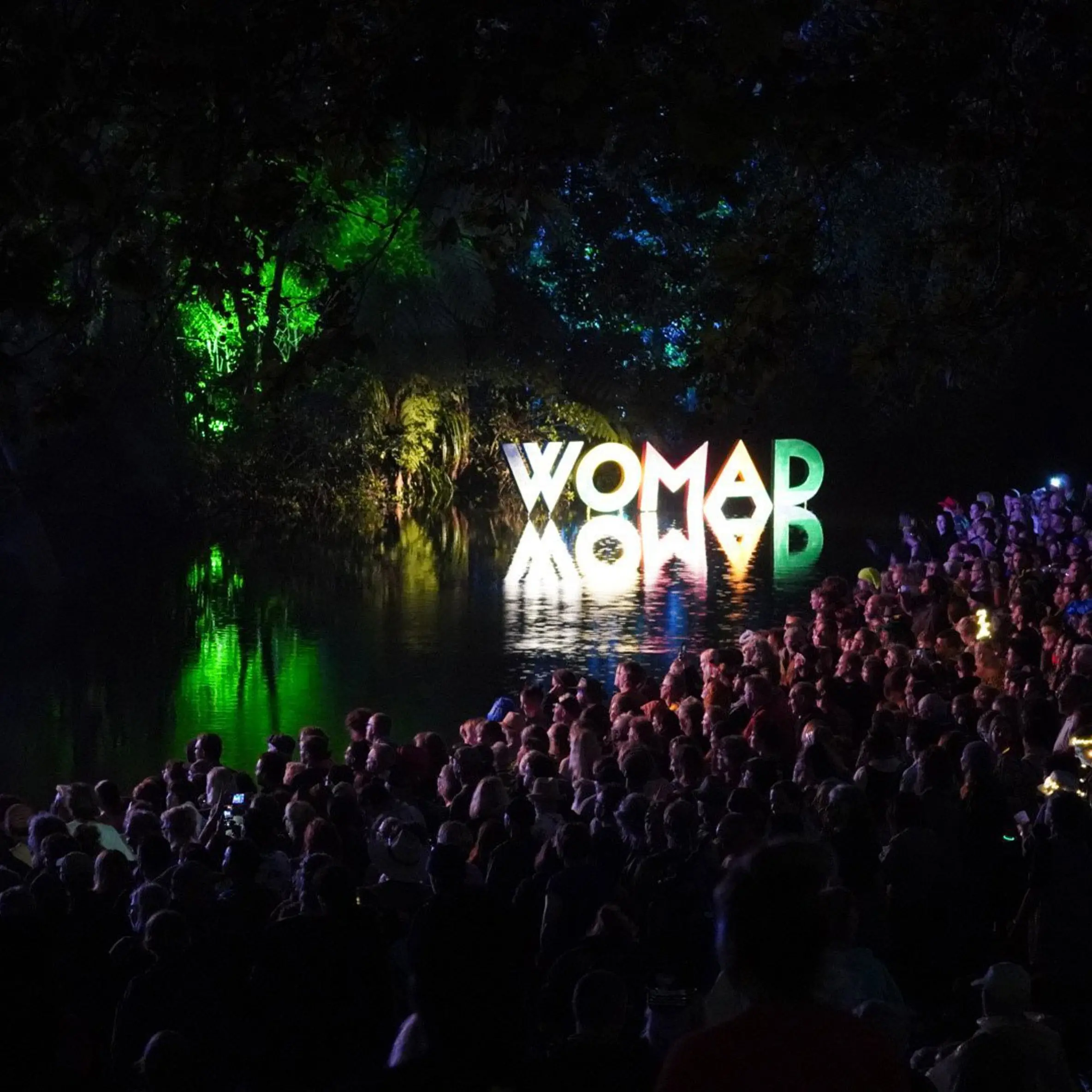
It might default to tropical, but the weather was all kinds during our visit; everything from balmy to bucketing down. Womad’s Saturday couldn’t have been more perfect though, the sun smiling on crowds back after a two-year hiatus.
It was a welcome return to normal, if normal is a sea of glitter facepaint, fluttering flags, silk kimonos and strobing rainbow angel wings, kids rolling down the grassy slope of the Bowl of Brooklands and the mingled aromas of Dosa and the Devil’s lettuce. The festival veterans had their game on: toting folding seats they’d had for 15 years, parasols, gumboots, prepared for all eventualities.
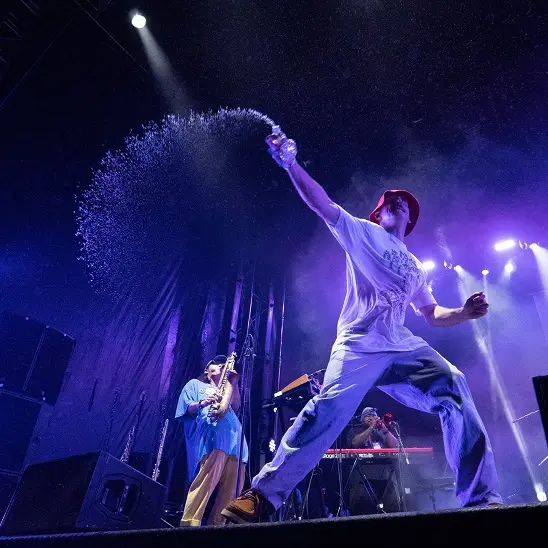
Womad: World of Music, Arts and Dance is one of the longest running festivals on the planet. It began in the UK in 1982 and since then more than 160 Womads have been held in 27 countries. This year marks 20 years since the festival was first held in New Plymouth’s Brooklands Park. Our wrist bands allowed time travel to covid-cancelled Womad 2022 – with a strict no waste policy, they were always going to be reused. It takes 600 volunteers and hundreds of staff to put this on, requires 15 kilometres of fencing and 12 days to set up the site. When it’s over, it will take four days to pack out.
Womad is a different kind of festival. I doubt there’s another event of similar size where the grass in front of a stage where Rubi Du, Avantdale Bowling Club and German techno brass band Muete (moy-te) had the crowd going wild the night before would be up for a picnic lunch on day 3. There was no rubbish strewn about, no glass, no puke, no broken tree branches, no Castle Street style chaos — despite the fact that over 40,000 people would have been through the gates by close on Sunday.
Roaming from stage to stage, sitting in the shade of a tree listening to poetry readings, joining the Juno gin queue ... with a wide range of music styles from Afghanistan to Zambia, Womad is about having a bit of whatever takes your fancy. There are plenty of rock star moments but with 40 artists from around the world on eight different stages, it was impossible to see it all and by Sunday we were rinsed, making an early retreat back to the van to read books and take in the last acts sitting in deck chairs on the van roof drinking G&Ts.
The feeling of being peopled-out extended to each other. Travelling in a van, you have moments of being murderously over it with no personal space to retreat to. Travelling in a van with me is a lot like being trapped in a lifeboat with a tiger, I imagine. Our last evening was stormy: thunder rumbled and lightning cracked above the port Taranaki gantries in accompaniment to a fiery argument whose tremulous aftermath called for a calming Laphroaig at classy wine bar The Hour Glass. I wouldn’t recommend two weeks in a van with someone unless you are quite self-contained yourself.
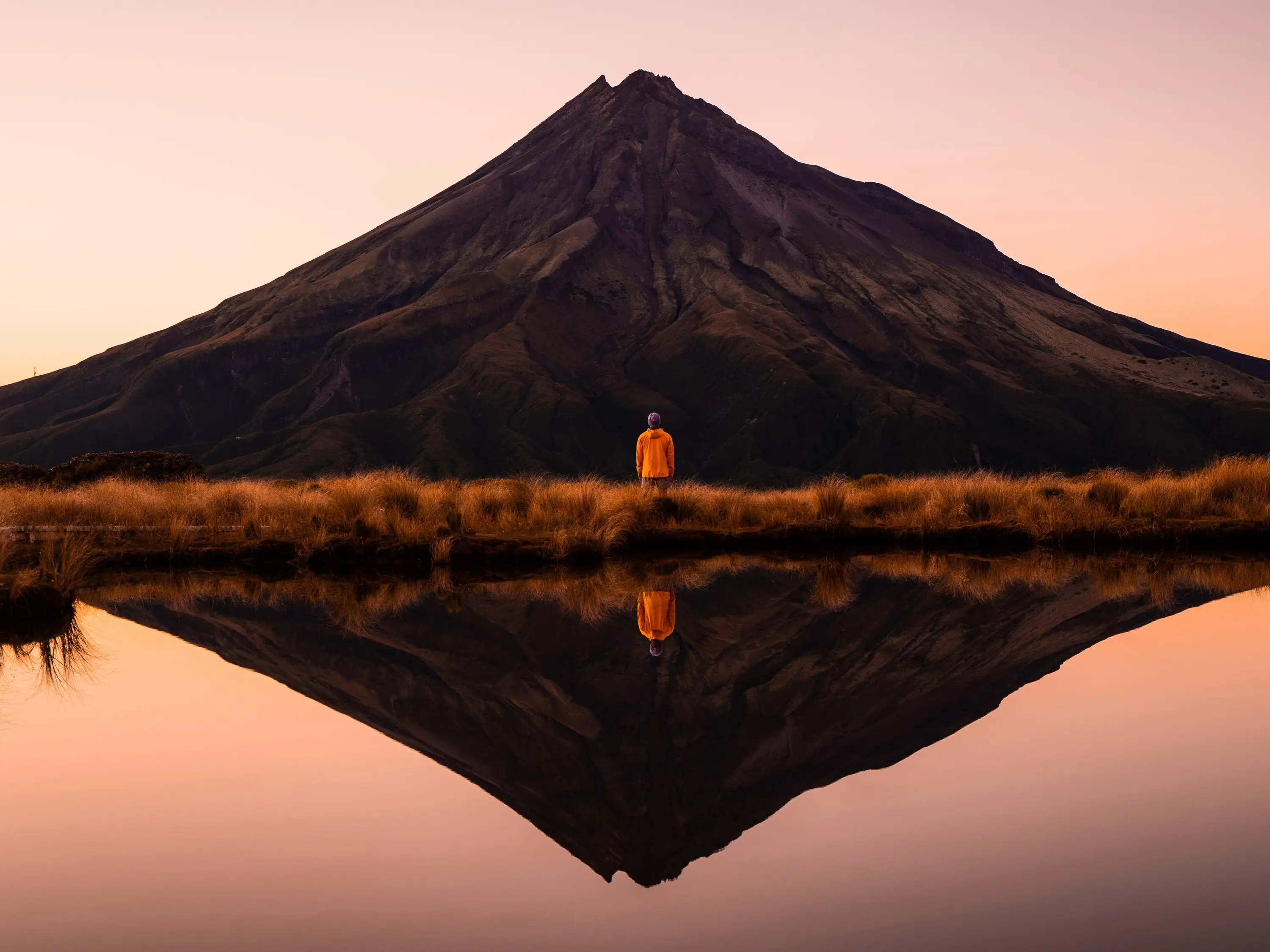
Perhaps also silently brooding, Mount Taranaki proved elusive. The maunga seemed to be always just out of sight, bobbing and weaving, plunging behind clouds, only popping out at dusk to moon over the Pouakai Ranges.
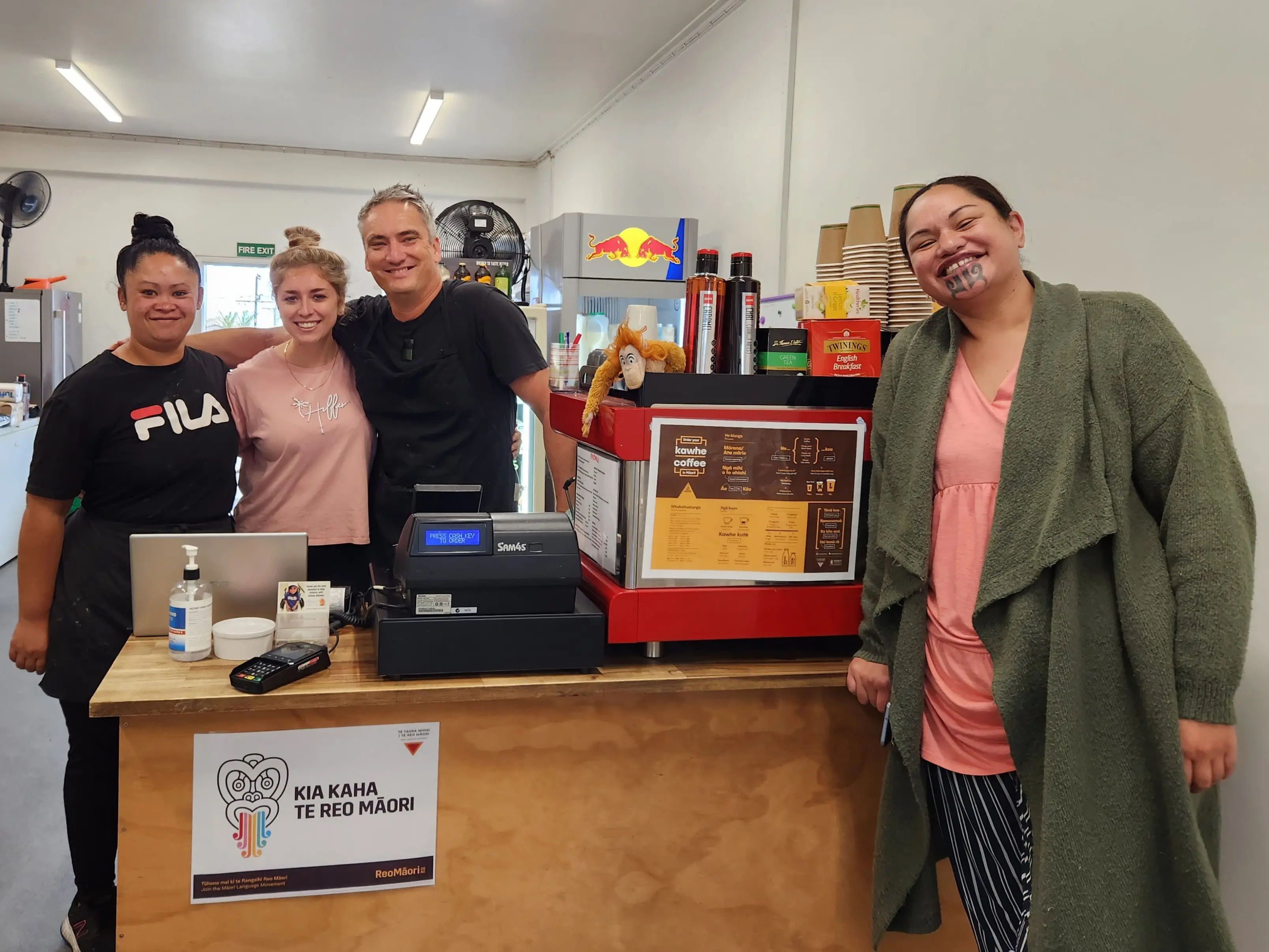
We found George’s Moturua completely by chance, it’s a 17-minute walk from Belt Rd. The menu is based around local lad Landon Elder’s granddad George Manu’s fried bread recipe. George spent his whole life looking after others: cooking at the marae, gathering kia moana or toiling in the garden to provide food for his whauna. Why haven’t I had fried bread before? It is the best thing you can put in your mouth — like a scone with a crispy batter exterior, sliced in half and covered in butter. George’s does a great boil up too.
It’s a very good thing there are so many walks to be had. Whether it’s a relaxing stroll in nature or a more challenging hike that tests your limits, you’ll find plenty to work off a diet of fried bread.
The 5km Huatoki walkway is a hidden gem in New Plymouth’s suburbia, behind the wall of established trees. Following the meandering Huatoki stream from the city foreshore, past street art and through the city parks, the highlight is Tupari reserve, a pocket of regenerating native bush where you can find rare epiphytes, or air plants, in the tree canopy.
Just out of New Plymouth, parking at the Mangorei Rd car park, a two-hour mostly uphill walk will take you to the Pouakai Tarn where on a clear day the mountain can be snared Narcissus-like in the mirror of his reflection.
Leaving New Plymouth, we decided to drive straight to the dormant stratovolcano himself, second highest to beautiful maid Mt Ruapehu. Māori legend says Taranaki once lived peacefully in the centre of te ika-a-Maui with Tongariro, Ngauruhoe and Ruapehu until a titanic battle ensued with Tongariro, after which, defeated and rebuffed, Taranaki wrenched himself away, plunging towards the setting sun and the coast, where he was ensnared by the charms of the Pouakai Ranges.
Clear skies meant we could finally see the magnificent snow-capped peak. It looked like a perfect day for a visit, only to be rebuffed by the scourge of roadworks. "Sorry, not today, Bro."
Nothing for it but to grab a slice of leftover fried bread and chew things over. There’s always next year. Womad 2024 dates have just been announced: March 15-17.