Pairing wine and food is a common occurrence, but spirits and food is more of an unknown.
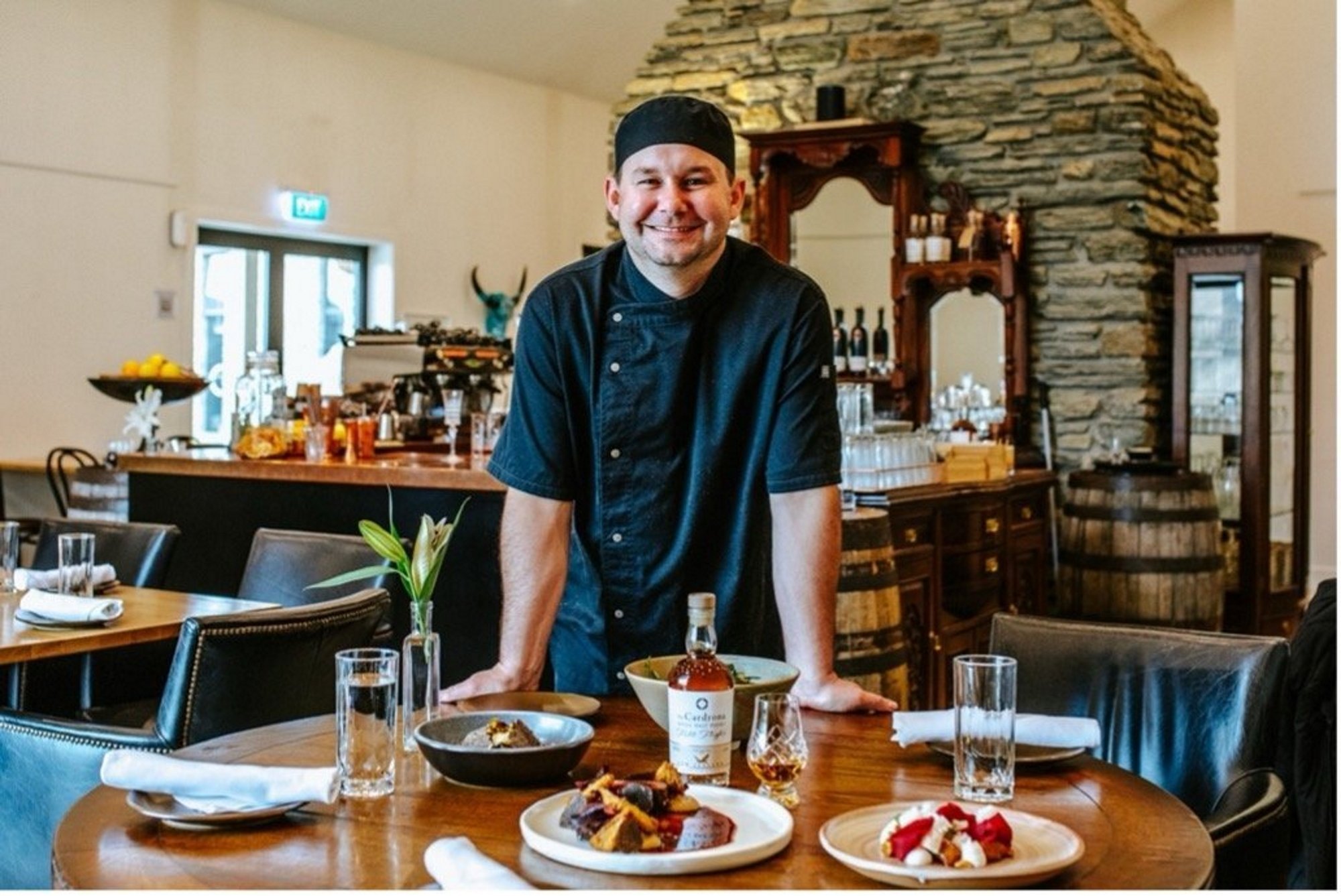
Even Lakes District chef Jack Foster admits before he started work at Cardrona Distillery three years ago his only experience at food and spirit matching was pairing a sherry with a cheeseboard or dessert.
"It was something that excited me about the position."
Foster is in charge of the distillery’s petite restaurant kitchen, which serves small plates and sharing dishes using local produce paired with single malt spirits and cocktails.
The challenge of pairing spirits and food is the high alcohol content of the spirit. Cardrona whisky at the time was around 62%, which means it can dominate the palate, overcoming the flavours imparted by the food.
"That was particularly challenging. It was a learning curve."
Foster spent time learning more about the mouthfeel of the spirit and the alcohol to see which foods they would match with.
"Dilution through cocktails definitely really helps."
As part of the job, he was given the additional challenge of achieving a Cuisine Good Food Award "hat"— a goal he attained this year, picking up one "hat" and a score of 17 out of 20.
"It’s great recognition for the team and I. We’re very happy."
A personal favourite cocktail is an Old Fashioned, and he created a spring onion dip (see below) to match — initially with the distillery’s Growing Wings Whisky, but he now uses its Otago Pinot Cask whisky.
"And it’s just the creaminess of the dip and then the almost creaminess of an Old Fashioned. It’s like sugariness and orange just really comes together."
To come up with the right matches takes a lot of experimentation, he says. As staff are given a complimentary bottle of spirits once a month, it enables him to play around with different combinations at home.
"Our whisky’s tasting notes for me have got a lot of — particularly the sherry cask — the dark caramel flavours. It’s almost got a slight Pedro Ximenez-y [a white Spanish wine grape variety] taste to it. So it’s where, for me, I instantly start thinking of matching that with something that’s predominantly got a bit of brown sugar in there to try and bind them together, or put it into a jus for a venison dish, or make a glaze for some root vegetables or something."
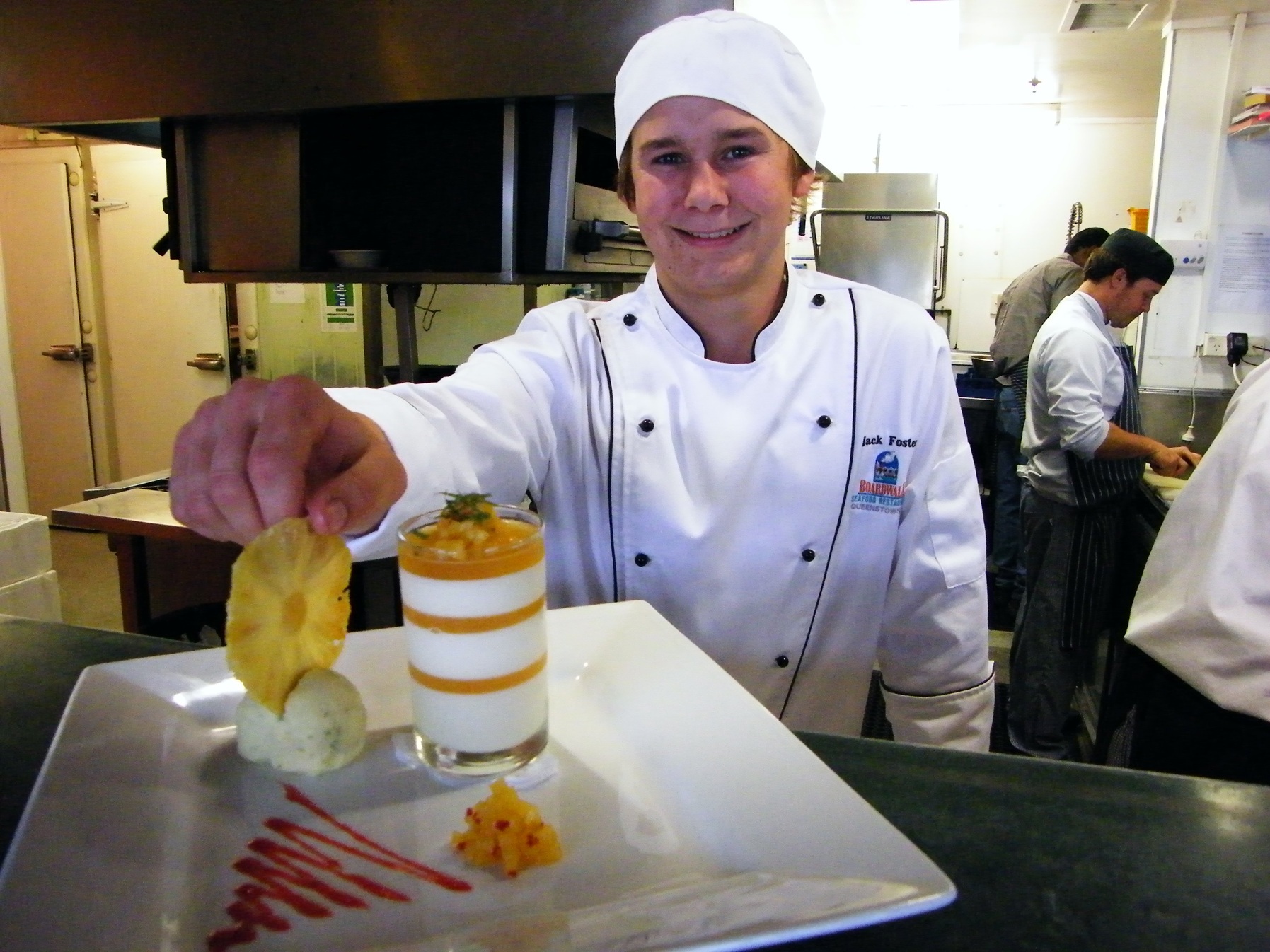
Foster’s journey to Cardrona began as an apprentice chef at a former Queenstown restaurant, Boardwalk. It was one of the town’s top restaurants in its day, hosting the likes of US president Bill Clinton for dinner.
"My chef there, Grant Jackson, was a bit of an older chef, but [with] a wealth of knowledge. He was basically a walking encyclopedia of cooking. I couldn’t have gone somewhere better."
He grew up in Arrowtown, and his Wakatipu High School careers adviser helped him find his spot. He had always wanted to be a chef, although he is not sure why — but believes the influence of one of his grandmothers, who was a great cook and grew her own vegetables and fruit, was probably a factor.
"So I spent a lot of time with her learning how to bake and make muesli slices and muesli, and preserving fruits and all stuff like that."
A passionate mentor of young chefs, Jackson sent him once a month to work in the exclusive Blanket Bay Luxury Lodge kitchen, continuing to pay him for his time.
Then when Boardwalk closed down, Jackson made sure Foster continued to learn, organising a trip around the country working in different kitchens to get more experience. He worked a few nights at Orbit 360 at Sky City and Peter Gordon’s Dine in Auckland, as well as at the Crowne Plaza in Christchurch.
The experience enabled him to get a job at the Rees Hotel in Queenstown where he worked for the next three years, much of that time under Ben Batterbury, then considered one of the best hotel chefs in the country.
It was a different experience again — five chefs creating, on a fully booked night, for 45 people.
"There was a lot of time for one-on-one training."
Like many young chefs, Foster then decided it was time to spread his wings and get some overseas experience, heading to Perth, Australia.
There he got a job with British chef Scott O’Sullivan at his Red Cabbage restaurant. O’Sullivan had won Australia’s Good Food Guide chef of the year title twice and achieved two hats, but the restaurant did not survive the country’s Covid lockdowns.
"That’s where I had my first ‘hat’ experience."
At Red Cabbage he met fellow chef Cameron Jones, who was a year ahead of him in his career, and they developed a healthy competitive relationship.
"It was probably the space where we both grew a lot in our careers through trying to be better than each other."
After four years the mountains began to call and he decided to move to Canada. He was visiting Whistler on what was supposed to be a ski holiday, but he could not resist a job and ended up working "far too much" in his first year.
So the following year he got a job at a steakhouse called Rimrock, where he worked with a lot of locals in a family environment.
"It was a really nice experience over there. It was a big family. Some of the staff had been there for like 30 years."
Foster decided to return home, picking up a job at luxury retreat Matakauri Lodge for nine months until a job came up at Wānaka’s Ode, a one "hat" restaurant, under chef Lucas Parkinson.
Foster had been wanting to work there, so took the first position he could even though it was a junior position, because he was keen to further his knowledge about organic and farm-to-table cooking.
"I think there were about 98% of New Zealand produce and dried goods we were using in that restaurant were organic."
He worked his way up to head chef and had been there two years when Covid hit. Ode ended up closing after investors pulled out, leaving Parkinson facing huge amounts of stress.
After losing his job, Foster was lucky enough to pick up work at nearby Wānaka restaurant, Kika, with chef-owner James Stapley and chef Sam Cooper, where his partner was working.
He continued to work there until the Cardrona job came up, giving him the opportunity to run his own kitchen and also only work days, as the restaurant only opens for lunch.
"It’s amazing."
With just a team of three in place, it is a very hands-on job.
Foster’s passion is using as many local ingredients as he can — something he built on during his time at Ode — right down to the milk coming from Southland’s Farm Fresh South, the venison hunted in Fiordland from Fair Game, biodynamically grown grains and flours from Canterbury and spear-fished fish from Nelson.
"They basically take your order and then go out and catch it, and they don’t get anything else. More recently, we’ve used a company on the Torah Coast called Torah Collective for their crayfish, which is the same concept ... fish to order. And generally they get that to you within the next day."
Produce of that level makes his job easy, he says.
"So if someone’s put in a lot of effort into growing the produce and making sure it’s at the best they can do, it really makes my end of it, the cooking, far easier."
While it can be difficult to have that approach in a bigger venue, Cardrona allows him to make the most of what is available on the day, he says.
"So if you run out of something, you can just ring them up at the end of the day and see what they’ve got an abundance of and pick it up on the way to work the next day."
It does make for some demanding days, but Foster says "it’s well worth it". Achieving the hat took a lot of work, patience to detail and having a good team to back him up.
"You’re only really as good as the staff that are working alongside you. You’re going to have days off, you’re not going to be there, so you need them to hold the standards while you’re not there."
The news Michelin stars were coming to New Zealand’s main centres, including Queenstown, has excited many chefs and concerned others.
Foster had always wanted to work in a Michelin-starred restaurant but never made it to Europe. He has a bit of a "wait and see" opinion on the system’s arrival, given that New Zealand dining is a lot more casual than in many European restaurants.
"All in all, I think it’s a very exciting thing to have here, and it will definitely help the struggling hospitality industry."
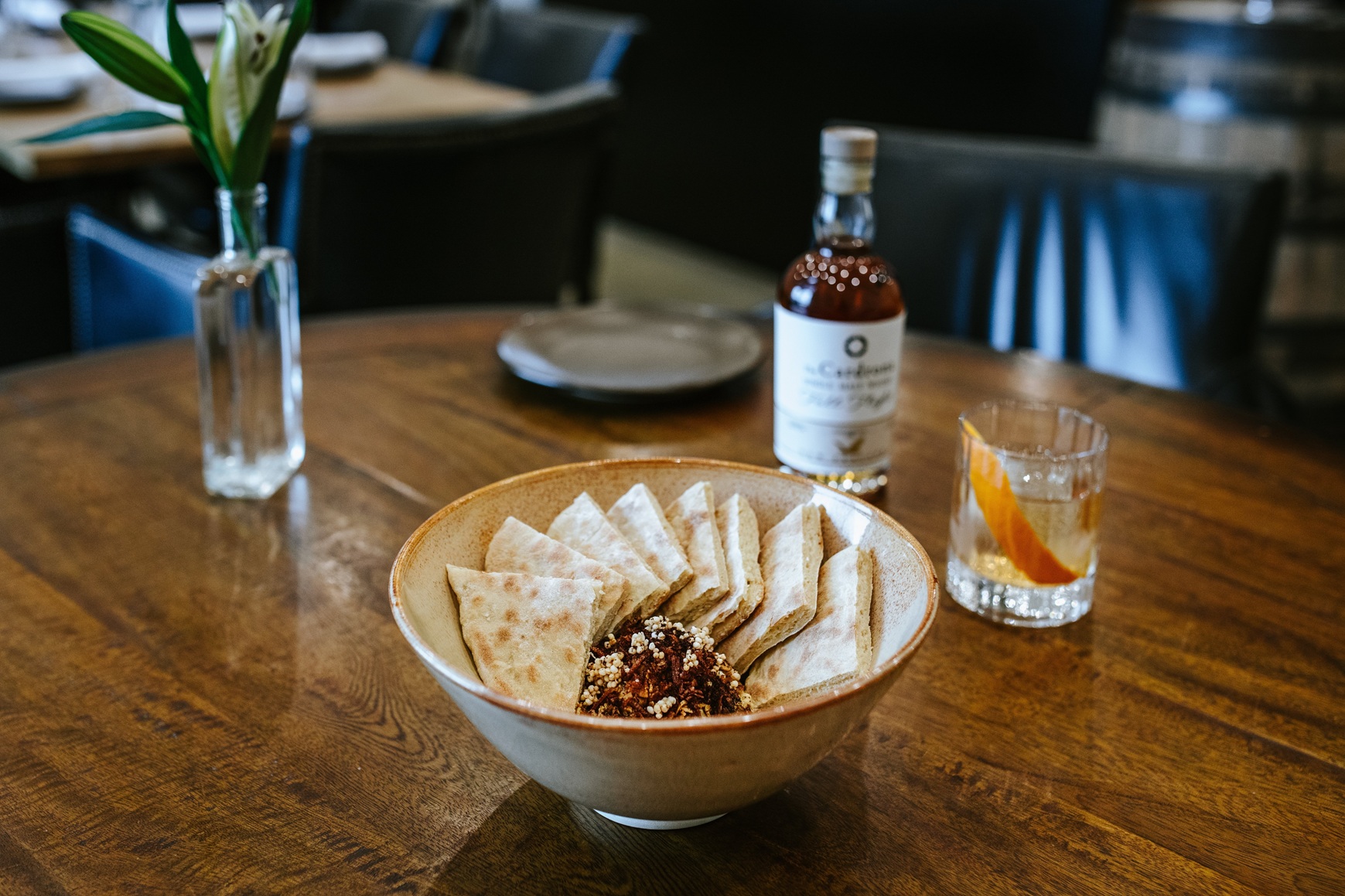 Caramelised spring onion dip with warm flatbreads
Ingredients
500g spring onions, thinly sliced
1 Tbsp butter
⅔ cup fresh mayonnaise
⅓ cup sour cream
⅓ cup Greek yoghurt
Zest and juice of 1 lemon
⅓ tsp onion powder
⅓ tsp toasted, freshly ground black pepper
Salt, to taste
Method
Heat a large pan over medium-high heat. Melt the butter, and when it begins to foam, add the spring onions.
Cook, stirring often, until the onions soften, reduce, and begin to caramelise.
Remove from the pan and cool the onions as quickly as possible.
Once completely cold, fold through the mayonnaise, sour cream, yoghurt, lemon zest and juice, onion powder, and pepper. Season with salt to taste. Cover and refrigerate overnight to allow the flavours to develop.
Flatbreads
175g self-raising flour
175g thick Greek yoghurt
½ tsp baking powder
Method
Combine all ingredients to form a shaggy dough.
Turn on to a floured surface and shape into a log. Cut into roughly 9 even pieces, roll each into a ball, and flatten or roll to about 5mm thick circle.
Heat a heavy-based frying pan over medium heat and dust lightly with flour.
Cook the flatbreads one at a time for about 2 minutes per side, adjusting heat as needed. Put on a wire rack to cool.
To Assemble
Heat the oven to 220°C fan bake.
Spoon the desired amount of spring onion dip into a serving dish.
Top with a generous drizzle of chive oil, then scatter over the pumpkin seed crumble and crispy shallots.
Warm the flatbreads in the oven for 3-5 minutes, then cut into quarters.
Serve warm for scooping — or dunk straight in.
Toppings
Crispy Bits
100g toasted pumpkin seeds
100g crispy shallots
Pulse the cooled pumpkin seeds in two batches to a coarse crumble. Mix with the crispy shallots.
Chive Oil
40g blanched, refreshed chives
100g extra-virgin olive oil
Blitz on high for 1 minute, then chill immediately to preserve the vibrant green colour.
 Hāwea Beetroot tart with Lake Dunstan hazelnuts and Blenheim goat’s cheese
Paired with The Reid Single Malt Vodka Signature Martini
Serves 4
Prep time 50min, plus overnight resting time
Cook time 2hr plus cooling time
Urban Hippie miso shortcrust pastry
100g cold butter, diced
125g white wheat flour
25g black sesame seeds
50g Urban Hippie miso paste
Day 1: Put flour, butter and sesame seeds into a large bowl and rub the butter into the flour until it resembles wet sand. Add miso paste and mix until it has formed a dough. Place in an airtight container and chill in the fridge overnight.
Day 2: Cut dough into 4 even pieces and roll each into a ball. While the dough is still cool, use a rolling pin to roll each ball into a circle approximately 3mm thick. Carefully press the rolled-out pastry into 4× 8cm tart tins then return to the fridge for 1 hour.
Preheat oven to 150°C degrees on fan bake. Remove tart tins from fridge and trim off any excess pastry. Bake for 12-15min or until golden brown. Allow to cool for 10 minutes. Remove from tins while still warm.
Hazelnut butter
250g roasted and peeled hazelnuts
200g sunflower oil
200g cold water
Salt to taste
Place hazelnuts and oil into food processor and blitz on high for 20 minutes (be careful — it will be hot). While blending on high slowly add the cold water then season with salt. Immediately place in an airtight container and cool in the fridge.
Shallot vinaigrette
80g sunflower oil
150g shallots, finely diced
75g sherry vinegar
100g extra virgin olive oil
10g salt
Heat sunflower oil in a small pot over medium-low heat. Add the shallots and salt and stir frequently until caramelised (about 50 minutes), then add sherry vinegar and stir frequently until reduced. Cool the shallot mixture then whisk in the extra virgin olive oil.
Confit beetroot
1kg medium size beetroot
2.5L sunflower oil
Preheat oven to 150°C degrees on fan bake. Place the beetroot into a deep oven tray and cover with sunflower oil and roast for 2 hours or until al dente when you put a skewer into the thickest part of the beetroot. Allow to cool, then peel and dice the beetroot.
Whipped goat’s cheese
200g soft goat’s cheese
50g cold water
1 tablespoon extra virgin olive oil
Place all ingredients into a bowl and whisk until smooth. Once smooth put the cheese mixture into a reusable piping bag then into the fridge to keep cool.
Garnish
Fresh As beetroot powder
Roasted and peeled hazelnut halves
30 pieces of Italian parsley leaves
To serve
Put a 1cm deep layer of hazelnut butter in the bottom of each tart. Dress the diced beetroot in the shallot vinaigrette and season with salt. Place a layer of beetroot on top of the hazelnut butter then dust with the beetroot powder. Pipe dots of the goats cheese on top and garnish with hazelnut halves and torn parsley.