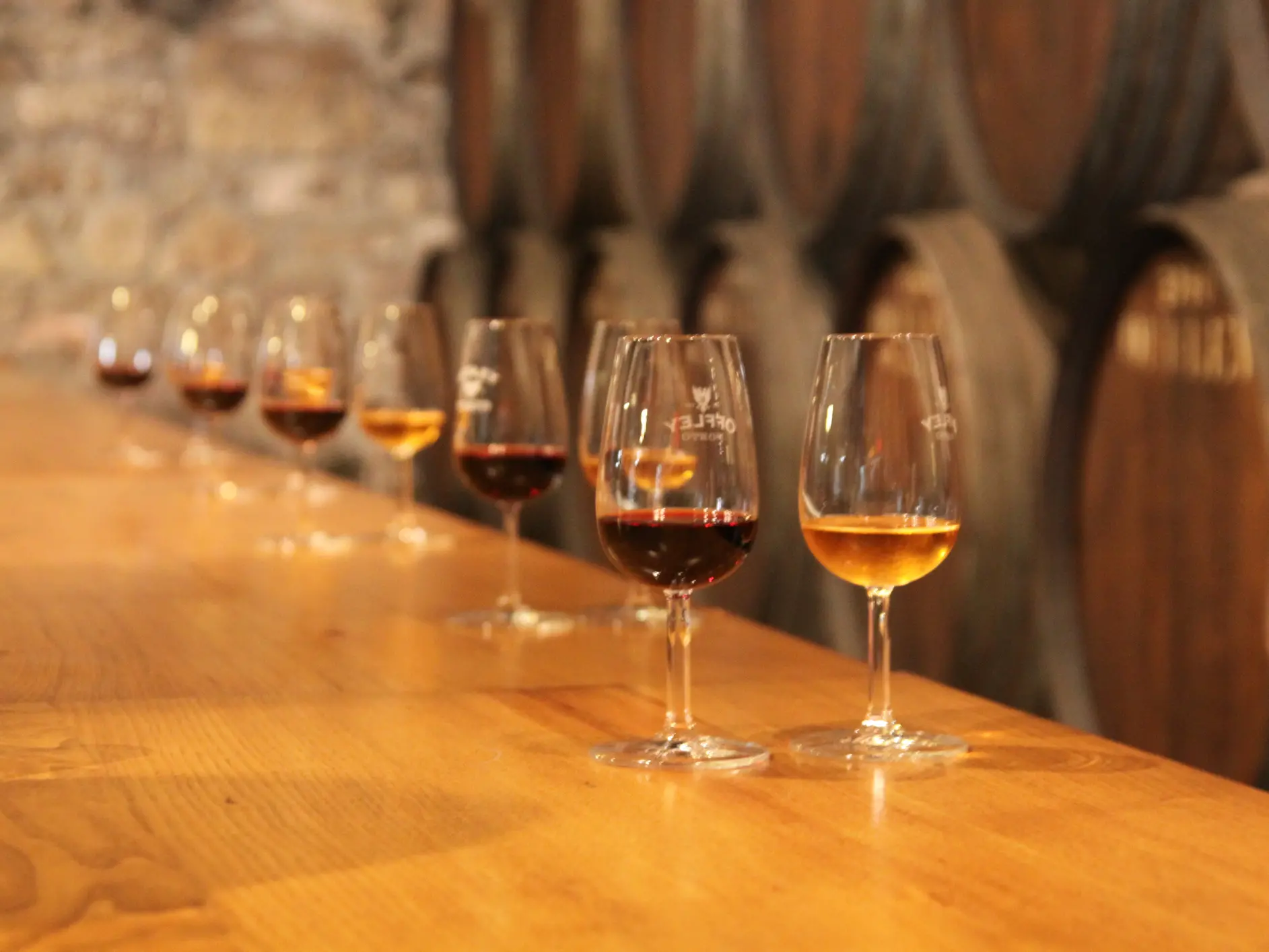
Tawny ports take their name from the colour of the wine, resulting from ageing and controlled oxidation of the wine. Photo: Getty Images
Port is a fortified wine from the Douro Valley in northern Portugal.
Its history dates back more than 300 years to the wars between the English and the French, which curtailed the supply of wine from France.
Enterprising English merchants began looking further afield and began shipping the dark and powerful wines from Portugal.
To maintain the wine’s freshness and stability on the journey to England, brandy spirit was added to the barrels of wine - its higher alcohol affording greater protection against spoilage.
At some point, brandy spirit was added to the still fermenting wine, and port was born.
The grape must (the mix of grape juice and grape skin) is run into fermentation vessels, with fermentation allowed to proceed for barely a couple of days.
The addition of neutral spirit then kills the yeast, arresting fermentation and thus retaining the natural grape sugars in the wine, while also extracting colour and flavour from the skins.
In the final wine, spirit makes up roughly 20% of the volume, leading to an alcohol level ranging from 18%-20%.
Tawny ports take their name from the colour of the wine, resulting from ageing and controlled oxidation of the wine.
Unlike the boldly fruit-driven Ruby, LBV and Vintage styles, Tawny styles offer mellow, nutty, "rancio" characters, classically paired with nuts and blue cheese, or contemplatively sipped by themselves.