
PHOTO
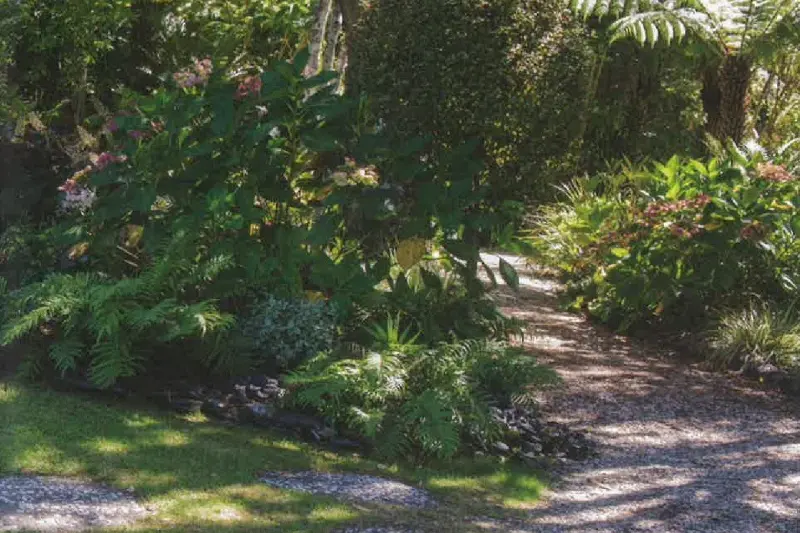
At first glance, Let’s Go Native looks like another book on the merits of native plants. But it so much more than that.
Its small-printed subtitle From Back Yard to Bush: Landscaping with Native Plants more accurately describes the content.
The focus of Let’s Go Native is how to use New Zealand native plants to create an attractive garden, but it also comes with plenty of practical advice.
Author Guy Hessell draws on his many years in the gardening and landscaping industry, including two years in London where jobs ranged from working on commercial sites to working for private wealthy clients.
In New Zealand, he has had a variety of businesses and jobs, including owning an upmarket landscaping and lawn business; working as head gardener at Summerset Retirement Village; owning his own shelterbelt nursery business, and managing Whangārei Quarry Gardens. He is now working three days a week gardening and landscaping at a winery on the Tutukaka Coast, Northland.
He was encouraged to write Let’s Go Native by many clients who wanted to know the basics of gardening and landscaping with native plants.
The book centres around four of Hessell’s landscape design plans. Three are formal designs with a small, medium and large focus, and the fourth is an informal design.
These can be used by someone starting their garden from scratch, or for someone wanting to adapt their garden.
Simple and clear explanations describe the differences between the two styles. For example, formal gardens tend to contain geometric shapes, such as round pruned balls, they have straight lawn edges and are quite symmetrical, whereas the informal garden has softer lines and curves and natural materials for borders and paths.
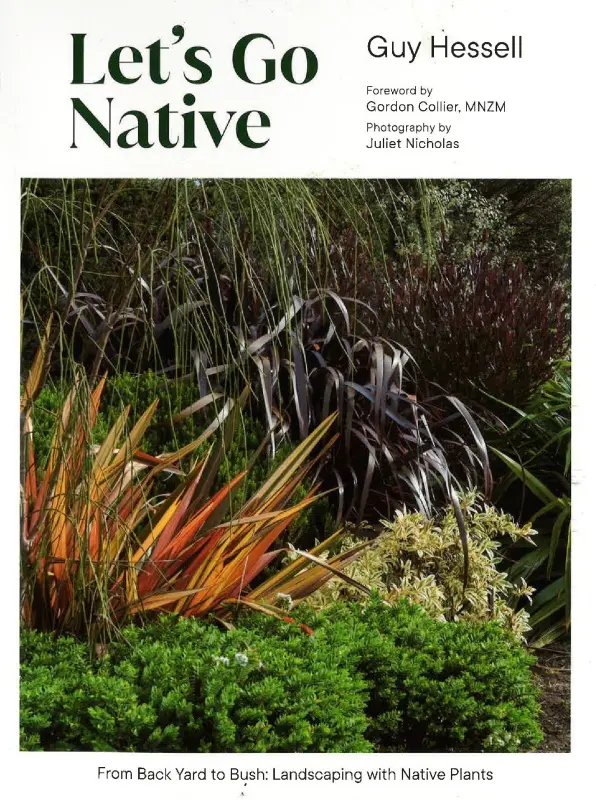
Each of Hessell’s plans lists the plants required and describes how the leaf size, colour or texture works with other plants. Unfortunately, there are no photos of the finished garden; instead, photos throughout the book are from a variety of gardens in New Zealand, for example the Auckland Botanic Gardens, Moritaki Garden in Blenheim, or Broadfield in Christchurch.
His landscaping ideas are inspiring — such as creating a garden design using two connecting circles, making a grass deck, or introducing square shapes bordered with pavers and filled with Leptinella ground cover.
There are also very practical ‘‘tips of the trade’’ scattered throughout the chapters, such as ‘‘plant your hedge first as soon as you buy your section’’, or ‘‘before planting, submerge the root ball in a 20L bucket of water until bubbles no longer appear’’. And my favourite — how to secure a ponga log to a slope to prevent mulch sliding down a hill.
Hessell also devotes a chapter to riparian planting — ie an ecosystem alongside water. This chapter will be useful for farmers or lifestyle block owners who want to fence an area to keep stock out of waterways.
The author’s aim to encourage people to look at New Zealand native plants in a new light has certainly succeeded.
As he says, ‘‘individually, native plants can sometimes seem plain, but this book hopefully shows how colour, texture and contrast available in New Zealand natives can combine to make a very attractive garden’’.
- Louise Frampton