
PHOTO
Fighting talk and words of defiance are forever etched into the history of Huriawa Peninsula, Matapura Ellison tells Tom McKinlay and Luke Chapman.
The waves of migration that swept down through Te Waipounamu over the centuries made for a rich intermingling of whakapapa, as marriages consecrated the connections between newer arrivals and those who had settled earlier.
Soon enough, their children could claim connection to a host of eminent tīpuna and any number of waka.
But it wasn’t all a love fest.

Conflict flared sporadically around the South over the years, including during the decades following the Kāi Tahu migration, as they butted up against the lands settled by Kāti Māmoe.
And the friction was not always inter-iwi — because families don’t always get along. An example of whanaunga fallout played out on the Otago coast, at Huriawa, the peninsula that extends out into the Pacific at the mouth of the Waikouaiti River.
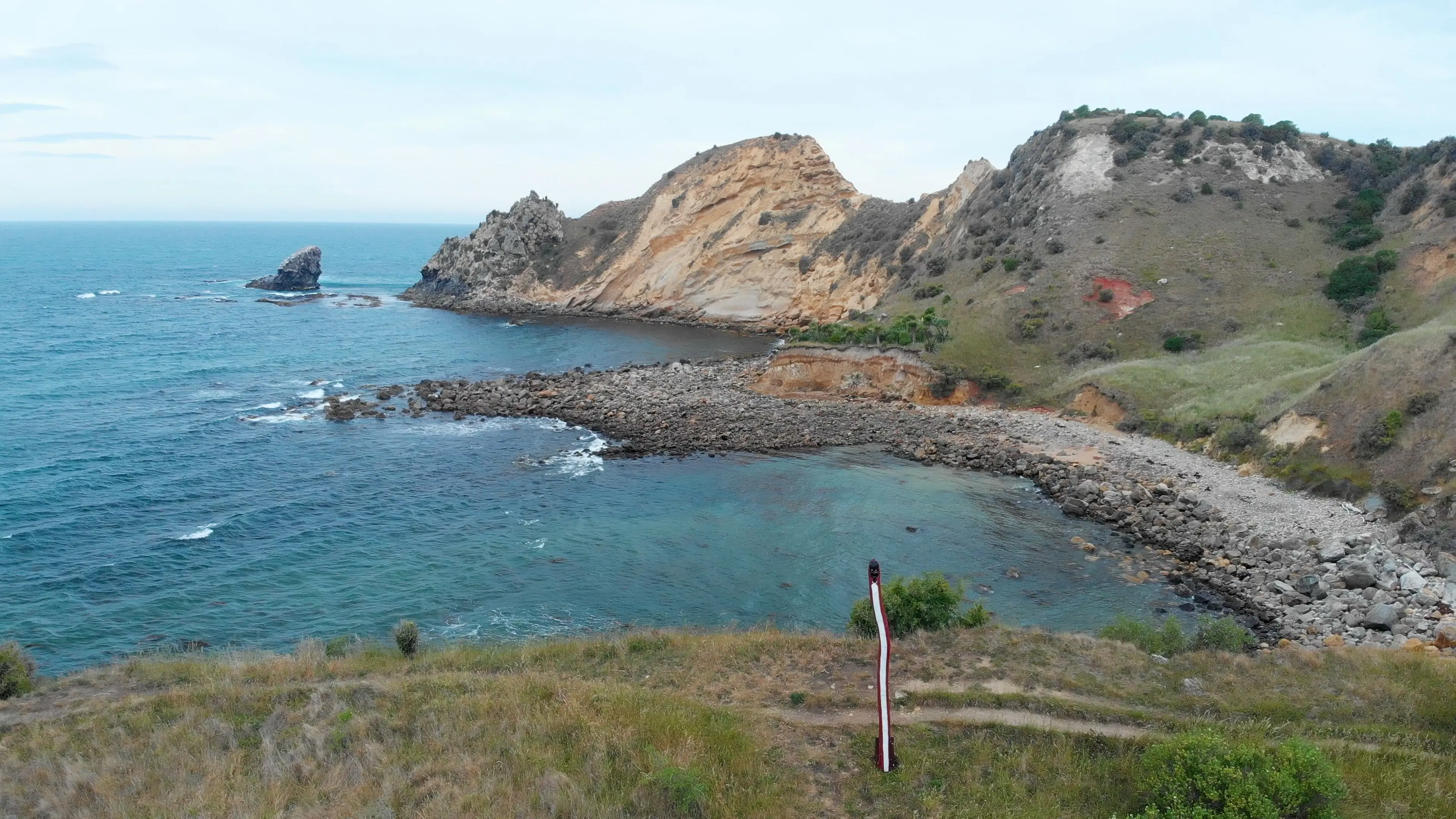
There, forces led respectively by Kāi Tahu rakitira Taoka and Te Wera came to blows during an extended siege of Te Wera’s Huriawa stronghold — Te Pā-a-te-Wera.
Kāti Huirapa Rūnaka ki Puketeraki kaumatua Matapura Ellison knows both the territory and story well. Indeed, in some tellings, his own tipuna Moki II had a significant role in stoking the flames. But that’s another story.
For all the durability of Te Wera’s legacy in the South, some mystery persists about the man, Ellison says.
"Around the time of his deeds, there are possibly up to four candidates who could be the Te Wera we’re talking about," he says, seated at the rūnaka’s Karitāne headquarters, a short stroll from the old pā site. "But it’s more likely one of two.
"And it’s certainly held by one of the whānau here that they are descended from the Te Wera, that Te Wera, whose deeds are associated with Te Pā-a-Te-Wera."
It is beyond question that Te Wera was a Kāi Tahu chief and related to Taoka, the man who was to become forever connected to him in story.
"They may have been cousins, second cousins, or Te Wera may have been an uncle to Taoka — there’s different views about that," Ellison says.
"However, that’s the beauty of the kōrero, that it can be discussed time and time again with different options put."
The two rakitira were part of the vanguard of Kāi Tahu’s movement into the South, charged by their elders to push down the coast from Taumutu — the settlement on the south side of Lake Ellesmere, or Te Waihora, in mid-Canterbury.
The strategic plan went well for a while, Ellison says, until there were some breaches of etiquette and the pair ended up facing off against each other.
The big set piece of their antagonism involved a six-month siege of the Huriawa pā, Te Pā-a-te-Wera, by Taoka and his forces.
"In the annals of our Kāi Tahu kōrero, our histories, it was a significant distraction from the tasks they were first charged with doing.
"However, these things happened, and utu being utu, one act demanded payment, and so you get this escalation of aggrieved people, and this is exactly what happened between Taoka and Te Wera. So Taoka and his army besieged the pā."
But he didn’t catch Te Wera napping. Rather his adversary had anticipated an attack and organised his people to lay waste to any edible food in the area.
At the same time, they built up a large pātaka, or storehouse, of food, of birds from the forest and other provisions — the likes of aruhe, fern root, a staple at the time.
"Essentially, when Taoka arrived, there wasn’t an awful lot for them to eat, because an army has to be fed, and so they sent out foraging parties."
The upshot was that the months dragged on and, in the end, Taoka had to give up the siege, defeated by the need to find food.
The defining feature of their confrontation is captured in an exchange between the two, remembered still, Ellison says.
Taoka is said to have threatened Te Wera, "Me whakatiki koutou ki te kai", "We will starve you out".
But Te Wera, sure of the size of his pātaka kai, responded "E kore ai, e kore au e mate i te kai", "I will not be starved out".
"E kore mā te matua whakatakoto ki Te Kutu o Toretore, e kore e taea!", "Nor by the army lying beyond the gates of Toretore" — which was one of the main entrances into the pā.
"Engari, mā te matua mate wai, ka mate au!", "Only by the army of thirst will we be destroyed".
Even there, Te Wera had an ace up his sleeve, Ellison says.
Unbeknown to Taoka, there was a spring in the middle of the pā, which supplied sufficient water to keep the garrison going.
"And that was protected by a covered way, we’re told, and the name of that spring is Te Punawai a Te Wera, the Well of Te Wera."
There were numerous attempts by Taoka’s army to surprise the defenders, but each fell short of its design.
On one occasion they launched a surprise attack by waka, into Te Awa Mokihi, what’s now also known as Butterfly Bay, but that too was repulsed.
"The main battleground, we think, was very much the low ground to the south of the pā, of the peninsula, which is now a built-up area, of course."
This was intense in-your-face stuff, Ellison says, right outside the pā gates.
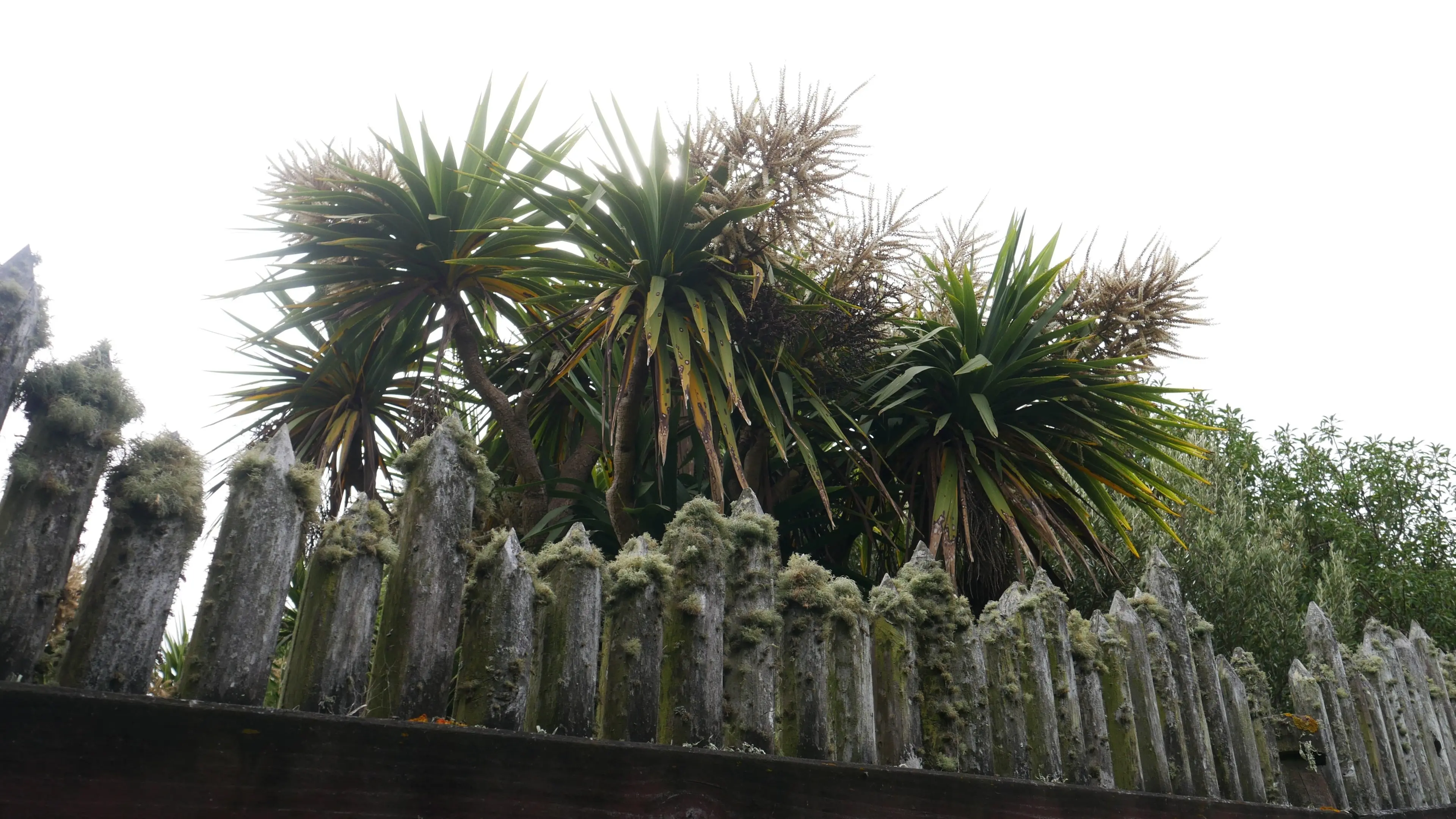
The archaeological evidence indicates there were three parts to the site’s built defences, though the palisades didn’t run around the whole of the peninsula. Rather, the occupants relied in part on Huriawa’s natural features, including its high sheer cliffs, to keep them safe.
Even here though, Ellison reminds that it doesn’t pay to be too sure.
There was an occasion when two of Taoka’s men — in the dead of a moonless night — made it inside the pā. The peninsula has several pehu, blowholes, on its south side, and the two warriors stealthily climbed up through one of these.
Once inside, they made for a particular prize — a deity, Kahukura, which was kept on an altar on one of the highest points of the pā, Te Iringa o Kahukura — then legged it back to Taoka’s camp on the far side of the sand hills.
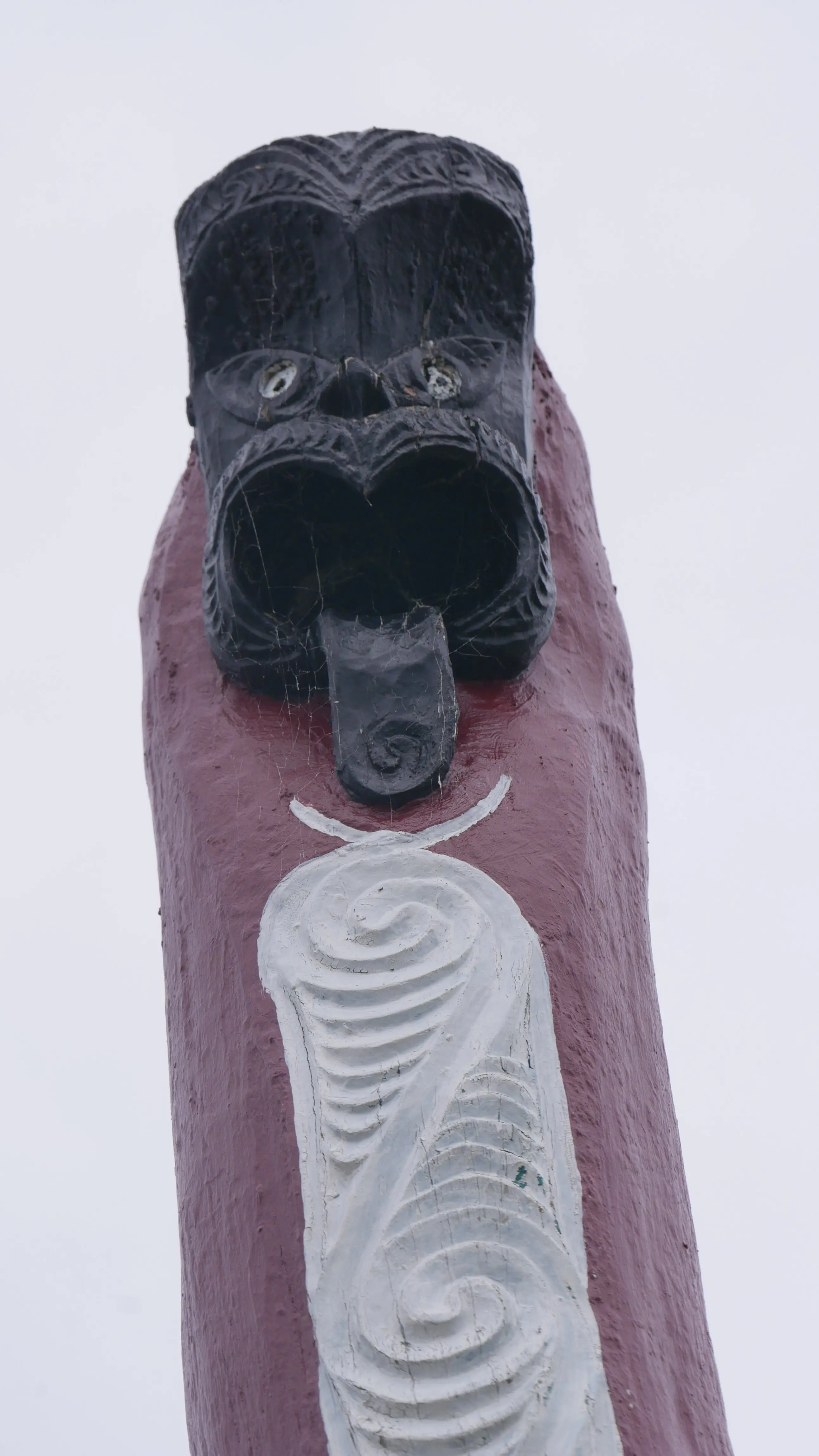
Kahukura was the protective deity of Kāi Tahu, so a very great loss to Te Wera’s followers.
"There was a rousing haka the next morning from the army of Taoka," Ellison says.
In response, Te Wera had his tohunga, Hautu, utter karakia, which caused the effigy to rise up out of the army of Taoka and return to its home.
The pā isn’t the only place in the area that carries the rakatira’s name. Kā Poupou a Te Wera lies further up the river and was possibly an eeling site, Ellison says.
However, after Taoka finally abandoned the long siege, Te Wera and a large part of his people left their fortress too, travelling south as far as Rakiura (Stewart Island).
Te Wera’s name lies on the land there too.
The Ngāi Tahu Atlas Kā Huru Manu records the name Te Wehi-a-Te-Wera as the Māori name for The Neck.
"Te Wera famously encountered a seal that frightened him, and the place was subsequently named ‘Te Wehi-a-Te-Wera’, which means ‘The Fright of Te Wera’," the online atlas says.
Te Whaka-a-Te-Wera is the name for Rakiura’s Paterson Inlet, whaka being the southern dialect pronunciation of whanga, meaning bay or harbour.
Te Wera died peacefully at Rakiura, Ellison says.
"Peacefully, rather than departing on the battlefield, which he lamented."
It is recorded that his ōhākī, his final words, to his sons were to urge them to die a warrior’s death on the battlefield.
And indeed, they did as they were bid.
As for the pā, Te Pā-a-Te-Wera, that didn’t follow its namesake’s advice.
"It doesn’t seem to have had any major conflicts associated with it again," Ellison says.
Toitū te Whenua is produced by Allied Productions.
Watch full series here;
https://www.odt.co.nz/lifestyle/toitu-te-whenua/toit%C5%AB-te-whenua-m%C...