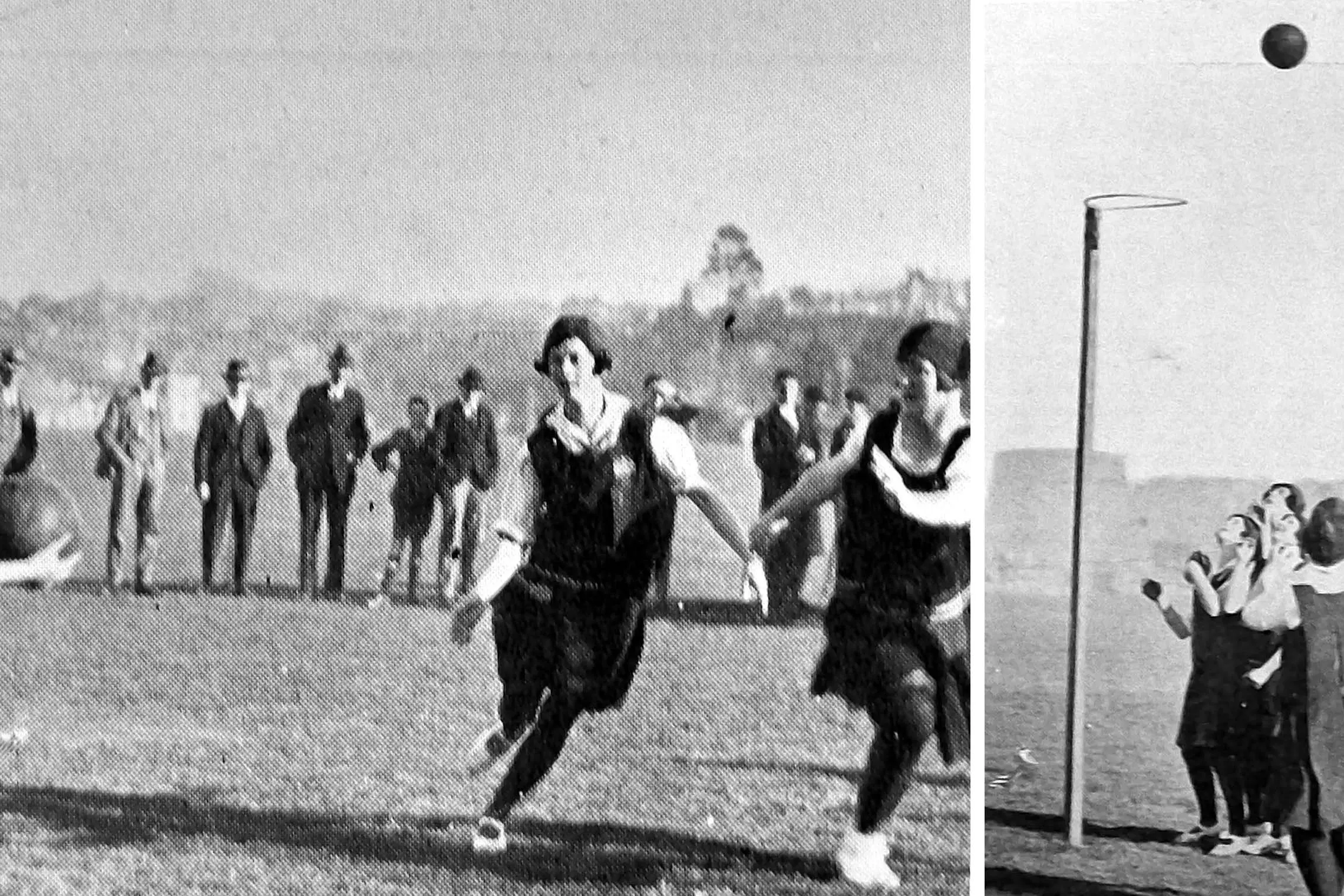
The Christchurch-Dunedin Training College Tournament was continued yesterday in ideal weather conditions. In the morning the tennis competition was brought to a conclusion at the University Courts, the honours going to Christchurch. Early in the afternoon the basketball match between Christchurch and Dunedin was played at the Oval, Dunedin winning by 14 points to 12, after a fast game. At the end of the second spell Christchurch was leading by six points to four, but in the second spell Dunedin added another 10 points to Canterbury’s 6. Miss Gloyn scored three goals for Dunedin and shot one from a penalty, and Miss B. Muir scored three goals. What do people do all day? Interesting figures are printed in the Labour Department’s annual report from the latest census of 1926. The primary producers numbered 117,218 — and secondary producers, domestics and others 498,891. In addition there are engaged in distribution, etc, 138,231. In teachers, servants of the Government and local bodies, lawyers and other professional workers, the number of 33,424. Engaged with luxuries and other non essential occupations are 7698. Children and other dependents number 423,451, making a grand total of 1,218,913. Factories increased by 443, but there was a decrease of 305 in the number of workers. The increase in the number of factories is due to the fact that many small factories were registered during the year, particularly in districts where hydro-electric power has become available and small motors could be cheaply installed. The decrease in the number of employees is due to a reduction of the number engaged in sawmills, dairy factories, woollen mills and the women employed in the millinery trade. The milliners suffered because of the smaller amount of trimming now required in women’s hats. There are now nearly 26,000 shops in New Zealand. Half of these are carried on without assistants. In the shops with assistants there are employed 20,029 males and 19,781 females. There were 102 industrial disturbances in the Dominion during the year. Of these 72 were trivial. Coal mine, shipping, and wharf labour were responsible for many of the more serious disputes. — by ODT Wellington correspondent Matauranga Māori An aged Maori, who had heard that the pakeha valued the Maori forecasts of the seasons, called at the New Zealand Herald office, and expressed a desire to convey a message to the people of Akarana, Auckland (reports our correspondent). Raising his right hand above his head after the manner of a Maori tohunga, he said: “Spring early, very early, and warm, good season: plenty te kumara, plenty te grass. Waikato have warm rain and produce greater than the pakeha ever known. North Auckland too very good. Dry weather come after New Year. Creeks dry up, but not for long. All crops heavy and everybody have plenty money.” Having delivered this cheerful prophesy the old man solemnly shook hands and prepared to depart. He would give no indications of the signs on which he based his opinion, his reply being: “Maori, he know. You see great prosperity, everybody happy. Work for all. Akarana grow and many pakehas come here like te manuka come up in the bush clearing.” With a courtly salute the venerable tohunga went on his cheerful way. Car taken from Invercargill The police have now in their safe keeping a two-seater Morris-Cowley motor car which was stolen from its owner (Mr J.H. McDonald) in Invercargill and driven to Dunedin by a particularly daring thief. The car was abandoned on Monday morning at about 10 o’clock on the lower road to Portobello, below Sir Lindo Ferguson’s residence, with a broken spring and an empty petrol tank. To avoid suspicion, however, the driver left a notice prominently displayed and worded, “Just run out of petrol, will be back in five minutes.” The police were informed during the evening, but the man had had ample time to escape. — ODT, 5.8.1926