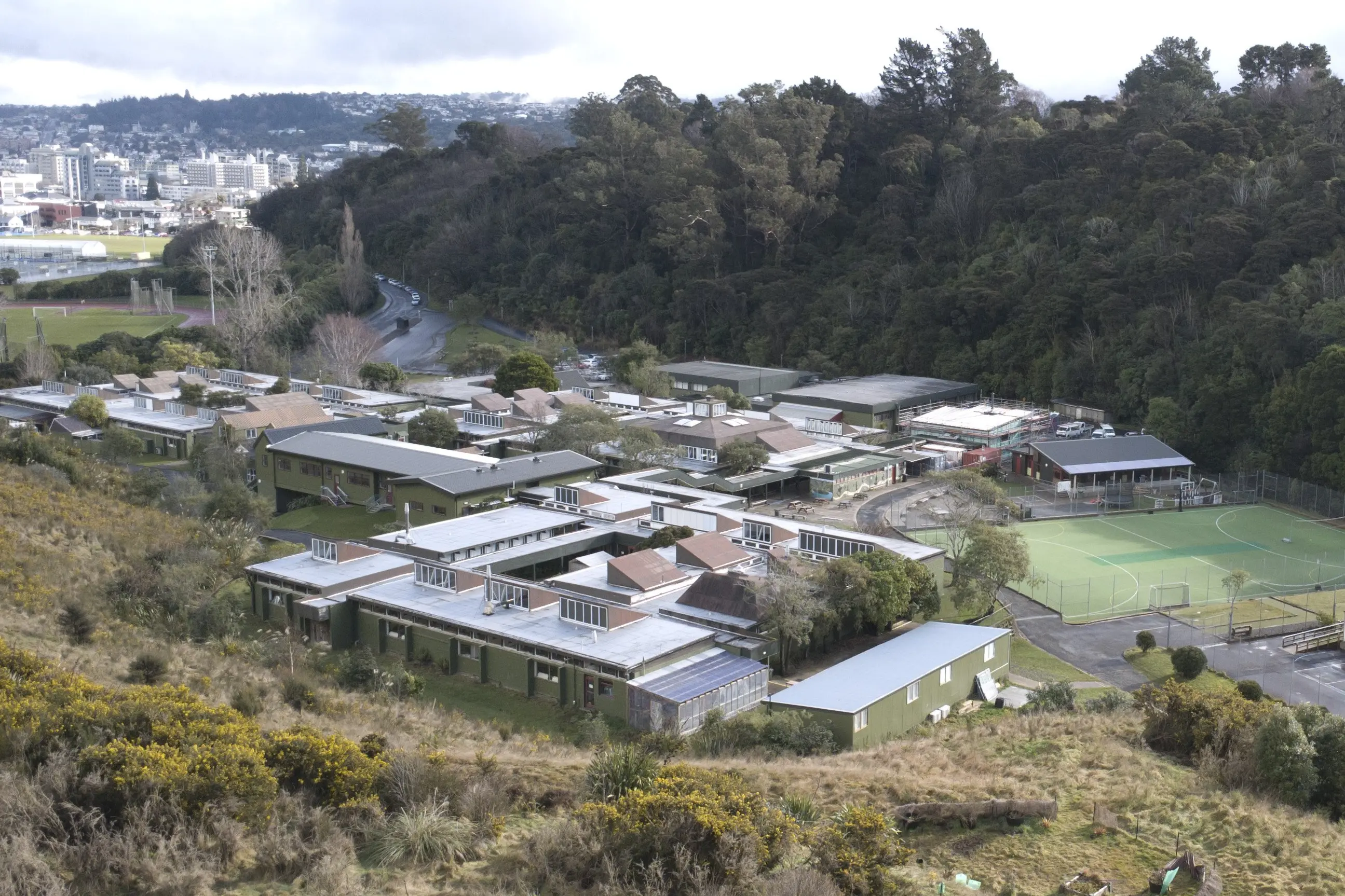
A Dunedin secondary school is confident being included in a government solar panel roll-out will be “really positive” despite it being nestled in a wooded valley. On Monday energy minister Simeon Brown and education minister Erica Stanford announced that 500 schools nationally were selected for “solar technology” — a programme where school would have solar panels installed as part of the pilot for the $30 million programme announced in the Budget this year. Schools were selected because they were identified as experiencing energy or fuel insecurity, as facing higher energy costs, were scheduled for gas or diesel boiler replacements, or had a need for greater energy resilience. Logan Park High School was one of the schools selected, and they jumped at the chance to take part. Principal Kirsty Sangster said the plan at the moment was to wait until the science block on the east side of the school was due to get re-roofed, which would be done as part of staged improvements. Despite being nestled in a shaded valley, she was confident the science block was a good location for solar. "Probably at that stage would be a good opportunity to make sure that the roof can actually hold the panels . . . it's also sunny and it catches the sun for the longest amount of time during the day too.” Being able to be more sustainable was also a very positive thing for both the school and the parents. "Obviously it costs quite a bit to heat our buildings in the winter, so it'll be nice to include something that's a more sustainable form of energy. "I think the response from the community should be really positive.” A total of 37 schools — primary and secondary — in Otago were selected for the programme, and 16 in Southland. [Missing Credit][object Object] The selected schools could choose to have solar panels installed after on-site assessments were done to ensure the site was suitable and could handle having solar panels installed. Ms Sanford said the programme made use of the buildings schools already had, reduced their environmental footprint, and helped schools keep more money in their budgets year after year. "By generating more clean, renewable energy on school rooftops, we can cut schools’ electricity use from the grid, reduce emissions, and lower their power bills at the same time,” Ms Stanford said. "Large schools are expected to save around $8,000 a year on average on electricity, freeing up money that can be spent on teaching and learning.” laine.priestley@odt.co.nz