
PHOTO
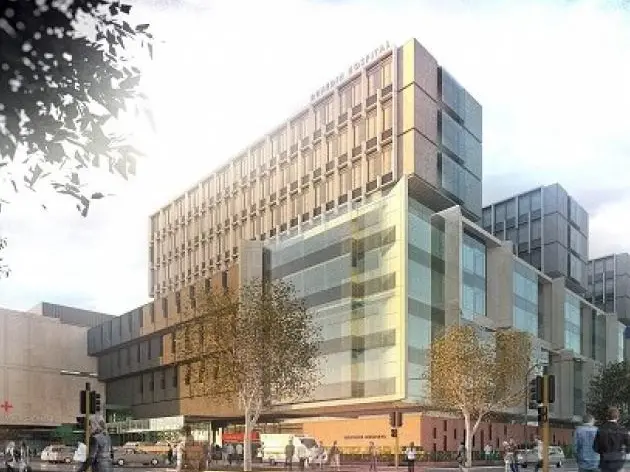
Dunedin's busy state highway could be cut to one two-way road running through the city as the new $1.4 billion hospital takes shape.
Plans for the hospital include a suggestion Cumberland St be turned into a public road with reduced traffic, and Castle St a two-way state highway.
The New Zealand Transport Agency said some traffic may be re-routed via Thomas Burns and Frederick Sts.
The change, the preferred option in a report released today by the Ministry of Health, could see a major reconfiguration of the city transport networks if it goes ahead.
It is one part of a wide-ranging report.

The preliminary site master plan for the new hospital notes the one-way streets taking cars north and south on either side of the hospital sites between Cumberland and Castle Sts are "significant constraints'' to the site.
The plan, released to the Otago Daily Times yesterday, said the roads, both state highways, were the busiest central city roads.
As such, they created "a barrier to safe and easy pedestrian access to the building''.
Possible changes to the state highway were indicated in November, when a workshop hosted by the NZTA and the Dunedin City Council was held in the city to discuss the issue.

The plan lays out what it called "potential initiatives that may change the current road network in the vicinity''.
Those included changing the one-way system to two-way, reducing the amount of traffic on Cumberland St, making Castle St the main north-south arterial route and slowing traffic on St Andrew St.
NZTA regional relationships director Jim Harland emphasised no decisions had been made, and detailed planning had yet to begin.
"This is an aspirational master plan from the hospital's perspective at the moment. It is a preliminary master plan, not their final word.''
Mr Harland raised issues of right turns off a two-way highway as one problem such a change could cause.
"When you bring two-ways in you introduce a lot of right turns that currently exist by the right hand lane.''
Right turning across traffic meant a trade-off in terms of travel time and reliability.
In Christchurch speeds had been reduced and streets made more attractive with one-way streets still in place. That reduced right turns and traffic conflict.
"There's a lot of details to be worked through.''


Mr Harland also said an option that has been raised more than once in the last decade, running traffic along Strathallan, Wharf and Thomas Burns St, then along by the railway track, up Frederick St, then back on to the Cumberland or Castle St, could be back on the table.

Mr Harland said reducing traffic on St Andrew St, which the hospital was suggesting, meant the east-west link needed to be "beefed up'' elsewhere.
"The two likely candidates are Hanover and Frederick.'' That's all part of the next bit of work to see which one would be better.''
Frederick St was probably the best option, though that was "too early to call".
Dunedin Mayor Dave Cull said a list of viable options was developed as to what could be done, and which was best.
Turning one of the streets, preferably Castle St, into a two-way main state highway, and Cumberland into a local road, was seen as the ideal.
That would mean the cycleways could be moved to the local road, Cumberland St, and taken off the state highway altogether.
Mr Cull said a two-way Castle St would be his preference, but the affect on whole transportation network needed to be considered.