
PHOTO
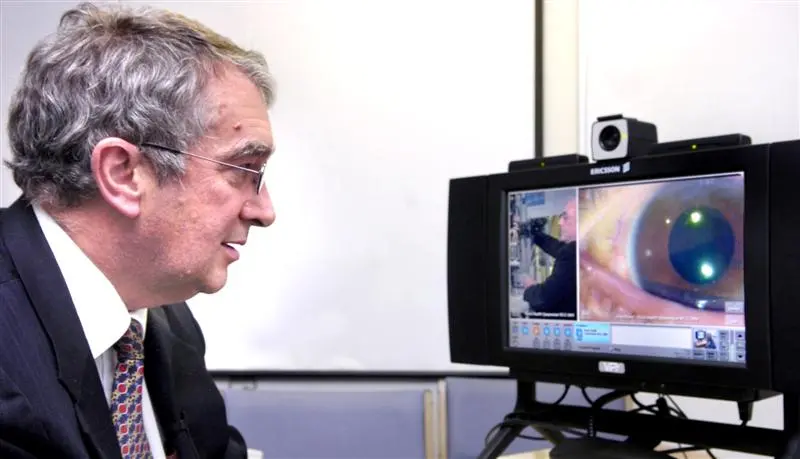
Dunedin consultants provided advice by video yesterday as part of a demonstration of live remote medicine to 170 people at a rural health symposium in Wellington.
While there were difficulties with the quality of images provided, it did show the potential of such links, the organisers said.
In one demonstration ophthalmologist Associate Prof Gordon Sanderson examined a woman who had had cataract surgery the previous day to see if she had post-operative complications.
A rural GP using a slit lamp conveyed the images.
Prof Sanderson said he could see the potential for using such technology, but the clarity would need to be better to make a conclusive diagnosis.
An alternative could be general practitioners seeking advice by conveying high-definition still images if they were able to photograph the relevant part of the eye.
Another of the demonstrations involved emergency department staff in Dunedin assessing the injury of a "patient" in hospital in Queenstown.
In that scenario, the patient had a shard of glass in her abdomen causing severe bleeding.
Staff in Dunedin were able to view the "injury" and help decide where to transport her.
The other simulation involved a "patient" in a road crash in Christchurch who needed to have the pressure in her lungs relieved by the insertion of a needle.
Co-convener of the symposium Dr Stuart Gowland said this demonstration showed how the use of a road-side camera by an ambulance officer or GP could be used to consult.
In yesterday's case, the image was able to be transferred to a GP's cellphone.
Dr Gowland said there was potential for specialists in tertiary hospitals to have a dedicated part of their clinic time to viewing queries posted by remote health practitioners.
This might save patients being referred to hospitals, or time might be saved because GPs could carry out tests before they arrived at hospital.
The symposium has also been linked to the several hundred people attending the World Organisation of National Colleges, Academies (WONCA) rural health conference in Crete.
Co-convener of the New Zealand symposium Dr Pat Farry, of the University of Otago's Dunedin School of Medicine, was due to give a presentation from Wellington by video link at 1 am today on the success of the rural immersion programme for medical students.
Associate Prof Jim Reid, also from the University of Otago, who is at the conference in Crete, has been reporting from there to the symposium by