
PHOTO
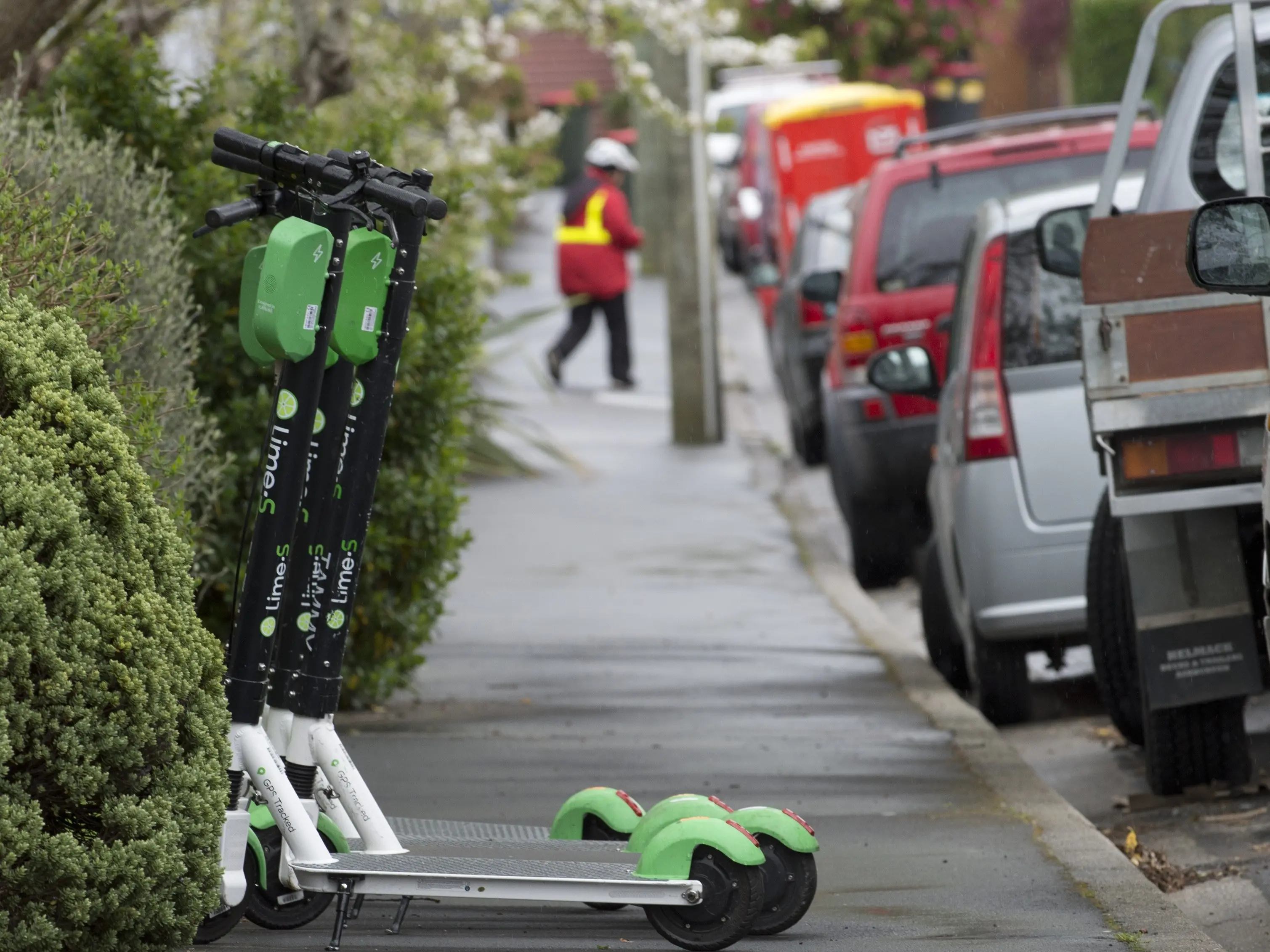
Lime says it has addressed concerns about its impact on the disabled community, and should be treated as a transport provider rather than as street furniture.
The company’s public affairs manager, Lauren Mentjox, spoke against the Dunedin City Council’s proposed trading in public places bylaw at a hearing yesterday.
Speaking via video-conferencing platform Zoom, she said it was aware of concerns from the disabled community, and was actively working on issues like tipped-over or poorly parked scooters.
"We’re about to embark on a national campaign about mobility."
Lime had the technology to detect when a scooter was on its side or had been poorly parked and could rectify the situation quickly, often within an hour, she said.
It was also working to educate riders about the issue.
"We make sure we do our best about having them upright.
"It’s coming up two years since Lime has been in Dunedin, and we’ve ironed out a lot of the issues the [proposed] bylaw is addressing."
Ms Mentjox said Lime was a transport provider and should be treated as such.
"The footpath is not necessarily the place where scooters should be ridden."
Its preference was re-purposing car parks for scooter use.
"We’re trying to get people out of their cars. We understand it’s disruptive but we believe it needs to be regulated as a transport provider rather than as street furniture.
A memorandum of understanding between Lime and the council was working, without need to alter the present bylaw, she said.
"Our local team [is] very responsive, if there are issues we are more than happy to address them.
She referenced changes Lime had made in the city including implementing lower speed zones in the city and create "geo-fences" where in certain areas Limes would not work.
Councillor Andrew Whiley said he often saw a lime scooter lying on the ground for hours at a time without being moved.
Ms Mentjox replied saying Lime spent time on the phone with residents, and was able to talk to anyone who was having issues with mobility.
On Tuesday, the committee heard from disability advocates who said it was often difficult to navigate around e-scooters that had fallen over or were parked across the footpath.
Disabled Persons Assembly kaituitui-community networker Chris Ford said he supported the proposed bylaw as it would allow the council to geo-fence e-scooters, which were hazardous for those with mobility issues.
"Every day at least one scooter disposed of across the footpath ... it makes it very difficult for us, particularly in congested areas."
The regulatory subcommittee has begun deliberations based on the hearings and will make recommendations on the proposed bylaw to the full council.