

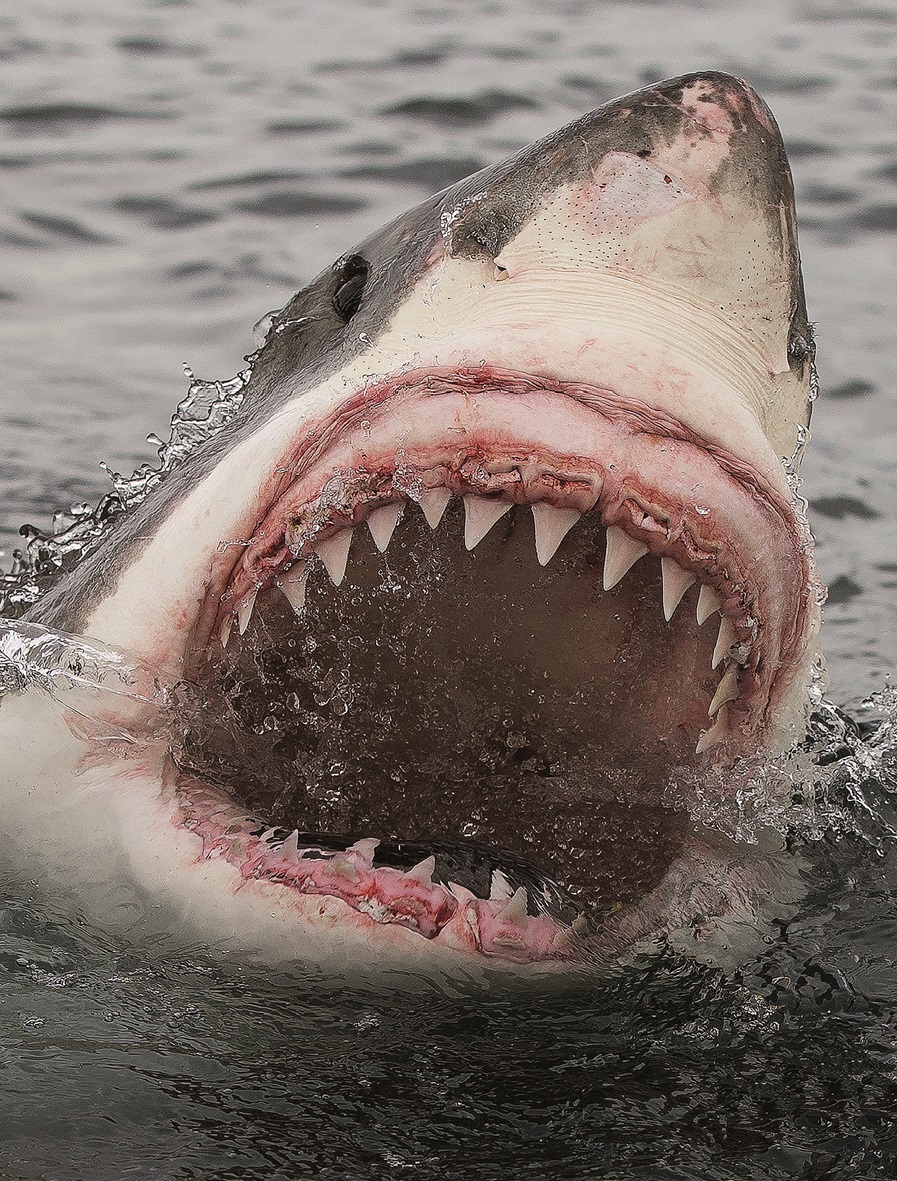
Prof Steve Wing, of the University of Otago, said Dunedin residents were more likely to die in a car crash on the way to the beach than to be bitten or eaten by a great white shark, because they were so rare.
The shark was endangered and became a protected species in New Zealand waters in 2007.
Prof Wing said he had been diving for more than 40 years and had only ever encountered two great whites in that time.
"You’d be lucky to see one.
"In fact, the best way to see one is to go spear fishing.
"They can detect from a long way away the vibrations that a wounded fish makes, and they can also detect from a long way away any blood in the water.
"Whites are the most dangerous around here. Putting blood in the water, putting dead fish in the water, gets sharks excited. It’s going to attract them."
That was what Waitati man Tom Brough was doing when a 4-metre great white shark came up behind him, about 50m off Huriawa Peninsula, near Karitane on Sunday.
Prof Wing said great whites came from around Australia and the Pacific Islands at this time of year, because the waters around Otago and Southland were warmer and food sources were more plentiful.
"From October through the summer months, the water’s a bit warmer and seals and sea lions are having their pups.
"They eat a lot of things, but the large ones feed on marine mammals.
"The smaller sharks would be feeding on fish and squid, but when they get up to 4m or bigger, they start hunting marine mammals."
Sometimes they could mistake humans for seals or sea lions.
To avoid coming face to face with a great white, or any other kind of shark, he suggested swimming in groups, because sharks, like all predators, saw solitary individuals as prey.
He said great whites were also visual hunters and needed light and clear water to identify preferred prey.
So avoid being in murky ocean water, or during twilight or darkness.
If a great white shark was encountered, he recommended staying calm, maintaining eye contact, and backing away slowly without splashing — they often mistake frantic movement for prey.

The goal was to slowly exit the water, keeping the shark in sight and warning others.
"Just realise you’re in the shark’s element, and the best thing you can do is get out of the shark’s element.
"Tom did exactly the right thing. He faced the danger.
"He interacted with it, poked it with anything he had, to show it that he was not just easy fodder, and then he got out of the water."
Despite there being more great whites in the waters around the south at this time of year, Prof Wing said you would have to be in the wrong place at the wrong time to encounter one.
So beach lovers should not be put off swimming.
"Obviously, we share the ocean with 4m-long predatory fish, and you don’t know when one might show up.
"Dunedin has a history of shark attacks, but that goes back to the 1960s and 1970s. So they’re out there.
"But it’s a calculated risk you have to take when you go in the ocean.
"I always tell people, it’s more dangerous to drive to the beach than to swim in the ocean."
Generally, if you swam between the flags, and lifeguards were on duty, there should not be any problems, he said.
Shark Experience Bluff spokeswoman Nikki Ladd praised Dr Brough’s actions.
She said the only time she had come face to face with a great white was while in one if the business’s cages.
"Our team are really, really lucky in that we get to see these beautiful endangered species a lot more than your usual Kiwi.
"But don’t get me wrong. To be in the water with them, without a cage, would probably be quite overwhelming.
"So good on that guy for getting through it safely."


