
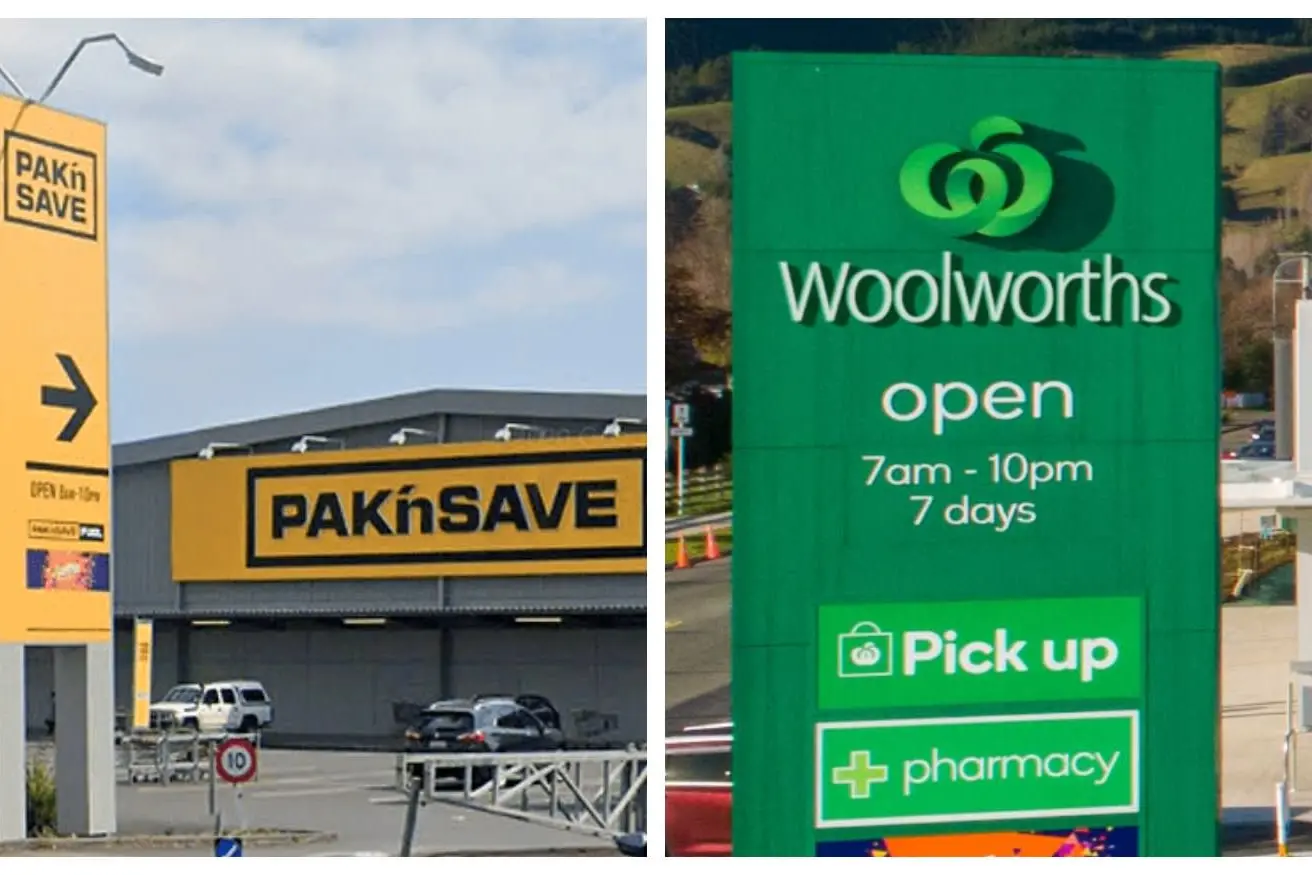
PHOTO
The Green Party is campaigning on establishing a publicly owned supermarket chain to break up the duopoly and drive down food prices.
The initiative is part of its “Affordable Kai” policy which would cost more than $6 billion over four years, and included expanding the school lunch programme.
Co-leader Chlöe Swarbrick said successive governments had failed to lure an existing chain to New Zealand to introduce competition in the sector, which is dominated by Foodstuffs and Woolworths.
"That's why today we are announcing the real solution: a supermarket owned by all New Zealanders, for all New Zealanders," she said.
"We're not short of supermarkets, we're short of competition. As experts have noted, divestment - that is, buying already existing stores - is key to breaking up the duopoly."
The publicly owned chain, KiwiMart, would be mandated to prioritise affordability.
Co-leader Marama Davidson said it was unacceptable that people were going without food because they could not afford it, given New Zealand produces enough to feed 40 million people.
"Government has abdicated its responsibilities and left it to the market, in fact literally, the supermarket," she said.
Foodstuffs and Woolworths would be forced to sell 120 stores and two distribution centres into public ownership, which would require new legislation, Swarbrick said.
The party said its plan would cost about $2.8b.
Parliamentary Library modelling estimated it would cost $1.3b to buy the stores and distribution centres, and $1.5b to establish KiwiMart, it said.
Swarbrick said KiwiMart would start with a 15% market share.
A publicly owned supermarket was not a new idea, Swarbrick said.
"This is something that has been identified by experts and economists, the likes of Consumer New Zealand as a consumer advocacy group, who have identified that as a small country at the bottom of the world, that it does make sense to have a publicly owned supermarket as a third competitor," she said.
"We are proud to say it's something that the Greens are taking to the election to actually increase affordability for New Zealanders. "
The Greens' full Affordable Kai policy also includes:
- restoring and permanently funding the school lunch programme Ka Ora, Ka Ako and expanding it to 150,000 more children ($2.2b)
- increasing food bank funding from $8 million to $25m ($72m) doubling the cap on Work and Income food grants ($388m)
- a $150m annual Fair Food Fund for community-led food security initiatives ($600m)
- increasing funding, penalties and powers for the Commerce Commission, including a mandatory pricing accuracy code with automatic compensation when shoppers are overcharged ($104m)
- banning supermarket price gouging and extending that to include other "uncompetitive" sectors like energy and fuel
- a National Food Strategy, including legislating the right to adequate and nutritious food.
Davidson said the policy would rebuild parts of the food system the current government had "run down".
It would be funded through its suite of new taxes, which was estimated to increase net revenue by $5.35 billion in 2027/28, rising to $5.94 billion by 2030/31.
