
PHOTO
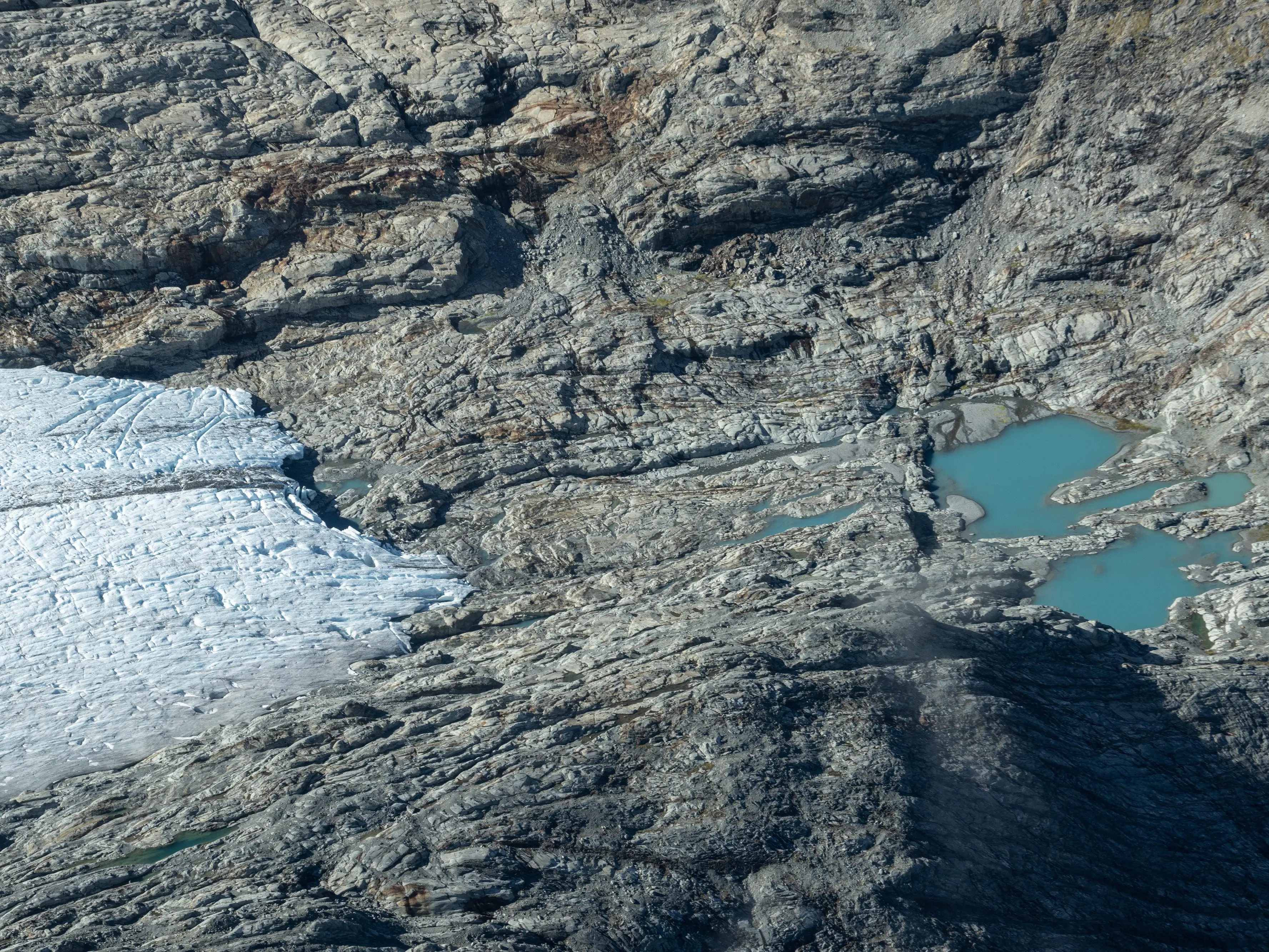
The retreat of the Southern Alps glaciers is "confronting", an Australian glaciologist says.
Monash University Earth, Atmosphere and Environment School head Prof Andrew Mackintosh was part of a team of scientists and climate experts to conduct Niwa’s 46th end-of-summer snowline survey.
The long-standing project captures an aerial portrait of more than 50 Southern Alps glaciers at a similar time each year to track how they change.
The 2023 survey was a collaboration between Niwa, Victoria University of Wellington, and the Department of Conservation.
The team spent nearly eight hours travelling back and forth across the Southern Alps, taking thousands of aerial photographs of glaciers of differing sizes and orientations.
The images will be used in a range of national and international research projects, including one that builds 3D models used to compare snow and ice year-to-year.
The snowline survey revealed continued loss of snow and ice for the glaciers, with the scientific results known later this year.
Prof Mackintosh said the Southern Alps glaciers had retracted markedly since he last joined the end-of-summer snowline flight.
"I was shocked by the state of the small low elevation glaciers, which have largely disappeared. Iconic glaciers such as Fox and Franz Josef have retreated markedly," he said.
"The scale of retreat is confronting, even to a glaciologist.
"It emphasises the urgency of slowing climate change because the impacts are going to become increasingly costly and hard to avoid," Prof Mackintosh said.
Niwa principal scientist Dr Andrew Lorrey, who co-ordinates the survey, said while the health of glaciers varied, ice loss was a continuing trend.
He had expected snowlines to be "very high" because of the South Island’s hot summer, but the survey revealed a "mixed bag".
"Snowlines were clearly visible across some glaciers while others had exposed ice from prior years laid bare up to the mountain top."
The global climate had warmed significantly since the snowline survey began and this year’s observations did not indicate a reprieve or a reversal of the ongoing ice loss trend.
"We’ve already had to abandon some of the index glaciers that we used to monitor because their snowlines and meaningful ice volume have completely disappeared. If current trends continue, we will see further contraction of snow and ice to only the highest places, leaving very little across the Southern Alps," Dr Lorrey said.
"This trend is worrisome — not only do we risk losing the glaciers and our intimate relationship with them completely, but it will also affect the livelihoods of people who rely on these natural wonders for tourism, as well as flow-on effects from decreased meltwater during periods of drought."