
PHOTO
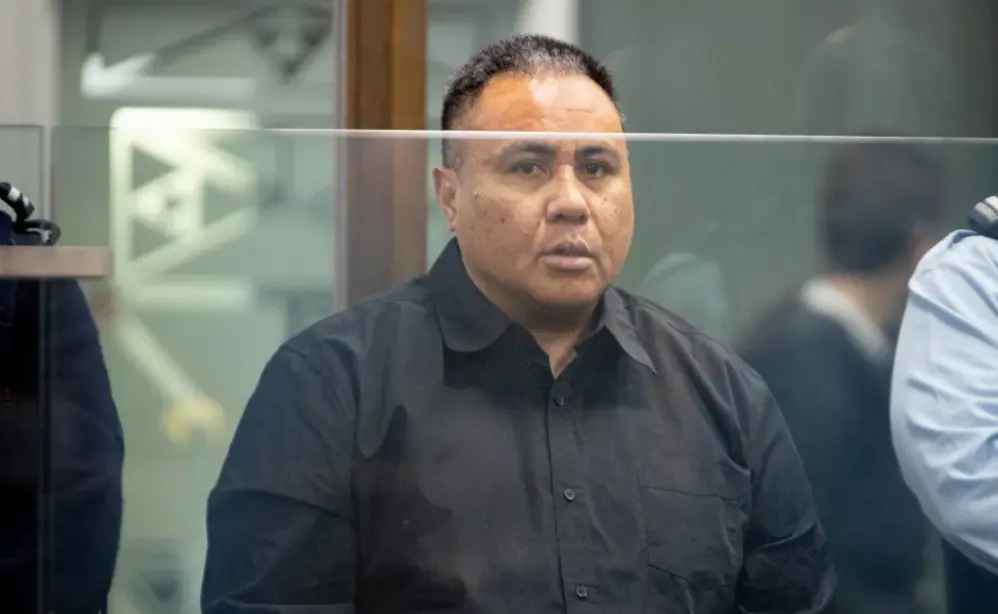
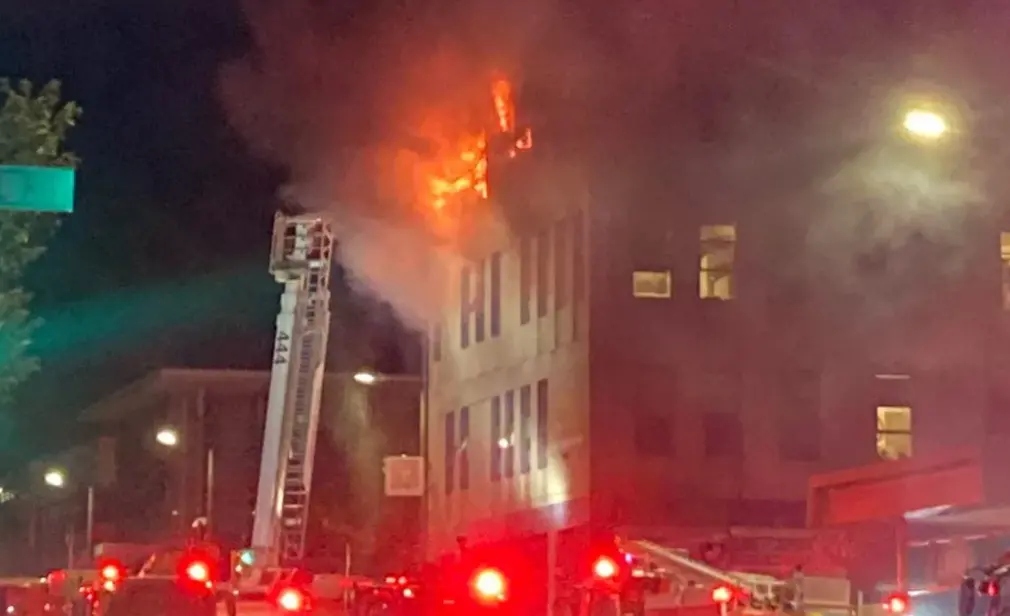
The man who lit a fatal fire at a Wellington boarding house has been found guilty of five counts or murder and one of arson.
The 50-year-old, who can now be named as Esarona David Lologa, set Loafers Lodge alight on May 16 in 2023.
Residents Michael Wahrlich, Melvin Parun, Peter O'Sullivan, Kenneth Barnard and Liam Hockings were killed in the blaze.
There were gasps and whispered exclamations of "yes" from the public gallery when the unanimous verdict from the jury of 10 was read out today.
The victims' families were among those present. Some were in tears.
It was never disputed that Lologa lit the fire, but he pleaded not guilty by reason of insanity.
He has been on trial at the High Court in Wellington for the past five weeks.
His name had been suppressed until today, but Justice Peter Churchman ordered that it be lifted at the end of the trial.
The Crown's case
The Crown said Lologa, who has schizophrenia, lit the fire because he no longer wanted to live at Loafers Lodge, a hostel in the suburb of Newtown, he had told people he didn't like.
It called about 100 witnesses during four weeks of evidence.
They included Loafers Lodge residents who described their harrowing escapes from the blaze, firefighters who fought tears recounting their experiences and, crucially, five mental health professionals who believed Lologa was not insane when he lit the fire.
The experts said Lologa did know his actions were morally wrong. They pointed to the accused's comments to police and psychiatrists, including that he had "done nothing wrong", as evidence he understood the difference between right and wrong.
Experts also recounted inconsistencies in his accounts of that night and his mental health at the time, saying that called into question his own narrative that voices in his head told him to light the fire.
During closing arguments, Crown lawyer Grant Burston said the defence had "not even come close" to proving Lologa was insane at the time.
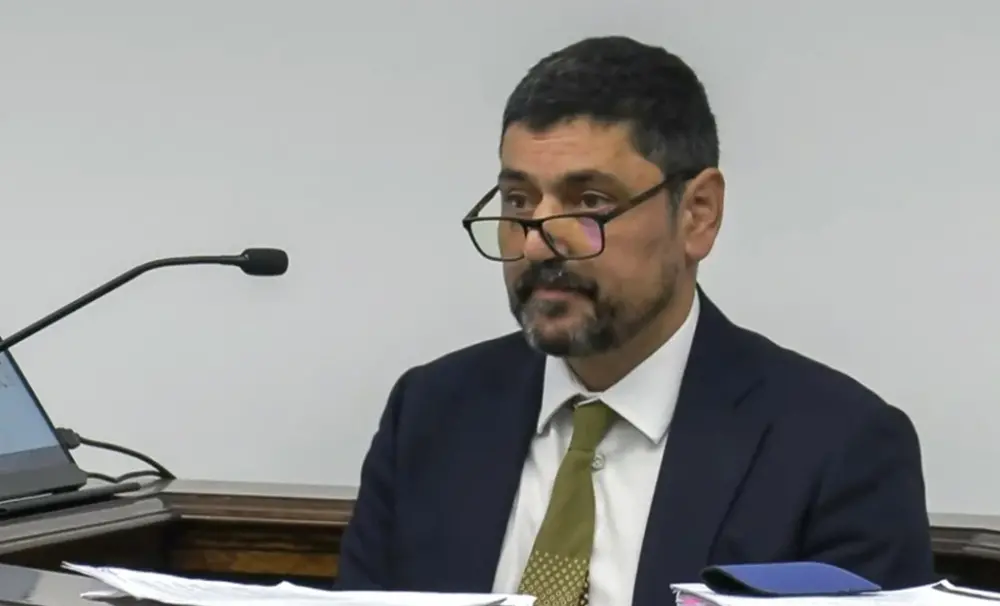
He said the sole psychiatrist called by the defence, Dr Krishna Pillai, took a "blinkered approach" to reach his "fundamentally flawed" opinion.
The defence arguments
Lologa's lawyers argued he was insane when he lit the fire. They called Pillai to support that, who told the court he believed that on balance, Lologa was incapable of understanding his actions were morally wrong.
Pillai pointed to CCTV footage the day of the fire showing the Lologa's agitation as he was "pounding" up and down the stairs and through the halls of the boarding house.
There was evidence Lologa suffered a "serious psychotic relapse", he said.
Pillai relied on Lologa's 'self-report' of his mental state at the time.
Lologa told Pillai and other psychiatrists he lit the fire because voices in his head told him that was the only way to stop people he believed were out to get him.
The defence rejected the Crown's assertion Lologa lit the fire because he wanted to get better accommodation, saying there was no evidence to support that.
"If you were to go with that theory, you would have to involve yourself in massive guesswork and speculation," Louise Sziranyi told the jury.
There was no reason for Lologa to light the fire other than mental unwellness, she said, arguing he was more mentally unwell than anyone realised.
Lologa would be sentenced on November 21.
The defence of insanity and burden of proof
The defence of insanity relies on three factors: the person must have a "disease of the mind" and not understand what they were doing or that it was morally wrong.
The first two points were not in dispute - Lologa had schizophrenia and both sides agreed he knew what he was doing.
The final point being argued was whether he knew lighting the fire was morally wrong, and knew people could die as a result.
The Crown called five experts who said Lologa was not insane when he lit the fire and knew it was wrong.
The defence called one psychiatrist who argued the contrary.
It was the Crown's job to prove the murder and arson charges beyond reasonable doubt.
But in raising the defence of insanity, Lologa's lawyers had to prove he was insane on the balance of probabilities - that is, it was more likely than not that he was insane at the time. That was a lower threshold than "beyond reasonable doubt".
50 previous convictions
Esarona Lologa - also known as Esa - was born in Wellington in 1975, but raised by his grandmother and uncle near Apia in Samoa. He moved to Wellington when he was about 13, where he lived with an uncle. He attended high school in Lower Hutt.
Failelei Lologa, who described Esarona as her adoptive brother, grew up with him in Samoa. She told the court Lologa was "respectful, quiet and likeable", but that changed when their grandmother died in 1993 and he started running away.
Lologa first came to the attention of mental health services in 1999, aged 24. He was hearing voices in his head that were swearing at him. He was diagnosed as having schizophrenia and was first admitted to a mental health facility in 2000.
The court heard details about Lologa's clinical history spanning more than two decades, including nine hospital admissions. Most recently, he fled an Auckland hospital while on unescorted leave, and lit the fatal blaze in Wellington just over three weeks later.
He has 50 previous convictions - including attempted murder with a machete in 2009 and attempted arson in 1996, after he broke into a butcher and tried to burn it down. He has also been found guilty of common assault and fraud.
As an adult, Lologa lived in Wellington and Auckland. He stayed in social housing and boarding houses, as well as in his car and on the street, psychiatrists told the court.
He worked on and off and did not have a lot of money. He told psychiatrists he would wander the streets, looking for food and cigarette butts.
