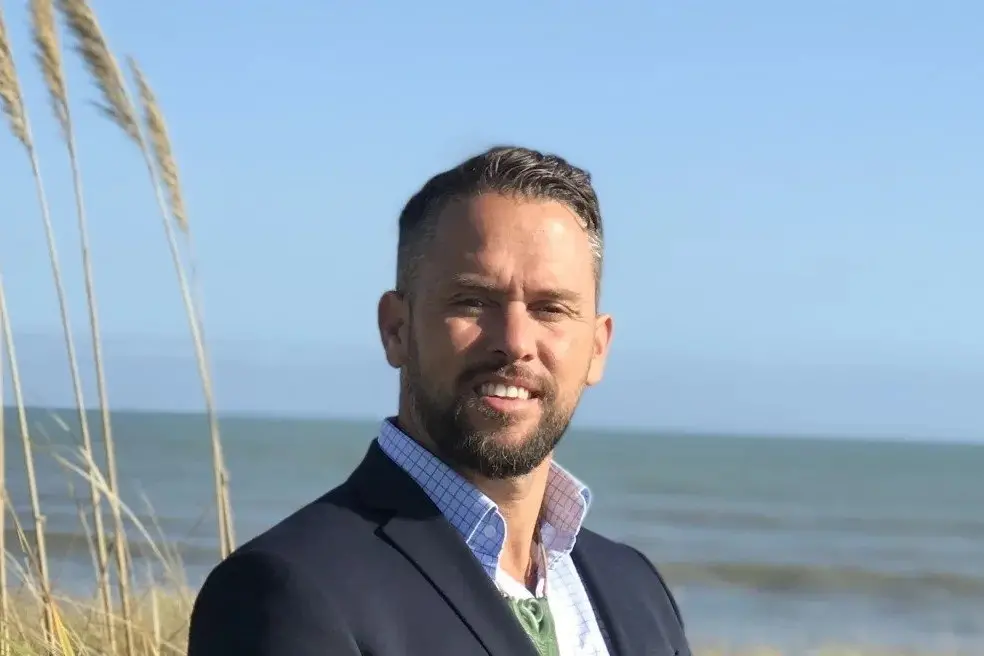
TE Tai Tonga MP Tākuta Ferris does not get that many days in the Parliamentary sun. Since he left Te Pāti Māori — or Te Pāti Māori left him, depending on how you interpret the byzantine politics of that caucus — Ferris is an independent MP. That means few opportunities to do anything substantive in the House. Speaking slots and Parliamentary questions are allocated on a proportional basis and a single MP up the back of the room is not able to claim that many. This week, however, the stars aligned for Ferris; not only did his turn for a Primary Question come around, he also was eligible for a slot in the General Debate. He did not waste his opportunities. While Parliament was all agog with prime ministerial apologies and the lack of any apology from the Minister of Foreign Affairs, Ferris had far higher concerns to address, asking Heritage Minister about what actions he would take to ensure the government met its statutory obligations to preserve the Rangihoua waka miheke? The what I hear many of you ask? The Rangihoua waka miheke might just be the most significant archaeological find in New Zealand in recent time — and possibly of all time. The waka was found in 2024 on the northern coast of Rēkohu (the Chatham Islands) and is a remarkably intact example of a voyaging canoe. Moriori oral traditions places the arrival of two double-hulled migratory waka, Rangimata and Rangihoua, from Hhiawaiki, at about 800 years ago. Radio carbon dating of organic samples from the waka suggest that the plants concerned grew sometimes in the 1470s or 1480s, making it entirely possible that this vessel may be Rangihoua. For Moriori it is a treasure of immense cultural significance. However, the waka is not yet in their care. Having been found on Department of Conservation land, the Crown has ownership of it and a responsibility for it under the Protected Objects Act 1975. The waka has already been the subject of a court case in which the ministry tried to argue that it only had responsibility for the portion of the waka which has so far been discovered and not that which remained buried. The Māori Land Court did not buy it, ruling that the Crown’s obligations extended to the waka. The delay caused by the case has frustrated archaeologists, who want as much of the waka miheke recovered before the punishing Chathams climate takes it toll. Hence, Ferris wanted to know what actions he would take to ensure that the government met its statutory obligations? ‘‘As this is an active matter before the court, I won’t be commenting further on the details of that,’’ Heritage Minister Paul Goldsmith replied. ‘‘I will note, however, that this is an extraordinary discovery and, potentially, a significant piece of New Zealand history, which is why the government allocated $1 million to the excavation and care of partial remains of the waka.’’ Ferris wanted more assurance than that though, asking what confidence can the Minister give imi Moriori and Māori that the government will protect the waka. ‘‘Every confidence,’’ Goldsmith replied,. “Because we obviously have invested upwards of $1m so far in terms of the preservation of the parts of the waka that have been uncovered and sent a specialist wet wood conservator to the area. We had an excavation undertaken in January and February last year. It’s in a very difficult area. It can be worked on during the summer, and we’ve put significant resources into it, but we’re taking further thought and consideration of the High Court’s judgment in the meantime.’’ Ferris was back for more the following day when he chose to address the House about the National Iwi Chairs hui, held last week in Tāhuna Queenstown and hosted by Ferris’ iwi, Ngāi Tahu. ‘‘The premise or the framework for the hui was the title ‘Hīkina te Kō’, which, quite simply, just translates to ‘lift up the shovel’,’’ he said. ‘‘A kō is an implement used in cultivation and for sowing gardens and crops and the like, and, in the Ngāi Tahu tradition, our ancestor Rākaihautū travelled the breadth of Te Waipounamu with this kō and carved out the valleys, the lakes, the rivers, and created the settings for generations to come. That was the responsibility of leadership.’’ The conference, Ferris said, issued a call for us to all throw our hand in and pick up the shovel to do the work of building a nation that we can all thrive in, that all communities can live in well, and that all communities can be respected in. ‘‘As I reflect on all of that and where we are as a Parliament heading into an election — the state of race relations, we might say — the iwi leaders were very clear that there has been some quite regressive work done in this term of Parliament, but they’re not cutting it off, OK? ‘‘There’s a conversation to be had, and as those conversations are had, the understanding deepens. That’s what we need as a country.’’ Ferris then observed that just across the road from Parliament sits Archives, where the three founding documents of New Zealand are on show as part of an exhibition called He Tohu. ‘‘Young New Zealanders of every persuasion, from every country around the world, go through that exhibition, week in, week out, and are learning. They’re deepening their understanding, and yet when it comes to us, there’s no real prerequisite for any MP or any person in Parliament to have an understanding that would match those young people’s,’’ Ferris said. ‘‘So, for the sake of the future of our country, we need to lean in to Te Tiriti o Waitangi; lean in to our constitutional foundations. Don’t get captured by political polarisation … but commit to coming, working our way towards the middle, to do the harder yards. Yes, they are harder yards, but in the long run they’re the yards that are worth doing.’’ The speech received the rare honour of some praise from assistant Speaker Greg O’Connor, who is usually more likely to upbraid MPs for reading from notes: ‘‘That was a very good general debate speech. I don’t think your eyes went down to your paper once, and it was full of ideas — without commenting on the content,’’ O’Connor said. He was right, and it was a reminder to Te Pāti Māori of the talent they have squandered. Otago Daily Times political editor Mike Houlahan writes the Southern Say column for the ODT.