
PHOTO
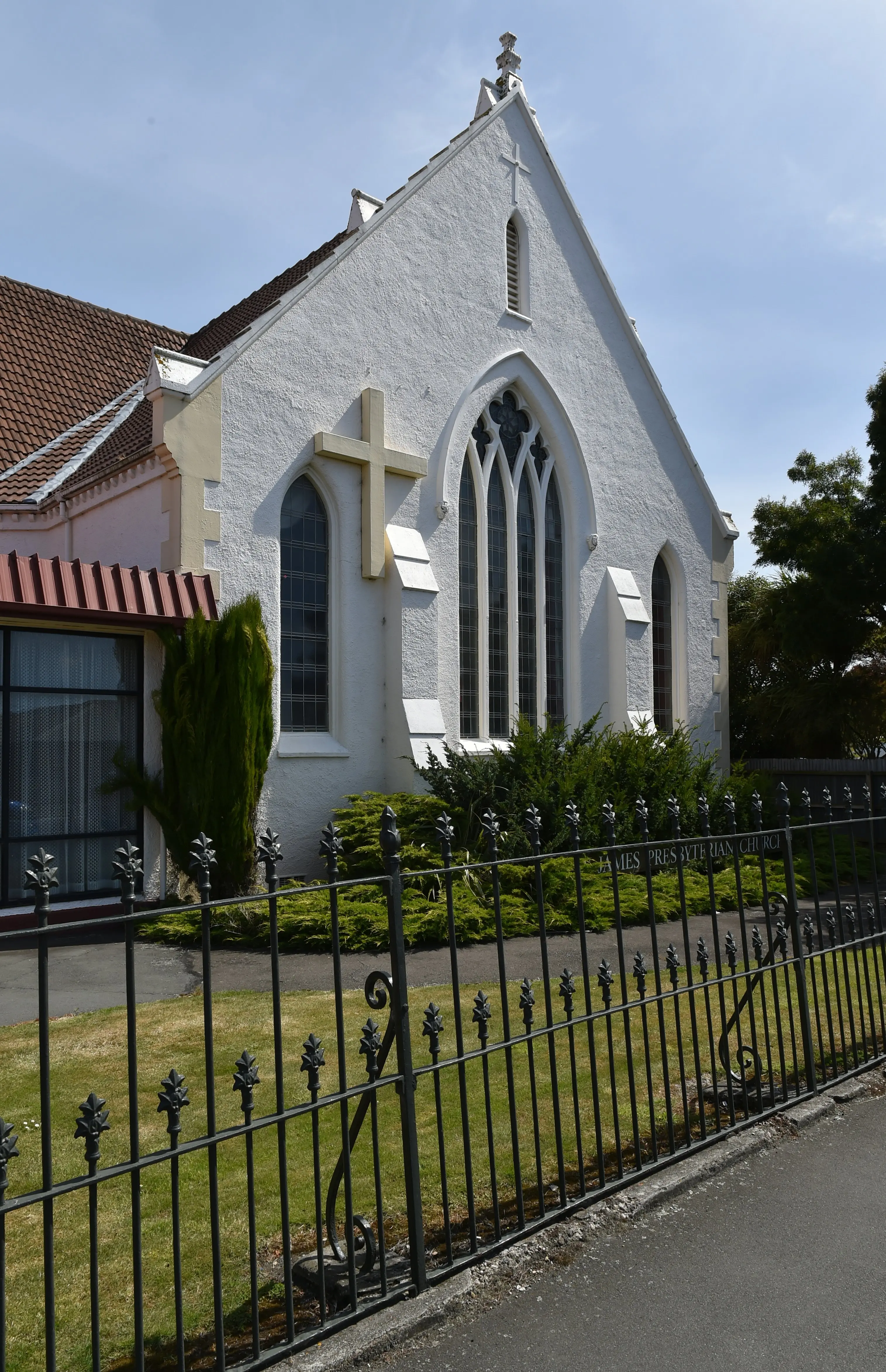
People in New Zealand are going to churches - I mean the buildings - in ever-decreasing numbers. One of the less important but very obvious results of this is that the income from the core functions of the buildings is reduced, and it's harder for the fewer people to maintain the buildings or pay ongoing costs such as rates and utilities.
So there are a plethora of ex-churches dotting the landscape. Those in Dunedin include the Congregational church (now Chapel Apartments); Trinity Methodist (until recently the Fortune Theatre); the Chinese Mission Church, Carroll St (a private home); St. David's Presbyterian a.k.a. the Maker's Place, NEV (for sale); St Bridgid's, St Bernadette's and St Alphonsus' Catholic churches (all in South Dunedin and closed in March 2016); Maori Hill Presbyterian, and as reported in the ODT (26.2) - St James Presbyterian, South Dunedin, which is facing demolition. And there are dozens more, just in Dunedin.
The sight of these distinctive and dignified structures going the way of gracious old post offices and railway stations, passing out of community use and into private hands, might gladden the hearts of atheists and free marketeers, but also suggests that churches - I now mean the people - need to do a far better job of dealing with their property.
Church communities, or their hierarchies, should not be in such a rush to divest themselves of under-utilised property. I suppose the prospect of injections of capital is attractive, and it might be argued that the capital can then be used for more important Christian purposes, such as dispensing charity, or necessary church-related expenses such as ministerial training and salaries. The management of real estate is clearly not a core church function, and neither is the custodianship of heritage buildings.
But getting rid of churches, colleges, vicarages - any real estate that a church may have been able to acquire or build in the past, but is now not "paying its way'' - is short-sighted. Who knows where the population might be in a generation's time, and where the very same building may not again be required?
I thought this when governments starting "rationalising,'' and shutting down schools and places like the Dunedin CPO, and selling off the valuable properties to so-called developers. But in the case of churches, it's not merely short-sighted, it exhibits a lack of trust in God: should churches not be praying for revival, and be in readiness when it comes?
It is also ungrateful, and exhibits an inadequate sense of what it means theologically to be a church. We belong, in the church, to the same body as those who have gone before: it's what's meant by that line in the Creeds about "the communion of saints.'' When those people have (often sacrificially) given money and property to build something to bequeath to us, it is with the intention that we receive this as a gift, and in the hope and expectation that the gift will assist to enable our presence and activities in that place, in an uncertain future.
It is also unwise. Property is in short supply, and no-one's making any more real estate. By holding on to property, and putting it to good and profitable uses, church communities can potentially both do good things - such as provide low-cost public housing - and generate income that will assist them to finance their own activities, such as maintaining small worshipping communities and even engaging in outreach.
It's also bad advertising. Churches are usually architecturally distinctive structures, purpose-built for the highly specific activity of people meeting to worship. They are typically spacious, so large groups can come together; they are typically tall and pointy outside and high-ceilinged inside, so as to direct our attentions beyond the mundane; they are often beautiful, because people want to honour God with beauty, and because holiness is a beautiful thing.
When they are abandoned or repurposed as luxury apartments, art galleries, theatres, quirky cafes or hubs for IT professionals, they still look like churches. But they say to drivers-by that the obvious and dedicated functions of these places are a thing of the past. They remain in the public imagination essentially ex-churches, and send a message that consumerism has finally won its battle with the life of faith.
The whole situation is of course complicated by the spectre of "earthquake strengthening''. Whether or not this is a bureaucratic overreaction to the Christchurch earthquakes is an interesting issue, but it sometimes seems that "earthquake strengthening'' will eventually be more destructive than earthquakes. But the often unsupportable costs of earthquake strengthening has certainly disproportionately affected churches. I am surprised there has not been some joint inter-denominational approach to government on the subject.
Could people not be advised - even sign something acknowledging - that they enter unstrengthened churches at their own risk? Most Sunday mornings, I'd be prepared to take my chances.
- Greg Tanner is an amateur church historian and former librarian.