
PHOTO
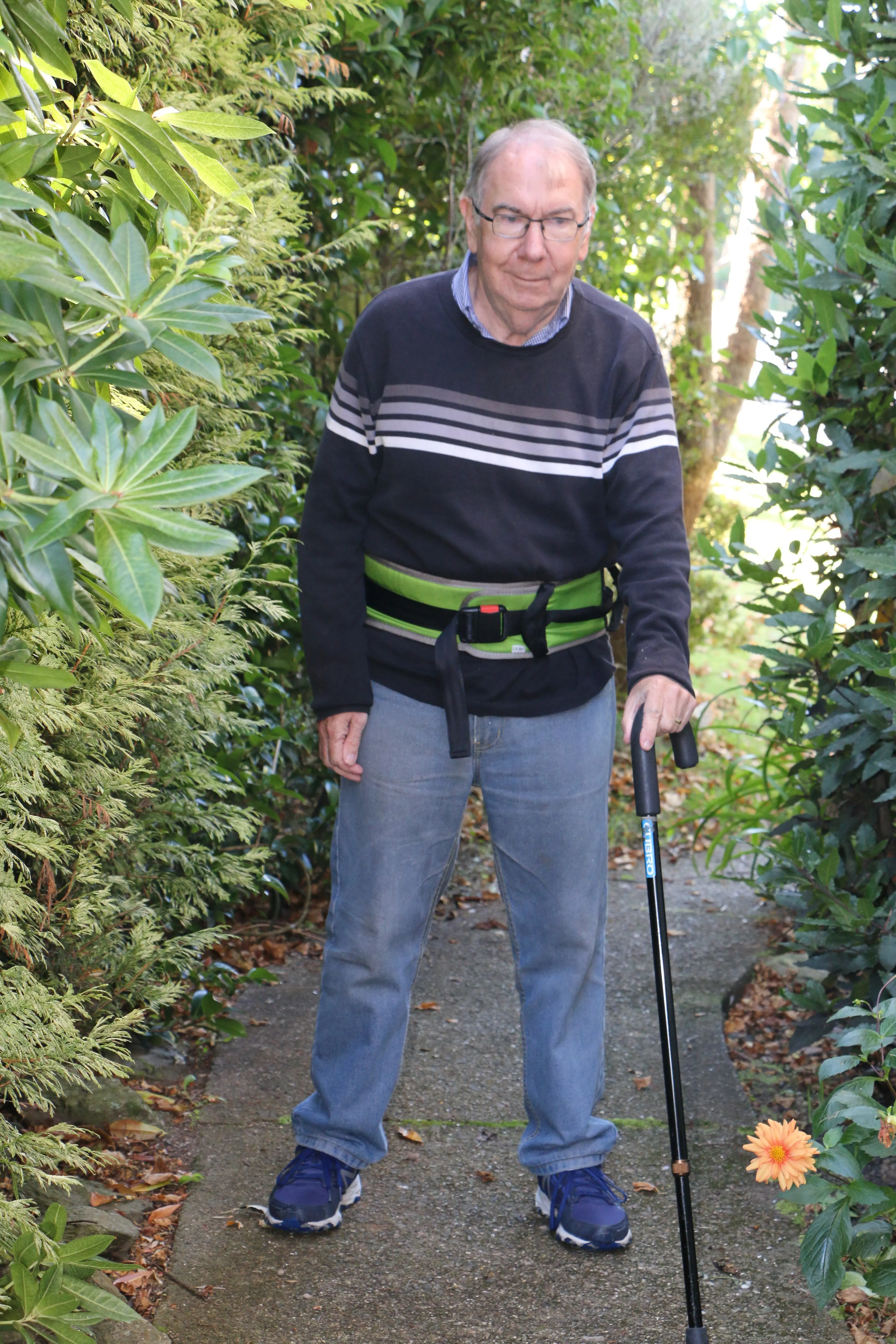
My stroke occurred while I was working downstairs.
I had left the Accident Compensation Corporation (ACC) where I was employed as the programme manager for Forestry and started work as a consultant. I worked for the Forest Owners Association, the Ministry of Business, Innovation and Employment. (MBIE), and even ACC.
My stroke started with feeling dizzy. I did not know it at the time but the dizziness was caused by blood escaping from my brain into my skull.
The Stroke Foundation have an acronym for stroke: FAST. It stands for Face – is it drooping? Arm – is it weak? Speech – is it slurred? Time to call 111.
This is good signs of a stroke, but one caused by a blockage. If you have a brain bleed like mine, there are no signs.
You feel fine and then you pass out. I spent ages after my recovery looking for the signs of a stroke. I didn’t find them.
Some time after the stroke I heard about a television presenter in Christchurch who had also suffered a brain bleed. The article also mentioned the FAST acronym and I learnt that if you had a brain bleed the acronym didn’t apply.
I was taken to Dunedin Hospital where they operated on my brain, and then in a coma, I was transferred to the high dependency unit. I was to remain there, still in a coma, for a month, and then I was transferred to Wakari Hospital, where after a time, I woke up.
When I woke up at Wakari I wondered what had happened to me. I thought I might have had a heart attack, but the nurses told me that I had had a stroke.
I did not know anything about a stroke but the nurses told me that I would make good progress in the first year, slower progress in the second year, and by the third year I would be close to the end of my journey.
I could still make progress towards recovery, but it would be much slower.
At Wakari I began my journey to recovery. There I was in room six, my bedroom. There was a gym attached to the hospital where under supervision, you could work on your fitness.
It had beds, weights, exercycles, stairs, which did not lead anywhere, and a set of parallel bars. I spent a lot of time on the exercycles.
There were also grounds outside, which were very inviting, and almost led to a serious accident. In the lunch time my wife used to come and sometimes we went for a trip around the grounds.
One day the weather was fine but my wife didn’t come, so I thought I would go out by myself.
There was risk in this because the door that led outside was right beside reception, and there was normally someone on reception. It was unlikely they would let me go outside by myself.
But as luck would have it there was no one on reception and the door was unlocked. I moved my wheelchair past reception and to the top of the ramp.
Then I heard the voice of my rehab assistant: “Where do you think you are going”, she asked? She was not happy with me.
She noted there was no one with me and I didn’t have my seatbelt done up. She told me that other people had tried the same trick as me, lost control of their wheelchair, and ended up in the garden.
She suggested I go back inside and visit the courtyard garden. My adventure was over.
My recovery began at Wakari and then continued at home. The physiotherapy nurses responsible for my recovery came to visit me at home to help me adjust to my environment.
One exercise involved me counting backwards in threes from 100 and walking at the same time. My wife Bronwyn, thought this was a very hard exercise and wondered if people who hadn’t had a stroke could do it.
At first my attempts were feeble — 100 minus 3 is not 95, but when I first began, I thought it was.
Tonie, my support person from Access, was shown how to support the exercise programme by the physiotherapy staff from Wakari.
Not long after I returned home, I tried to walk up the stairs. I remembered the saying from Henry Ford – “whether you think you can or you think you can’t, you’re right”.
I thought I could walk up the stairs, just using my balance and determination. Sometimes I could, most times I couldn’t.
I did wonder about why I had a stroke. I was fit – I used to go walking every day, but still I had had a stroke.
In reading about a stroke, I found that high blood pressure was a warning sign of stroke. I had never taken my blood pressure in my entire life because I did not believe I would ever have a stroke.
How wrong can you be?
I also discovered that there were risk factors that could lead to a stroke. If you were obese, had a sedentary lifestyle, drank heavily, smoked regularly, or had a medical condition, your blood pressure could be high and you could be at risk of a stroke.
Is life over after a stroke? Well in my case you would have to say no.
I seem to have defied all the rules. Your life after a stroke however seems to depend on how quickly you get help and the quality of the help. If you are taken ill, then call an ambulance and wait for help.
In my case I can no longer do health and safety, I can’t trust my mind and the terrain could cause me to fall.
However, I can still go for a walk, I can still write, I can cook and I can garden albeit – modified gardening because my balance was affected by the stroke operation.
And I still have a coffee – one of life’s social pleasures.
- Don Ramsay is a Dunedin stroke survivor. World Stroke Day is October 29.