
PHOTO
Headlines such as "Pastoral land covered in exotic pine trees" and "Forest harvest slash inundates farmlands, knocks out bridges, destroys buildings and a threat to life and limb" regularly feature in the media.
Nightly television images depict devastation due to extreme weather events in the Gisborne/Hawke’s Bay regions.
Our exotic pine plantations have reached the bottom rung in popularity among both urban and many rural dwellers.
Yes. Many large corporate forests are overseas-owned. But there are also many local investors in large-scale plantations, including small-scale farm foresters and Maori interests.
Most do follow the rules for sustainability and good management under the Forestry Stewardship Council (FSC) certification scheme, but people in the industry admit they are still learning — particularly with the advent of climate change.
The main concern among pastoral farmers is the more recent advent of permanent forests called "carbon farming".
Struggling property owners are entitled to either sell up or plant pine trees, which is proving to be more profitable than running livestock. But it is the recent extreme weather events and Cyclone Gabrielle that has really put the heat on forestry.
Post harvest "slash" is in fact a mix of bin wood (off-cuts), reject logs, tree tops and branches sitting on skid sites and landings, but also broken branches left on the cut-over areas. In some areas this residue is processed into biofuels.
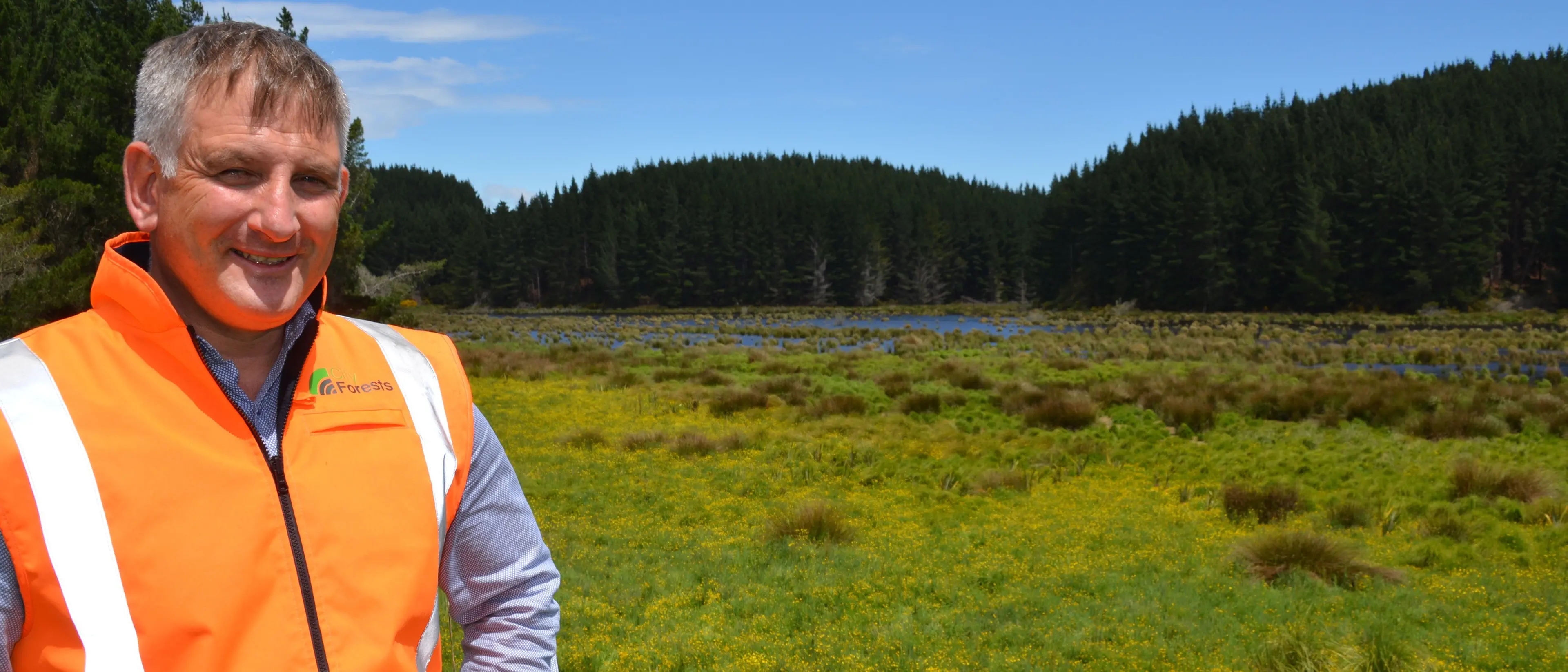
DCC City Forests’ Grant Dodson, president of the New Zealand Forest Owners Association, describes this as a "very sensitive" situation.
"Forestry companies are working very hard to help their communities but are also suffering a backlash."
He warns there are billions of dollars at stake and significant impacts on the community infrastructure — and some very large investments from New Zealand and overseas. Forestry exports exceed $7 billion annually.
The future of the industry has to be carefully managed, he believes, and "sensitive to the considerable social hardship and damage done by the cyclones".
Prior to the cyclone and now doubling down on the research are scientists from both universities and Crown research institutes who are working hard on solutions. It could mean changes to forest management systems.
The Farm Forestry Association recommends permanent or continuous cover systems on steep slopes. Mixed species of both exotic conifers and indigenous species should be part of the solution.
University of Canterbury Forestry School’s Mark Bloomberg is working on small coupe (0.5ha to 2ha of clear fell sites) and select (one in 10) tree harvest in several steeper areas, including in Hawkes Bay. This allows continued timber production for local processors and stabilisation of catchments.
The Forestry School’s Campbell Harvey is working on accumulations of residues on steep slope harvest sites.
Meanwhile a Scion Research team led by Peter Hall has been researching conversion of forest residues into a variety of products such as liquid fuels and processes for heat energy.
However, a significant percentage of New Zealand’s population remain ignorant of our forestry industry, how it operates and manages our basic exotic forestry estate.
It has to be recognised that the resource is the most environmentally friendly industry in New Zealand, if not the world, to mitigate climate change.
Growing trees, both short-term conifers such as Pinus radiata and long-term native bush, sequesters green house gases. It also provides shelter, habitat for wildlife and biodiversity as well as stabilising catchments.
Most exotic plantations are grown on a rotational and sustainable basis. Carbon is sequestered during growth and retained in products post harvest and processing.
The variety of items, apart from wood-based products for buildings and homes, also includes biomass for energy in both liquid and solid form. And more recently added medical applications, such as an antioxidant (Enzogenol) for health, developed by Canterbury University. Projects for essential oil are ongoing.
Due to the fact wood manufacturing does not require raw material extraction it has the lowest carbon footprint of any other industry. Thus it is also worth noting that in the production of heat energy in joules, a unit of heat from coal emits over 80kg of carbon compared with wood chip of under 2kg (Scion Research).
A further development is secondary processing of wood chip into a high-energy pellet form suitable for fuel to replace coal at the Huntly Power Station: currently pellets are imported from Canada as a trial.
It is most important that these researched facts and figures should be promoted publicly before the industry is further demonised — a resource that provides for our shelter, heat, power, health and potential transport fuels from resins.
- Jim Childerstone is a consultant with 48 years’ experience in the forestry sector.