
PHOTO
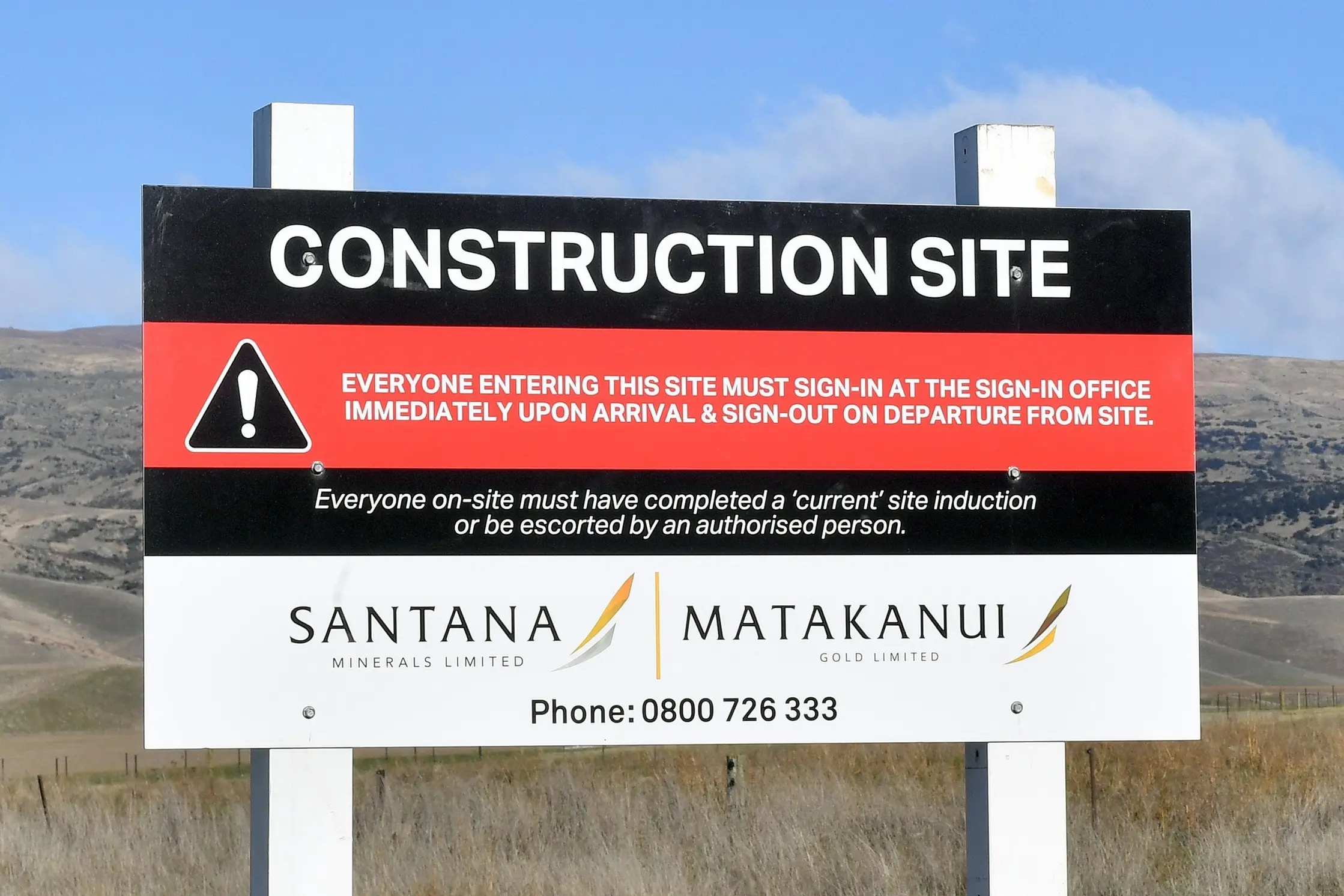
What kind of country do we want to become? How should we shape Otago? Who will lead us there? Upcoming elections prompt such questions. Otago’s focus this election is sharpened by the prospect of Santana’s gold mine, which will begin at Bendigo and may end at Ophir, on the other side of the Dunstan Range, above the Maniototo.
Tributes flowed for Sir Sam Neill, who fought the Santana mine because, ‘‘If this mine goes ahead — and God willing it won’t — everything that you see is under a claim. And there will be mining all around us, and that’ll be the end.’’
Sir Sam was quite right: all inland Otago is being eyed up now: the Rock and Pillar, Raggedy Range, the Llammerlaw and Silver Peaks are under prospect and exploration permits sprawling over a million hectares.
Will the area keep its world of difference in quiet mountains and clean rivers? Or become scarred by vast open cast mines, tailings dams and industrial processing plants? This one election may well decide and define our region’s future.
Sir Sam’s speaking up made him subject to abuse he felt ‘‘frankly very shocking and disturbing’’, personal attacks that started after Shane Jones ‘‘chose to make this personal’’, calling him anti-Kiwi and accusing him of ‘‘not living in the real world’’.
Jones was ‘‘a guy I don’t understand’’, Sir Sam said.
‘‘I just don’t understand him at all’’.
Who can understand a man who styles himself ‘‘matua of mining’’ while calling Otago’s Regional Council ‘‘green banshees’’, overtaken by ‘‘demonic eggbeaters out of Dunedin’’.
He will admit of himself that ‘‘I’m a bit of a stirrer’’.
He likes to talk about Otago as a woman: ‘‘largely empty’’, but ‘‘pregnant with mining potential’’.
But the Bendigo mine is ‘‘akin to a beauty spot on the alabaster face of a beautiful woman’’.
Then he winks: it’s just ‘‘megaphone rhetoric’’.
The National Party’s Miles Anderson and Joseph Mooney have made their views clear: Provided Santana meets its obligations every step of the way, Anderson says, ‘‘by supporting this project, we are investing in jobs, infrastructure and the overall wellbeing of Otago’’.
Anderson appeals to ‘‘balance and facts’’. Then he repeats Santana’s figures for how much money the mine might make.
But Santana’s figures are make believe. They are a wildly optimistic estimate of what money might be made, that ignores the fact much of the mine’s profits will flow overseas, ignores basic accounting practices like discounting the future, overlooks impacts on amenity, biodiversity or ecosystems, counts no risks and costs no remediation.
And it assumes a historically high gold price holds, when it has already started to slide.
All of this illustrates a broader problem with Santana’s approach and its application. Fast-track applications are meant to be submitted complete.
Yet the panel charged with deciding it under the fast-track process has had to repeatedly ask Santana for a great deal of basic but fundamental information, including baseline data on ecology and water. A report on spring annual plants threatened with extinction was only handed over after repeated questioning.
Unsurprising, perhaps, the local community are deeply divided, the mine has little social licence, and trust in the company is lacking.
Now, to try to answer the panel’s latest long list of questions the company has had to pause its application for what it insists will be only 35 working days.
Whatever it can pull together in that time does little to paper over the fact its application has been clearly premised on its original publicly stated expectation the fast-track process was a formality that could be decided in a month.
Instead, even after months of debate over outstanding questions, at least a month’s more workshops are needed to consider Santana’s inadequate proposed consenting conditions, which left the community and environment at high risk.
Among the panel’s many current curly questions for Santana is this: will they indemnify us against catastrophic tailings dam failure? Hardly likely; this is a small wildcat company that has never run a gold mine before.
Indeed, Santana seems most likely set up just to get consent and sell — a tick and flick fly by night operation where the company has no lasting interest here and can leave Otago careless of consequences.
The Greens have pledged to revoke fast-track consents for coal, hard-rock gold and seabed mining projects, and specifically named Bendigo.
Labour, through Rachel Brooking, will not go so far, largely because they have a realistic shot at power and revoking legally issued consents is genuinely repugnant.
But, in this case, because Santana’s application has been so poor, the decision will not be reached till well after the election is over. Even if approved, this project will likely be legally challenged and further delayed.
It is then open to Labour to stand by its view that such large complex projects should never be decided through the current fast-track.
Politicians in power are only ever as brave as their public permits. Labour’s hero Norm Kirk famously repudiated the contractual obligation to raise Manapouri and Te Anau to serve Comalco’s smelter, and protected Lake Wānaka in perpetuity, because he had met the people and knew that would win the South in the 1972 election.
If, like Sir Sam Neill, we don’t want Otago to become pitted with mines, we need to say and show what we stand for this election, and again help Labour show the courage of our convictions.
Do you want Otago torn up for gold? Should our mountains be mined for two parts per million and the rest left as forever toxic slurry? This election, it is time to take sides.
Jonathan West is a Dunedin writer.