

PHOTO
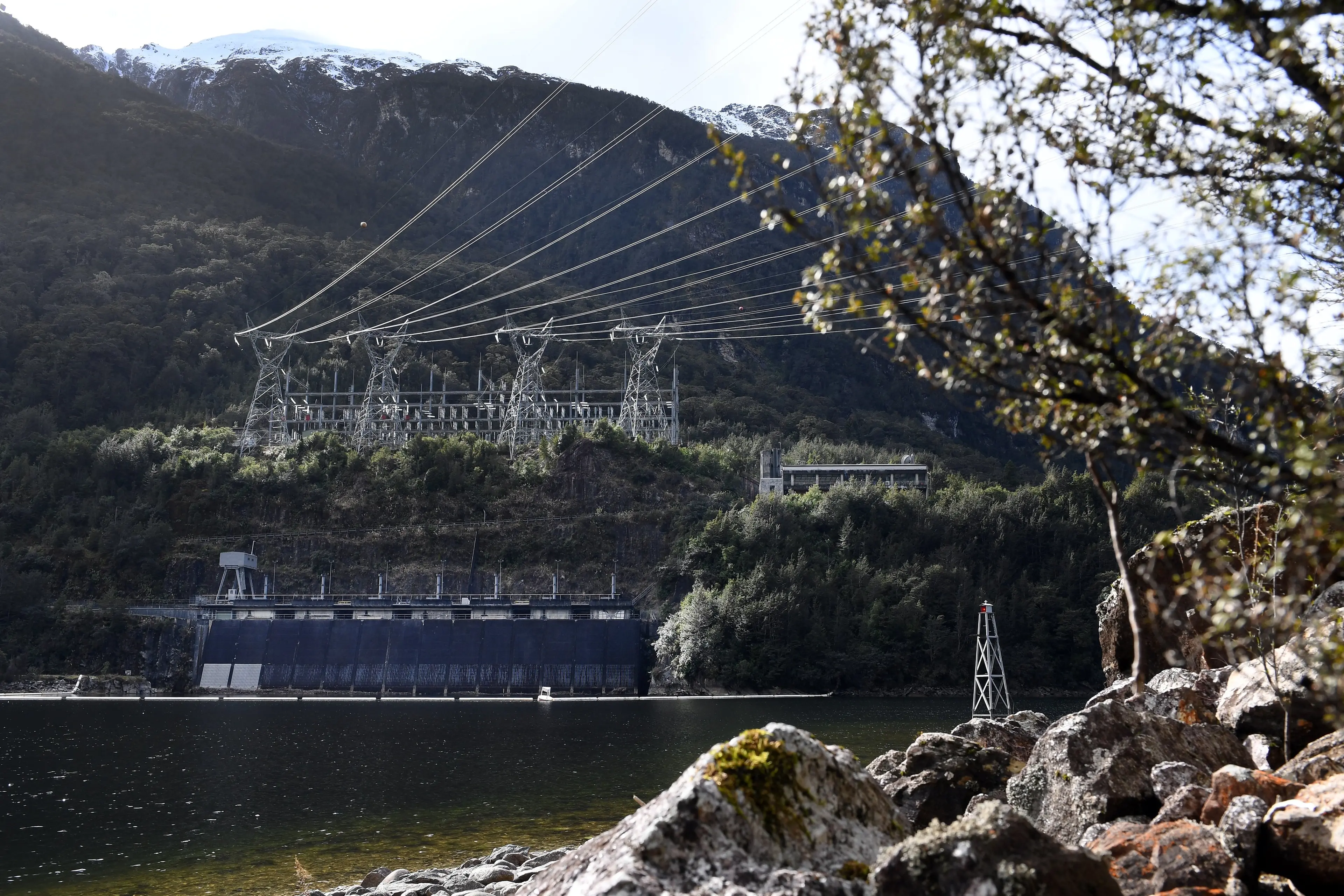
With no immediate answers in sight, Southland business leaders are calling for a national energy strategy to address a looming power shortage, writes Toni McDonald.
Electricity generation and transmission infrastructure must keep pace with Southland’s growth if the region is to take advantage of the opportunities ahead, business leaders say.
Great South strategic projects general manager Steve Canny said a recent energy forum in Invercargill was a conversation that was “well overdue”.
Southland’s situation highlighted a wider national problem — New Zealand lacked a national energy strategy to guide future generation, transmission and investment decisions.
“We can’t afford not to have a plan.”
He said electrification and industrial growth were accelerating so quickly New Zealand could no longer rely on the organic approach that had shaped the country’s power system for the past 144 years.
Future demand would require the country’s generation system to more than double within a much shorter timeframe, creating an unprecedented need for detailed planning.
“Even an imperfect strategy would help to guide investment and infrastructure decisions.
“At least everybody understands what needs to happen to satisfy the growing demand for electricity.
Mr Canny said demand was being driven by residential heating electrification, hot water conversions, electric vehicle charging, industrial decarbonisation and new industrial developments in the Deep South, as New Zealand continued to replace fossil fuels with electricity.
The region had already converted 114 coal and LPG-fired boilers, with another 66 still to complete their transition.
Additional demand could come from hydrogen production, mineral processing, biomass projects and two proposed data centres.
The Datagrid facility at Makarewa alone will use 280 megawatts of power, making it the country’s second-biggest user of electricity.
Modelling suggested approximately 230MW of additional electricity would be required by 2040, with most growth expected in the next nine years.
While Southland currently used about 1850MW of firmed electricity, Great South modelling suggested the region would ultimately require about 2000MW of firmed generation to support future growth and decarbonisation.
Mr Canny said Southland had a particular interest in the issue because 70% of the region’s GDP came from exports and it remained New Zealand’s largest exporter per capita.
Affordable electricity was critical to ensuring exporters remained competitive in global markets.
While wind and solar generation had expanded renewable generation supplies, those sources were intermittent.
However, industry required reliable fixed supply sources, he said.
He believed hydroelectricity remained a critical component of the country’s future energy mix, supported by technologies such as grid-scale batteries.
Expanded hydroelectric generation was “more likely than not” the critical element to provide the firm electricity supply it needed to support future growth, he said.
Mr Canny presented eight opportunities where additional hydro power generation expansion could potentially be achieved by expanding existing schemes.
New Zealand lacked a national strategy, but Southland had continued to refine its regional energy strategy since it was first developed in 2003.
The ability to predict future power demands created an “unprecedented need for detailed planning to avoid unnecessary costs and delays”.
Accurate data allowed growth to be planned strategically rather than organically.
New businesses, particularly electricity-intensive industries were urged to engage with Southland’s energy planning as early as possible.
“Early engagement in planning is critical to successful outcome.”
PowerNet chief executive Paul Blue said early planning was becoming more important as electricity projects grew in size and complexity.
Tight project timeframes often resulted in higher costs because network operators had less opportunity to properly design solutions and buy equipment.
“We are seeing it time and time again.
“If we don’t get a chance to properly plan something properly designed — it’s a wet finger in the ear about what it costs… it really does affect the proper budget we can give.”
Building infrastructure took detailed planning through each stage.
Procurement had its own challenges — large, specialised transformers had an 18-month delay from order to delivery.
Supply delays from international sources were being pushed out as New Zealand competed on the international supply market against larger countries.
“We don’t keep spare 500MW transformers in New Zealand...that just doesn’t happen.”
Build times in Southland also needed to consider seasonal access and geographic distance.
Forward planning could offer grouping projects to combine infrastructure resources and lower costs.
Transpower grid development executive general manager Matt Webb said it was important to only build transmission networks at the pace they could be used.
“We don’t want to hold Southland back by the lack of transmission, but we equally don’t want to commit to a whole lot of transmission that soaks up all the resources.
“So we’re really trying to read the room around how that works and how we can balance those two things up.”
Non-transmission solutions, which may include battery storage, could potentially bridge gaps to prevent construction and development delays.