
PHOTO
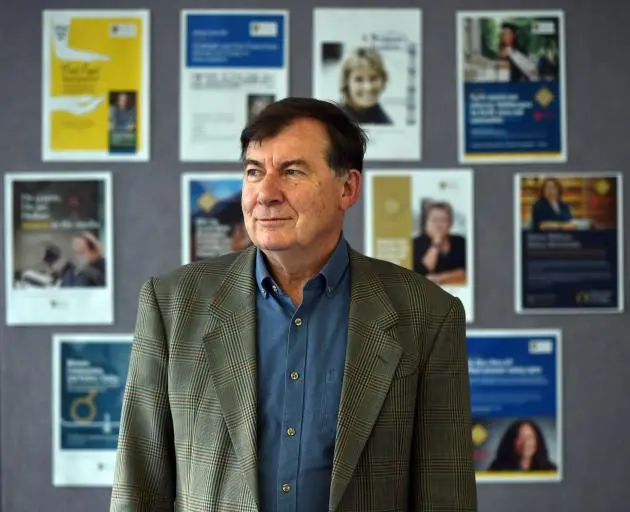
This weekend’s 60th Foreign Policy School, in Dunedin, could be a fork in the road for New Zealand’s international relations, Prof Robert Patman says.
A score of national and international foreign policy specialists and more than 40 Wellington-based policymakers will gather at the University of Otago tomorrow for the opening of New Zealand’s preeminent, annual, foreign policy gathering.
School co-director Prof Patman hopes the three-day event, themed The faltering international rules-based order and New Zealand, will cause the government to rethink its foreign policy.
“I think it is a fork-in-the-road moment for New Zealand foreign policy,” Prof Patman said.
“I hope this will be the beginning of a debate about what is the best direction for New Zealand and other small countries and middle powers in protecting their interests."
The University of Otago Foreign Policy School began in 1966 to help New Zealand develop an independent foreign policy at a time when the United Kingdom was shifting its attention away from former colonies, towards Europe.
Speakers at this weekend’s School include Dr Malcolm Jorgensen, of the Max Planck Institute, Germany; Ministry of Foreign Affairs and Trade deputy chief executive Tahamoana Macpherson; Prof Fadhel Kahoub, of Denison University, United States (US); Ukraine Analytica editor Dr Hanna Shelest; and Prof Richard Byrne, of University of Maryland Global Campus, US.
Speaking on Global Insight, Prof Patman said he believed New Zealand’s approach to the new global disorder and the US government’s Trump administration needed to change.
"The international status quo is not working well for New Zealand, and many other countries, because the rules they depend on are being flagrantly undermined,” Prof Patman said.
- Watch full interview
“I think the current policy, which I've described as a softly, softly approach to Trump . . . it's not working."
He favoured a more direct approach in dealing with the US government and a more collaborative approach to tackling global rule-breaking by major powers.
"Most of the key problems — climate change, pandemics, transnational terrorism, problems of economic contagion — can only be solved with the participation of all countries, not just great powers.”
Also on Global Insight, Prof Byrne said he believed New Zealand could influence world affairs by forming strategic trade partnerships that did not include the United States or China and by speaking up when major powers behaved badly.
"If countries [do that], that may well pressure the United States and China to be more faithful to rules-based trade and order,” Prof Byrne said.
In this episode of Global Insight, Profs Patman and Byrne discussed the peace talks between the US and Iran, the background to the current disordered global system, the history of the Foreign Policy School and the potential impact of the School and New Zealand on global relations.