
PHOTO
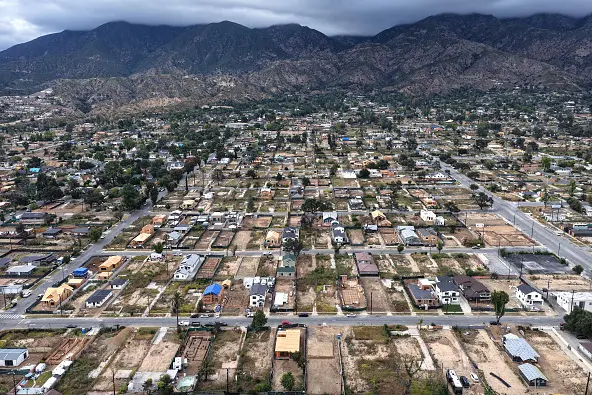
Electrical sparks from an out-of-service transmission tower owned by Southern California Edison caused a devastating 2025 wildfire that killed 19 people and destroyed thousands of homes near Los Angeles, fire investigators say.
The findings, made public in a 55-page Los Angeles County Fire Department report on Tuesday, could pose major legal ramifications for the utility giant, owned by Edison International, which faces billions of dollars in potential liability claims stemming from the blaze, dubbed the Eaton fire.
While noting other circumstances that factored into the January 7, 2025, conflagration, including fierce wind gusts at the time, the report points to electrical arcing from an Edison transmission tower caught on video footage as the sole cause and origin of the fire.
Two "electrical arcing events that occurred in quick succession" sent "unknown burning material" falling from the out-of-service tower into a dry bed of vegetation below, which ignited in about 12 seconds, the report said.
Edison did not immediately dispute or accept the report's findings.
"We saw the report, and we’re reviewing it," a spokesperson for the utility said, adding, "At SoCal Edison, we have taken our potential role in this fire seriously from the beginning."
In October 2025, the company formed a special compensation fund to fast-track payments for death claims, property losses and smoke damage stemming from the Eaton fire, which ravaged the suburban Los Angeles community of Altadena and destroyed over 9400 homes and other buildings. The fire engulfed more than 5600ha overall.
Edison's voluntary fund has received over 4000 claims and paid more than 2400 people to date, the company spokesperson said.
Responding to lawsuits brought by property owners and the United States government over the Eaton fire, the utility has publicly acknowledged that its equipment likely was associated with ignition of the blaze.
DOUBLE-FIRE CALAMITY
Edison in turn has sued LA County, Southern California Gas and other agencies, claiming they, too, bear some responsibility for the scale and severity of the disaster.
The Eaton blaze coincided with another catastrophic wind-driven wildfire that also erupted on January 7 about 48km to the west and laid ruin to the seaside Los Angeles enclave of Pacific Palisades, near Santa Monica, killing 12 people.
Fire investigators determined the Palisades fire stemmed from a smaller blaze that was deliberately set six days earlier and was quickly suppressed but kept smouldering underground in dense scrub for nearly a week before reigniting in heavy winds.
The suspect in that fire, 30-year-old Jonathan Rinderknecht was tried on three federal arson charges in June, but the judge declared a mistrial after jurors failed to reach a unanimous verdict, deadlocking, 10-2, in favour of acquittal. Prosecutors said they would seek a retrial of the case.
Taken together, the Eaton and Palisades fires rank as the deadliest wildfire calamity in Los Angeles County history, surpassing the 29 lives lost in the Griffith Park fire of 1933.
A study published last year in the Journal of the American Medical Association said the toll in lives lost was much higher than the official combined tally of 31 fatalities, estimating 440 "excess deaths" were attributable to the two fires.
The study was based on statistical models that included such factors as increased exposure of people with heart and lung diseases to smoke and toxins released by the fires, as well as healthcare delays and disruptions they caused.
Some estimates put economic losses from the two fires at more than $US250 billion ($NZ425 billion) making the twin infernos one of the most costly natural disasters in US history.
As of a year ago, Southern California Edison had $US1 billion of customer-funded self-insurance coverage available for Eaton-related claims. Losses in excess of that amount could be reimbursed through California's Wildfire Insurance Fund, which had an estimated $US22 billion.