
PHOTO
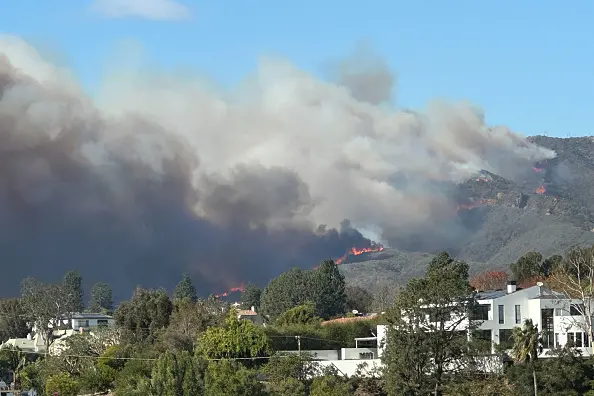
A federal prosecutor has told jurors a man feeling lonely and dejected over a breakup, and angry at society deliberately started a fire that grew into one of the deadliest and most destructive wildfires in Los Angeles history.
The attorney for Jonathan Rinderknecht, 30, a former Uber driver, countered that the hilltop blaze on January 1 last year was triggered by fireworks, not his client, and that the massive Palisades inferno that killed 12 people and destroyed thousands of homes a week later was a separate fire set by others.
The opposing accounts were presented to a US District Court jury at the start of a high-profile arson trial stemming from one of the worst wildfire calamities on record anywhere in the United States.
Rinderknecht was indicted in October last year on one felony count each of destruction of property by means of fire, arson affecting property used in interstate commerce, and illegal burning of timber on public lands.
He is accused of starting a brush fire that was suppressed relatively quickly but continued to smoulder underground in the roots of dense scrub before re-igniting a week later, whipped by fierce winds into a conflagration that laid waste to the upscale seaside enclave of Pacific Palisades.
Rinderknecht, who pleaded not guilty and has remained in custody since his arrest in Florida, faces a sentence of five years to 45 years in prison if convicted on all three counts.
OPPOSING NARRATIVES
Assistant US Attorney Mark Williams said security camera footage and location data from Rinderknecht's cellphone established that he was the only person in the vicinity of the January 1 fire when it erupted. He added that investigators ruled out all non-arson ignition sources, including fireworks.
"The evidence will show that the defendant lit this fire on January 1 and that he did so on purpose, and the evidence will show that the fire that the defendant started on January 1 was the same fire that caused all of that destruction on January 7," Williams told jurors in a downtown Los Angeles courtroom.
Defence attorney Steve Haney said Rinderknecht witnessed the January 1 fire erupt from the vantage point of a hill he had climbed to watch a New Year's fireworks display after dropping off his last Uber passenger for the night. And Rinderknecht had in fact tried to alert authorities when saw it, Haney said.
Haney played a recording of the emergency 911 call that Rinderknecht placed to report the fire, after poor cellular reception thwarted several previous attempts to make the call.
"That's not the voice and actions of a man who started a fire. It's the voice and actions of a man who tried to stop a fire," Haney said.
Haney also asserted that prosecutors lacked physical evidence linking Rinderknecht to arson, or any electronic or digital records showing an intent to start a fire.
ONE FIRE OR TWO?
The case hinges in part on whether the January 1 blaze, originally named the Lachman Fire, and the disastrous Palisades Fire six days later are actually the same fire.
Los Angeles firefighters believed they had swiftly extinguished the Lachman Fire, which began near a hiking trail in Topanga State Park, a unit of the Santa Monica Mountains National Recreation Area.
But after smouldering undetected in a phenomenon experts call a "holding fire," the blaze erupted again on January 7, close to the same spot, and grew swiftly into the devastating Palisades Fire, federal investigators say.
Fanned by hurricane-force Santa Ana winds, the flames scorched 9300ha and incinerated some 6000 structures. Property losses were estimated at $US150 billion ($NZ258 billion).
The Palisades Fire coincided with another catastrophic wildfire northeast of Los Angeles known as the Eaton Fire, which killed 19 people and ravaged the community of Altadena.
Haney, the defence attorney, said testimony would show that the Palisades Fire was originally treated as an act of arson separate from the Lachman Fire, and that investigators only abandoned their two-fire theory in favour of a single-fire explanation eight months into their inquiry.
Ultimately, Haney said, evidence will show that fireworks triggered the Lachman Fire, and that the Palisades Fire was the work of unidentified arsonists, "not Jonathan."
Moreover, he said, authorities initially failed to secure the Lachman site as a crime scene, thus compromising the integrity of any findings implicating his client.
ANGER AND CHATGPT
In seeking to establish a motive for arson, prosecutors have painted Rinderknecht as a malcontent whose life "started to deteriorate" after a romantic breakup in 2024 that left him lonely and withdrawn.
Williams said Rinderknecht became angry towards society - and the wealthy in particular - as the cause of all of his troubles.
An examination of the defendant's digital profile showed he turned often to the AI app ChatGPT to express his resentments, the prosecutor said.
On one occasion, Williams said Rinderknecht directed ChatGPT to create a image of thousands of people trying to escape a forest fire while a group of rich people laughed and danced from a safe position behind a gate marked with a dollar sign.