
PHOTO
In less than four years since OpenAI launched ChatGPT, AI technology has shifted from theoretical and technical conversations among computer scientists in the digital tech industry and universities, to a principal theme of general discussion.
The dramatic emergence of AI within human societies is already having, and will continue to have, a significant impact across all sectors of human societies.
Advocates praise the greater efficiency and productivity, and the resulting benefits that AI will bestow upon humanity. However, the speed at which AI technologies are developing and the rapid deployment of their use have curbed essential ethical reflection.

In a famed scene from the 1999 movie, The Matrix, Agent Smith, the representation of the AI programme, pins the head of the protagonist, Neo, to train tracks in front of an upcoming train and states: ‘‘You hear that, Mr Anderson? That is the sound of inevitability. It is the sound of your death. Goodbye, Mr Anderson.’’
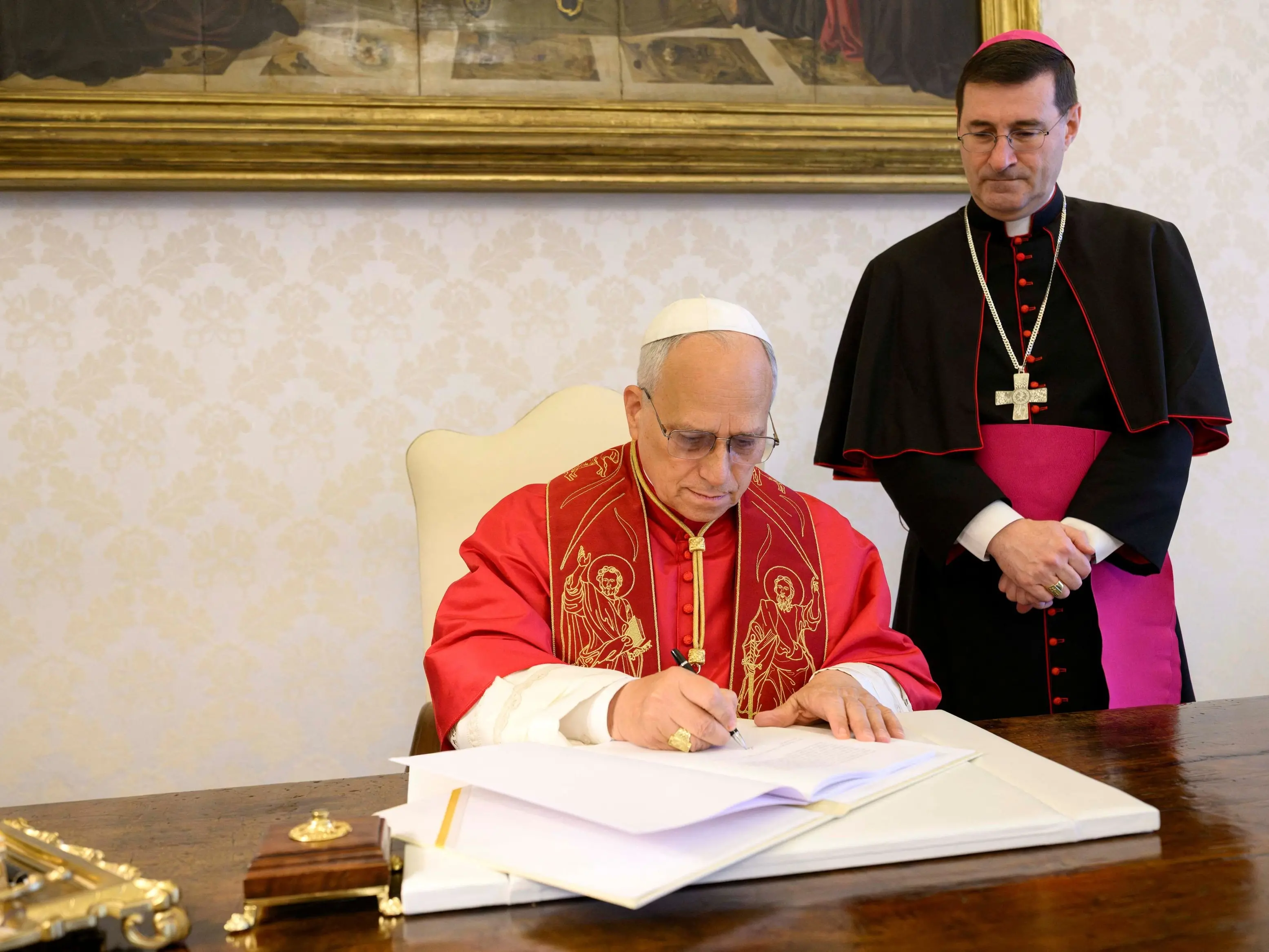
Two recently released reports offer insightful reflections on contemporary global challenges. Magnifica Humanitas, the first encyclical letter issued by Pope Leo XIV, discusses the ethical implications of the emergence and adoption of AI technologies for human dignity and societal wellbeing.
The encyclical pushes back against the narrative of inevitability. While acknowledging that ‘‘AI can be a valuable tool’’, Leo XIV argues that ‘‘the use of AI is never a purely technical matter’’ but that its development and use reaches to the core of what it means to be human, touching on our understanding of human ‘‘rights, opportunities, status and freedom’’.
Rather than accept a discourse of technological determinism, the encyclical employs two Biblical images to illustrate the choice humanity faces.
In option one, willingly or unwillingly, we participate in the building of another Tower of Babel: constructing an economy managed by a wealthy elite who control the technology and reap the financial benefits, thus creating a society that ‘‘sacrifices human dignity for efficiency’’.
Option two requires a rejection of this ‘‘Babel syndrome’’, in which ‘‘the idolatry of profit sacrifices the weak’’. Here, Leo XIV takes his cue from the Book of Nehemiah, an account of Jewish exiles returning to rebuild the walls of Jerusalem destroyed 150 years earlier by the Babylonian empire.
For Leo XIV, while ‘‘technology has the power to heal, connect, educate and protect’’, this is only possible when we build together for the common good.
Noting that technological innovations, like AI, can ‘‘foster participation and justice or exacerbate inequality, control and exclusion’’, Leo XIV contends that our use of such technologies must be evaluated according to a key question: do these technologies ‘‘truly help individuals and peoples to become more humane and fraternal, while respecting our common home and future generations?’’
The second report, the Global Justice Report, authored by the World Inequity Lab led by French economist Thomas Piketty, confronts the challenges of climate change and global inequality.
After describing the problems faced, the report offers a blueprint of an alternative future. It is not, the authors contend, inevitable that we face a grim future of increasing global inequality and diminished planetary habitability.
Climate change and increasing societal and global inequality, the report insists, are not separate but inextricably connected and solvable issues. The report argues that to change the global trajectory and construct a future of human wellbeing for all, and planet habitability requires three key shifts within our political economies.
Firstly, what is required is the fast decarbonisation of our economies. That is, a rapid uptake of renewable, sustainable energy sources.
Secondly, economies need to shift from a focus on ‘‘growth’’ and increasing ‘‘prosperity’’ to that of ‘‘sufficiency’’.
This shift towards ‘‘sufficiency’’ is not merely a mental shift, but an achievable practical reality implemented through three key steps: (1) halving our average working time, from 2100 hours a year to 1000 hours; (2) a significant reduction and change in our consumption patterns, specifically our dietary choices; and (3) a refocusing of the economy towards low-consumption activities, specifically education and health.
Thirdly, the report posits that this rapid decarbonisation and a shift towards a low-consumption economy of sufficiency is only financially and politically possible if there is a drastic reduction in inequality of income, wealth and power, both within societies and between countries.
Addressing inequality through our economic and political decisions is a ‘‘necessary condition’’ for the construction of a decarbonised, low-consumption economy, built not to benefit a wealthy elite, but the common good of humanity.
Both reports make clear that we should not accept the two prevailing discourses of inevitability: AI as the salvific technology that solves all our problems, or, the opposite, an apocalyptic narrative, where out-of-control AI, climate realities and inequality lead to humanity’s inescapable demise.
The reports remind us that despite emerging technologies and contemporary challenges of our own making, humanity, made not as a machine but in the image of God, continues to have dignity and agency.
Collectively, we can choose the future we pursue. Do we desire a future of equality and ecological sustainability which seeks to preserve and enhance the dignity and wellbeing of all of humanity?
Or do we continue down a path in which humanity functions machine-like in a technocratic economy that exacerbates inequality and injustice, and leads to planetary destruction and human diminishment?
Will we participate in constructing a new Tower of Babel or join together to build a world for the common good that enhances human dignity?
• Dr Andrew Shepherd is a senior lecturer in Theology and Public Issues in the Theology programme, University of Otago.