

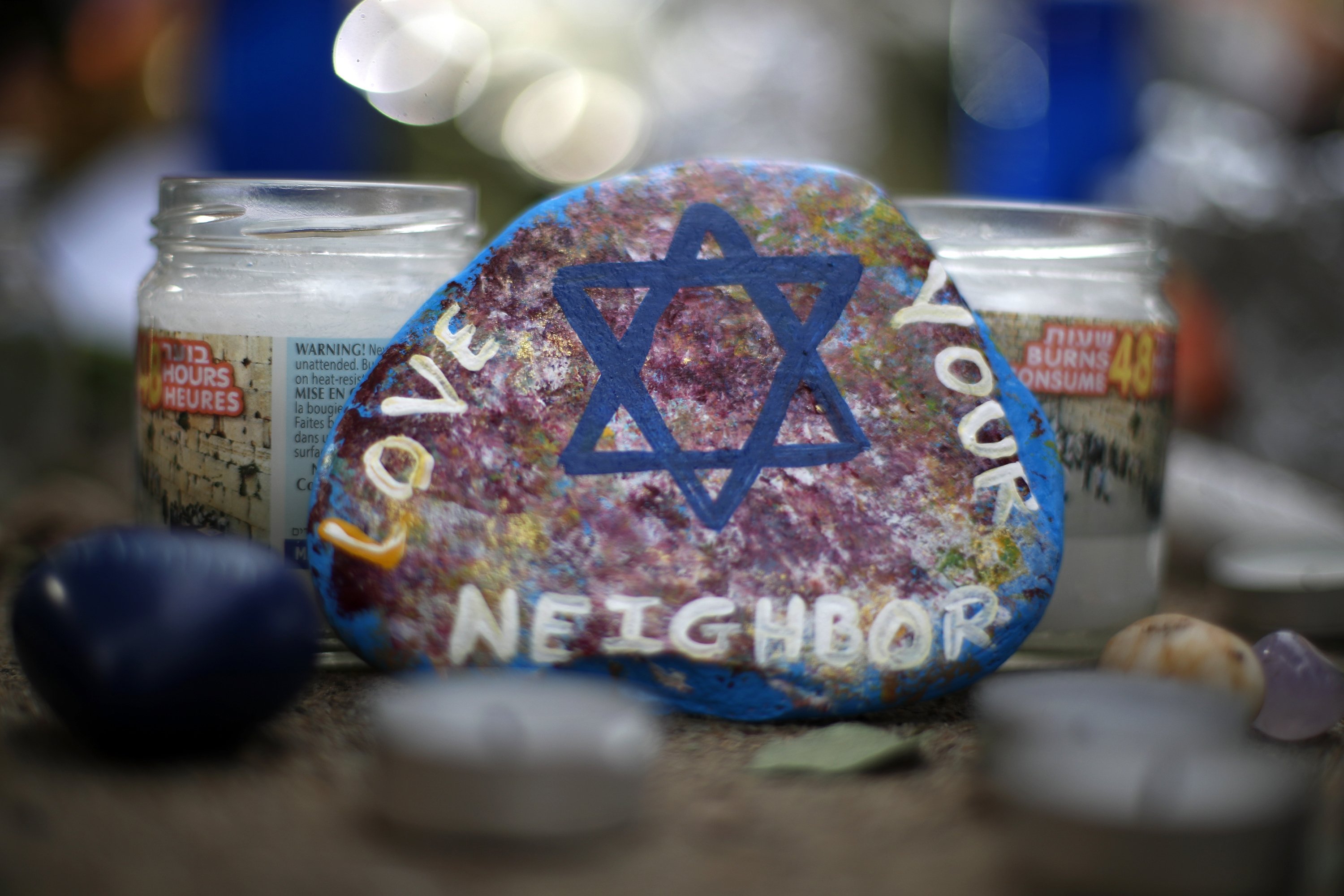
The disturbing rise of both anti-Semitism and Islamophobia across liberal democracies should alarm us — not only because each is morally abhorrent, but because together they expose something deeper about the fragility of public life.
These hatreds are often treated as separate problems, arising from different causes and requiring different responses. In reality, they flourish in the same soil.
Both are fuelled by fear, caricature and a growing tendency to explain complex social problems by blaming whole communities. They are two sides of the same coin, minted in conditions of grievance, social fragmentation, political polarisation, and declining trust in institutions. When politics or religion are pressed into the service of identity anxiety, minorities are rarely far behind as convenient targets.
New Zealand is not immune. While we rightly pride ourselves on social cohesion and restraint, recent events show how quickly suspicion can harden into hostility.
As the world looks aghast at violence in Gaza and Bondi, Jewish and Muslim communities here often feel the shockwaves most keenly — through threats, vandalism and a sense of being held responsible for actions far beyond their control.
Closer to home, a Sikh community’s Nagar Kirtan procession in South Auckland was recently disrupted by protesters linked to Destiny Church. The procession was lawful, peaceful and religious in nature, yet it was confronted by demonstrators railing against multiculturalism and asserting a narrow vision of who properly belongs in New Zealand.
The disturbing thing about Destiny Church’s actions was that cultural and religious difference was framed as a threat. A minority community practising its faith in public was treated as an intrusion rather than as fellow citizens exercising the same freedoms others take for granted.
When religious conviction is deployed to challenge the legitimacy of another community’s presence in shared civic space, it crosses an important line.
Liberal democracy protects freedom of religion — not the right of one group to intimidate or delegitimise another. At the heart of this is a persistent confusion between relativism and pluralism.
Relativism suggests that all beliefs and values are equally valid and therefore beyond critique.
Pluralism, by contrast, recognises deep differences while insisting that people can coexist as equals under shared laws and norms.
Liberal democracy depends on pluralism. It does not require citizens to abandon strong beliefs or theological commitments.
It does require them to accept that those beliefs do not confer authority over public space or determine who belongs. When religious language is used to deny that premise, it ceases to enrich public debate and instead undermines the civic settlement that makes religious freedom possible in the first place.
Anti-Semitism and Islamophobia thrive precisely where this distinction collapses. Complex, internally diverse communities are flattened into threatening stereotypes.
Political conflicts are recast as civilisational struggles. Ordinary neighbours become symbols of distant wars or imagined conspiracies. The Sikh procession incident belongs to this same pattern, even if the community targeted was different.
These dynamics are amplified by a digital environment that rewards outrage, certainty and absolutism. Radicalisation today rarely develops in isolation within one ideology or tradition. It circulates across platforms, feeding grievance narratives and reinforcing the sense that society is divided into irreconcilable camps of "us" and "them".
Responding to these patterns requires more than moral condemnation after the fact. Law reform has a role to play — not as a cure for hatred, but as a means of limiting harm, setting boundaries and signalling whose safety matters.
But law alone is not enough. Social investment matters just as much: in education that builds civic literacy, in institutions that command trust, in interfaith and community initiatives that create contact rather than caricature, and in public spaces where disagreement can occur without dehumanisation. Liberal democracy is sustained not only by what it prohibits, but by what it patiently builds.
In Aotearoa New Zealand, this should not be controversial. Ours is a Treaty-shaped society, already committed to holding together multiple histories, identities and worldviews within a shared civic framework. The challenge has never been to erase difference, but to ensure that difference does not become a pretext for fear or exclusion.
None of this diminishes the need to confront anti-Semitism and Islamophobia clearly and robustly. Nor does it excuse intimidation by dissolving responsibility into abstract social forces.
Individuals and groups choose how they act, and those choices must be judged. But a society serious about preventing recurrence must ask not only who acted, but what made such actions seem justifiable.
If liberal democracy is to endure, it will not be by retreating into suspicion or moral panic.
It will be by recovering the difficult, patient work of pluralism: holding firm moral commitments while refusing the caricatures that turn neighbours into enemies.
■ Graham Redding is a lecturer in Chaplaincy Studies, University of Otago.


