
PHOTO
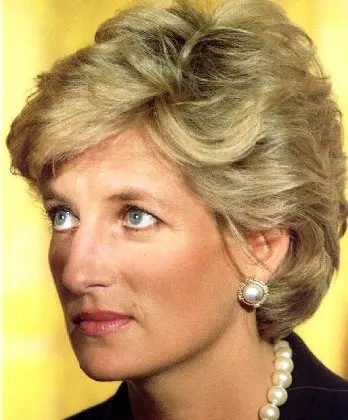
The jury in the inquest into the death in 1997 of Diana, Princess of Wales, has returned the only possible verdict on the evidence presented, that of unlawful killing.
It cited both the photographers who followed the car driven by Henri Paul, and the driver as the causes of the deaths of the two passengers, Princess Diana and her companion, Dodi Fayed, and Mr Paul, and the severe injuries to a bodyguard in the vehicle, Trevor Rees.
And although the coroner, Lord Justice Scott Baker, has deemed the verdict to be equivalent to manslaughter, it is unlikely there will be any further steps to prosecute the French photographers involved.
The British legal system has no jurisdiction over events in France, and a French investigation failed to find sufficient evidence to charge the photographers with responsibility for the accident.
The jury seems not to have been of one mind about its decisions, since its verdict was by majority.
In this may be found, perhaps, the residue of a decade of speculation, theorising and bizarre imaginings. The accident itself has been so exhaustively studied - major French and
British police investigations lasting for years, costing millions, and involving hundreds of witnesses - that a clear-cut verdict could hardly be expected. The accident itself was unexceptional: the car, driven at twice the legal speed limit by a man with three times the legal maximum
of alcohol in his blood - a drunk driver, in fact - smashed into a pillar of a tunnel.
None of the occupants were wearing seatbelts. Two were killed outright, and two, including Diana, were taken to hospital for immediate emergency treatment. The Princess died from her major injuries within two hours, having had a very low likelihood of survival.
Of the conspiracy theorists who soon emerged, the most persistent has been Dodi Fayed's father, Mohamed Al Fayed, who was convinced within moments of hearing about the accident that it was the result of a British Establishment conspiracy, led by none other than Prince Phillip.
Lord Scott Baker took considerable steps to ensure all of the conspiracy theories were put before the jury, at length; every one of them collapsed. None was found to have any factual basis.
The Establishment murder theory was demolished very simply: the Duke of Edinburgh, working
in cahoots with MI6, was supposed to have set up and implemented an assassination plot in the few minutes after the intended route to drive the couple to their destination was changed.
The Al Fayed theory was tosh from the start and should now finally be put to rest: the facts of
the accident simply could not be manipulated to fit the theory, yet, as in so many sudden deaths of celebrities, the public seems ever-unwilling to accept mundane truths.
The most mundane of these, and perhaps the saddest of all, was the jury's proper acceptance that the celebrity photographers - all of whom were cleared in the French police investigation - were to blame because of their frenzied attempts to try to slow down the Princess's car in order to take photographs to sell to a public - a public whose appetite for the most salacious sensation is never to be satisfied.
The taking of photographs of the wreckage, indeed, by standing on the wreckage itself to do so, rather than aiding the helpless occupants is as much a comment on the photographers' morality as it is on those who choose to dwell on the products of their despicable trade.
Has justice been done in relation to the death of this most popular, if tragically capricious, mother of our future King? The answer must surely be "no''.
The inquest did not have the power to compel some of the French witnesses to attend, nor did the French authorities intervene to force the photographers to testify.
Some of the French medical experts did not give direct testimony, and were therefore unable to be cross-examined.
Has justice been seen to be done? The answer can only be "probably''.
The inquest, when considered together with the other formal inquiries, and the total absence of a balance of evidence to the contrary, is supportive of the jury's verdict as the only one it could reasonably have reached.
The theorising will not, alas, cease: rumour, hearsay and speculation will continue to grow, since "cover-ups'' are far more appealing to the public imagination than the sensible consideration of plain details of evidence.