
PHOTO
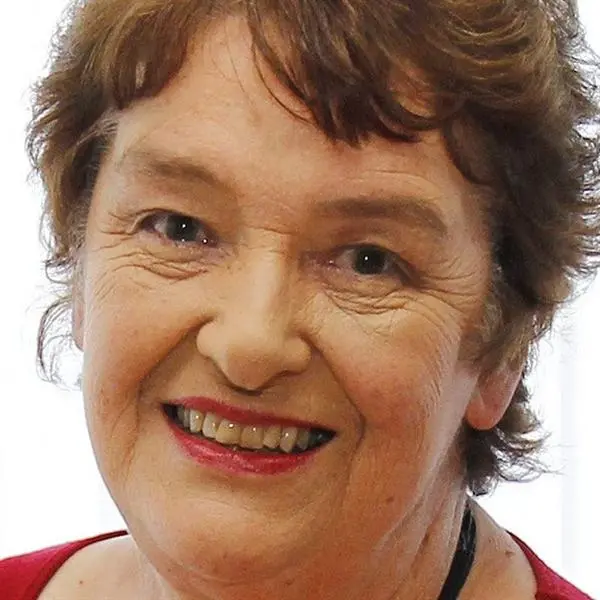
Dame Alison Holst has been part of New Zealand's pysche for such a long time it is hard to remember a time when her cookbooks were not resplendent in the country's kitchens.
She, and latterly with her son Simon, has taught generations of New Zealanders to cook simple but satisfying meals.
She moved with the times, generating books on microwave cooking for those pressed for time, through to the slow cooker recipes for those wanting something a bit different in their daily fare.
People with gluten intolerances will have enjoyed seeing Dame Alison put her name to a gluten-free range of recipes.
Sadly, time has caught up with Dame Alison, who has been diagnosed with dementia and is no longer cooking, even at home.
Her family said it is one of the saddest parts of her decline.
Simon Holst says Dame Alison was frustrated to be let down by her memory and that it was hard for the family to watch.
But seeing her out of the kitchen made him the saddest.
We can all feel the sadness of knowing Dame Alison is not able to cook.
For 50 years, she has been cooking up a treat for New Zealand. She first appeared on television screens in 1965.
Dame Alison has published more than 100 books, defining her ''everyday cooking'', selling more than three million copies.
Her career began as a home science lecturer at the University of Otago.
Dame Alison is being looked after at home by her husband Peter, who is said to be doing an impressive job.
The important message here is dementia does not only affect one person; it has a wider impact on families.
Dunedin has a special place in its heart for Dame Alison who grew up in Opoho. Her father lectured at Dunedin Teachers' College.
Her two sisters, Patricia Payne and Clare Ferguson, have also left their mark as an international opera singer and a London food stylist respectively.
Dame Alison was moved to start publishing recipes in a sort of rebellion against the Galloping Gourmet Graham Kerr.
She was asked to front a television show on cooking family food.
Despite her initial trepidation, the series of Here's How: Alison Holst Cooks took off in the late 1960s, and her first cookbook, with the same title and illustrated with colour photographs, was published in 1966.
For some years, her cookbooks were published in Dunedin.
Plenty of families will have had the experience of watching a relative suffer through dementia, sometimes totally helpless in knowing how to cope. It is a saddening and frustrating process for all.
Having such a public admission by Dame Alison, someone taken into the hearts of New Zealanders, is hugely valuable in showing no-one is immune from this decline in mental ability.
Dementia is not a specific disease, but is described by the Alzheimer's Association as an overall term describing a wide range of symptoms associated with a decline in memory or other thinking skills severe enough to reduce a person's ability to perform everyday activities.
Dementia is often incorrectly referred to as ''senility'' or ''senile dementia'', which reflects the formerly widespread but incorrect belief serious mental decline is a normal part of ageing.
Many dementias are progressive, meaning symptoms start slowly and gradually get worse.
The Alzheimer's Association warns if you or someone you know is experiencing memory difficulties or other changes in thinking skills, do not ignore them.
See a doctor soon to learn the reasons, is the advice.
In Oamaru, Presbyterian Support Otago plans to open a secure dementia unit at its Iona care home, in response to an increasing demand in North Otago.
The number of people in New Zealand requiring dementia care is expected to be about 75,000 in the next 10 years and pressure to provide dementia care rooms around the country is increasing.
As sad as it is, the acknowledgement by the family of Dame Alison of her condition can be put to the good by raising awareness of the insidious disease of declining mental ability.